Essential Profiles
The men and women who dismantled legal segregation in the United States through extraordinary courage, strategic brilliance, and unwavering commitment to nonviolent resistance — from the Montgomery Bus Boycott of 1955 to the Voting Rights Act of 1965 and beyond. Ministers who turned churches into command centres, sharecroppers who registered voters at the cost of their livelihoods, students who sat down at lunch counters to stand up for democracy, lawyers who fought segregation through the courts, and ordinary citizens who became extraordinary agents of change in the most consequential nonviolent movement of the twentieth century.
Nearly a century after the abolition of slavery, African Americans across the South lived under a system of racial apartheid enforced by law, police terror, and the constant threat of mob violence. The Supreme Court's 1896 Plessy v. Ferguson ruling had enshrined "separate but equal" as constitutional doctrine. Between 1877 and 1950 more than 4,000 African Americans were lynched. Jim Crow was not a relic — it was a living, breathing structure of racial control that pervaded every aspect of Southern life and much of the North.
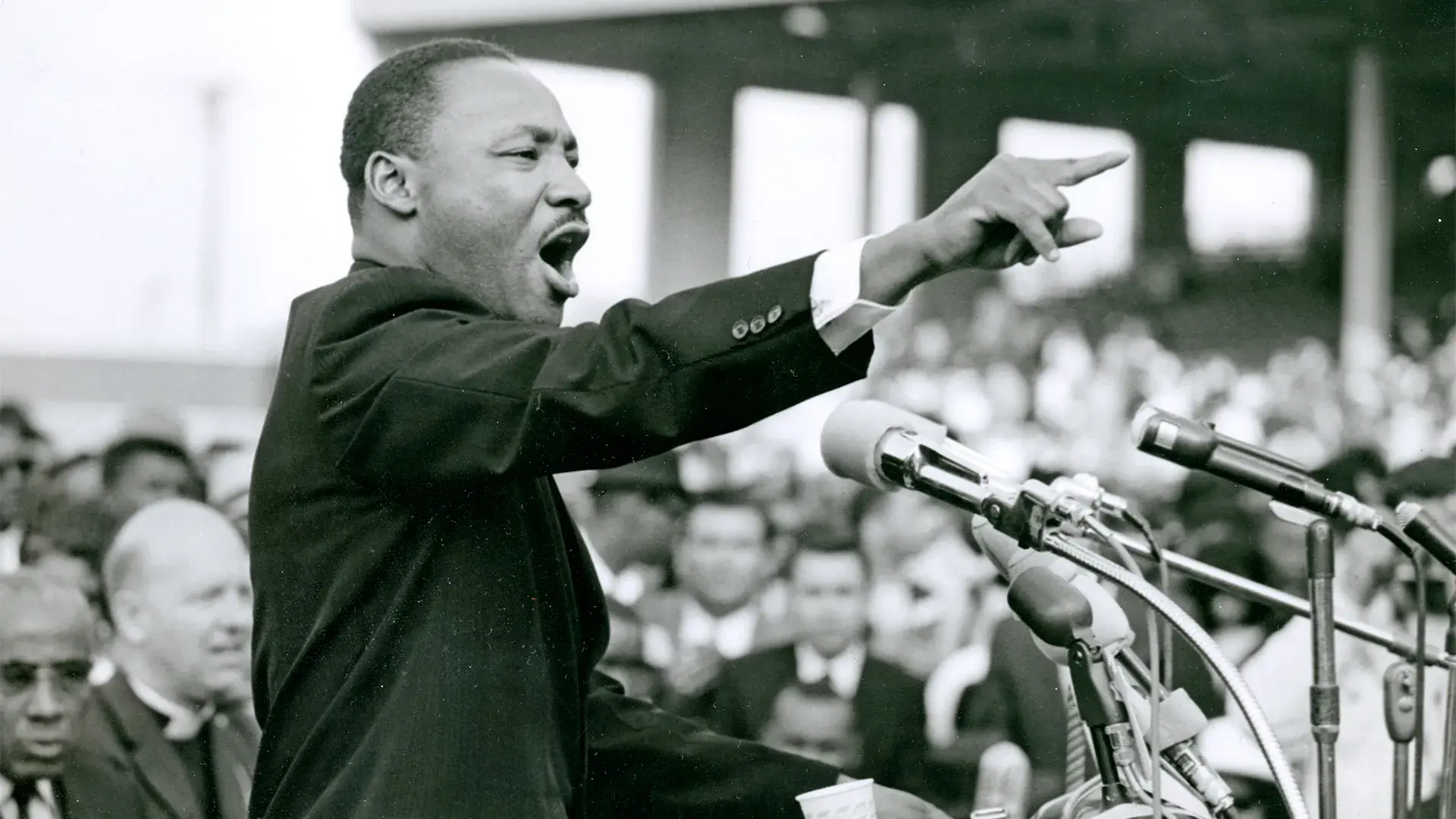
The movement operated on multiple simultaneous fronts. Thurgood Marshall and the NAACP fought in the courts, culminating in Brown v. Board of Education. Martin Luther King Jr. and the SCLC organized mass marches and economic boycotts. Ella Baker and Diane Nash built SNCC as a vehicle for student-led direct action. James Farmer and CORE launched the Freedom Rides. Together they created irresistible moral and political pressure.
The Civil Rights Act of 1964 outlawed discrimination based on race, color, religion, sex, or national origin. The Voting Rights Act of 1965 dismantled the legal machinery of Black disenfranchisement across the South. These victories came at an enormous price — Medgar Evers murdered in his driveway, Martin Luther King Jr. assassinated at 39, hundreds imprisoned and beaten. The work remains unfinished.
The United States declared in 1776 that all men are created equal and endowed with unalienable rights to life, liberty, and the pursuit of happiness. For the next 189 years, millions of its citizens lived under a system explicitly designed to deny them all three. The Civil Rights Movement was America's second founding — the long, painful, and still-unfinished work of making the founding documents mean what they said for every person on American soil.
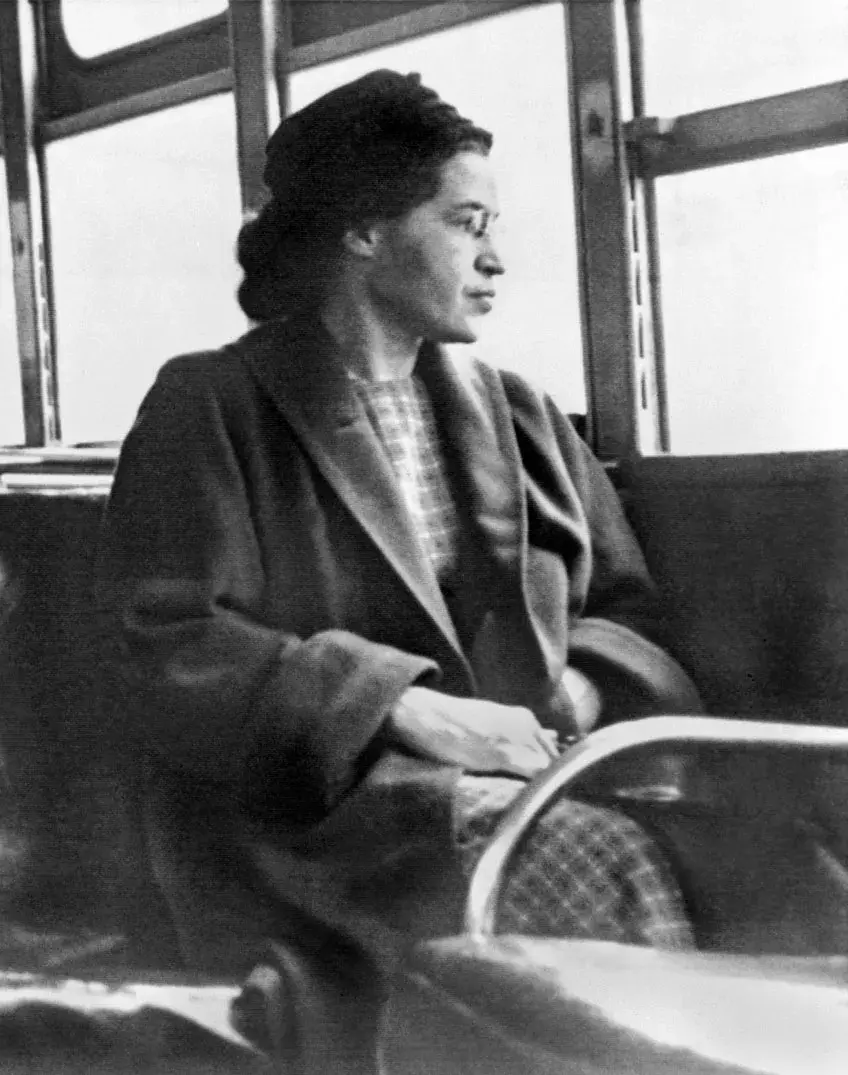
On 1 December 1955, Rosa Parks — NAACP secretary, trained organiser, and decidedly not a woman who had simply been too tired to stand — refused to surrender her bus seat in Montgomery, Alabama, and was arrested. The Black community's response was immediate and devastating to the bus company's finances: a boycott of 381 days that paralysed public transit and introduced the world to a twenty-six-year-old Baptist minister named Martin Luther King Jr. What Montgomery proved was that organised, disciplined nonviolent economic pressure could defeat segregation — and that the movement had to be ready to sustain that pressure through violence, bombing, and assassination.
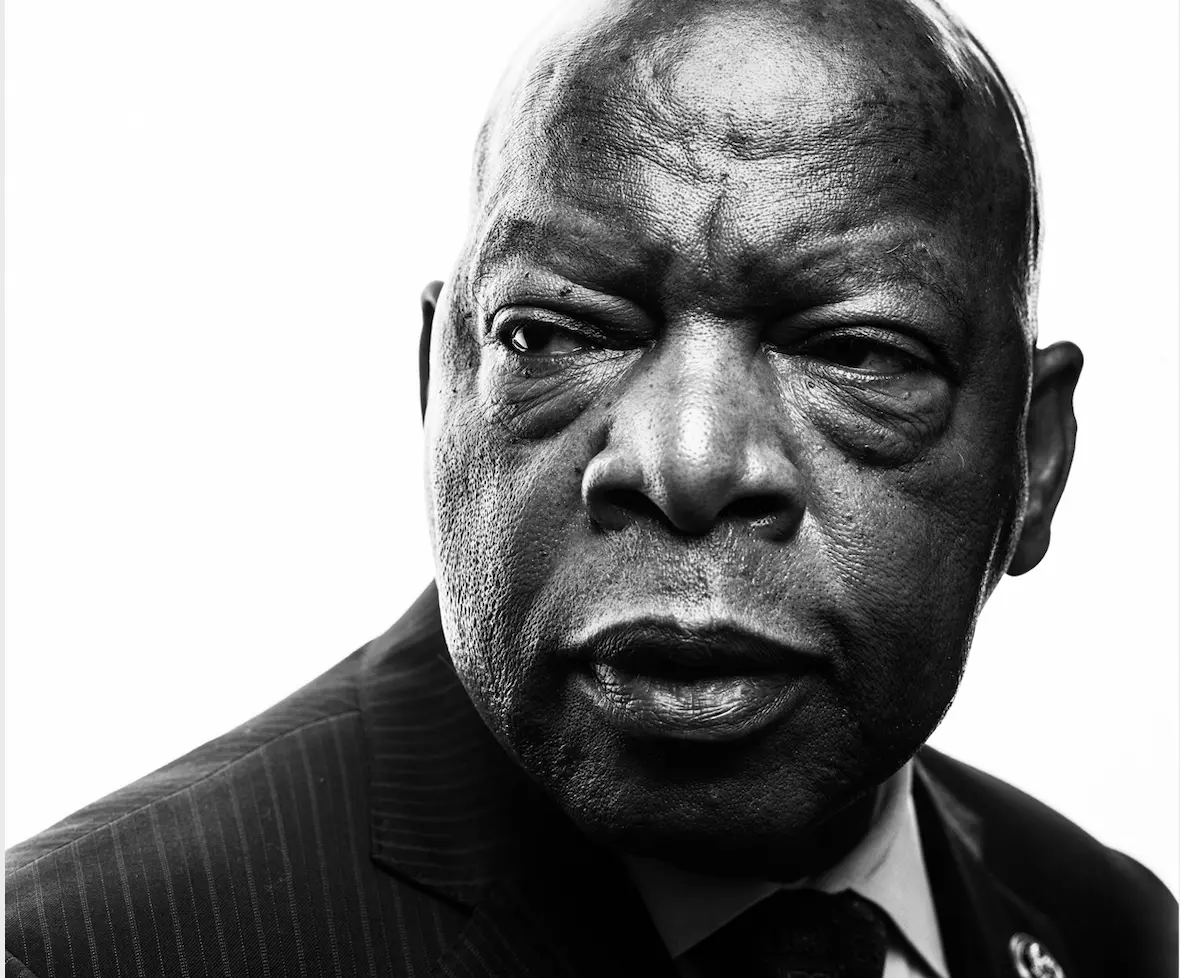
On 1 February 1960, four freshmen from North Carolina A&T sat at a Woolworth's lunch counter in Greensboro, were refused service, and sat until closing time. Within weeks Ella Baker had convened a meeting of student leaders at Shaw University and helped birth SNCC. Diane Nash, John Lewis, James Lawson, and Bob Moses built an organisation that was younger, more democratic, and more willing to go into the most dangerous corners of the rural South than any previous civil rights body. Moses moved alone to Mississippi — perhaps the most perilous state in the nation for a Black activist — and began the methodical, terrifying work of voter registration.
Mississippi was the heart of the terror. Medgar Evers, who had fought for his country in Normandy, was shot in his driveway in 1963 — his murderer not convicted for thirty years. Fannie Lou Hamer was evicted, shot at, and beaten in jail for trying to vote. Emmett Till was murdered at fourteen, and his mother's decision to hold an open-casket funeral shocked the nation into understanding the depth of the hatred it was confronting. Freedom Summer 1964 brought hundreds of volunteers to Mississippi — three of them, James Chaney, Andrew Goodman, and Michael Schwerner, were murdered by the KKK with the complicity of local law enforcement.
In 1963, Fred Shuttlesworth invited King to Birmingham, Alabama, where James Bevel conceived the Children's Crusade — sending thousands of Black schoolchildren into the streets. Commissioner of Public Safety Bull Connor responded with fire hoses and police dogs. The footage broadcast around the world made the moral calculus of segregation impossible to ignore. Four months later, Addie Mae Collins and three other girls were killed when the KKK bombed the 16th Street Baptist Church. The same year, Bayard Rustin organised the March on Washington — 250,000 people mobilised in eight weeks — where King delivered his 'I Have a Dream' address.
In Dallas County, Alabama in 1965, 15,000 Black citizens of voting age were represented by 335 registered voters. Amelia Boynton Robinson had been fighting this absurdity since the 1930s. The Selma campaign, led by Hosea Williams and John Lewis, ended on the Edmund Pettus Bridge on Bloody Sunday — troopers on horseback, clubs and tear gas, Lewis's skull fractured, Boynton Robinson beaten unconscious. The photographs ran on the front pages of every newspaper in the country. President Johnson addressed Congress eight days later using the movement's own words. The Voting Rights Act was signed on 6 August 1965.
The movement's visible leadership was overwhelmingly male. Its operational foundations were largely built by women: Ella Baker, who refused to let any charismatic leader own the movement; Septima Clark, whose Citizenship Schools taught 800,000 people to read and vote; Fannie Lou Hamer, whose raw testimony at the 1964 Democratic Convention moved a nation; Diane Nash, who organised the Freedom Rides when others were ready to abandon them; and Dorothy Height, the only woman on the podium at the March on Washington, who spent forty years building the National Council of Negro Women. Without these women, there would have been no movement to remember.
Choose which cookies you're happy for us to use. You can change this at any time from the "Cookie Settings" link in the footer.