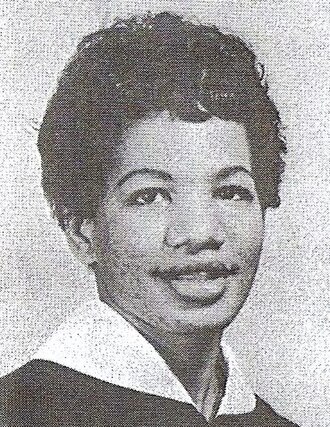
Ruby Doris Smith Robinson, SNCC Freedom Rider and executive secretary, who ran SNCC's day-to-day operations through its most consequential years and died of leukaemia at twenty-five having done more for the movement than most people who lived twice as long.
United States · Civil Rights Movement

Ruby Doris Smith Robinson

Ruby Doris Smith was born on April 25, 1942, in Atlanta, Georgia, the second of seven children of Alice Banks Smith and John Thomas Smith, and grew up in Summerhill, a working-class Black neighbourhood of Atlanta, in conditions that were materially modest and that gave her a formation rooted in the specific experience of Black working-class life in the South rather than in the middle-class professional world from which many of the civil rights movement's student leaders came. She enrolled at Spelman College in Atlanta in 1959 — the historically Black women's college whose tradition of intellectual seriousness and civic engagement had been shaping Atlanta's Black women's leadership for generations — and became involved in the student sit-in movement immediately, participating in the Atlanta sit-in campaigns that Julian Bond and Lonnie King were organising across the city's multiple Black colleges. She became a Freedom Rider at the age of eighteen, travelling south with the Nashville contingent that continued the rides after the original CORE group had been hospitalised by violence, sitting in the white waiting room at the Rock Hill, South Carolina terminal in February 1961 and being imprisoned at Parchman Farm in Mississippi with other riders who refused to pay their fines and demanded to serve out their sentences. She emerged from Parchman as one of the most committed and most respected members of SNCC's founding generation, and she threw herself into the organisation's work with an intensity that became legendary — she was known for the ferocity of her commitment, the directness of her manner, the refusal to accept limits that she regarded as arbitrary, and the willingness to do whatever the work required. She was elected SNCC's executive secretary in 1966 — the person responsible for the organisation's day-to-day operations, its finances, its personnel, its logistics — and she ran the organisation through one of the most tumultuous periods of its existence, when the shift toward Black Power politics under Stokely Carmichael was transforming SNCC's culture and direction. She also, with Frances Beal, wrote the position paper that is sometimes cited as the first document of second-wave feminism produced by the civil rights movement — a document that challenged SNCC's treatment of women and argued that the movement could not be morally consistent about human dignity if it reproduced within its own organisations the gender hierarchies it was fighting against in the broader society. She was diagnosed with leukaemia and died on October 7, 1967, at the age of twenty-five, at the moment when her gifts and her experience had made her one of the movement's most indispensable figures. She had done, by twenty-five, more than most people accomplish in a lifetime.

United States SNCC Freedom Rides Spelman College Executive Secretary Women's Rights

Born: 25 April 1942, Atlanta, Georgia, USA  |  Died: 7 October 1967, Atlanta, Georgia, USA — aged twenty-five

At a Glance

Full NameRuby Doris Smith; married Clifford Robinson 1964; known professionally as Ruby Doris Smith Robinson; born 25 April 1942, Atlanta, Georgia; grew up in the Summerhill neighbourhood; enrolled at Spelman College 1959; participated in Atlanta sit-in movement; became a Freedom Rider 1961; imprisoned at Parchman Farm; joined SNCC full-time; elected SNCC executive secretary 1966; co-wrote position paper on women in the civil rights movement; diagnosed with leukaemia; died 7 October 1967, Atlanta, Georgia, aged twenty-five
Born25 April 1942, Atlanta, Georgia; second of seven children of Alice Banks Smith and John Thomas Smith; grew up in Summerhill, a working-class Black Atlanta neighbourhood; her working-class origins gave her a formation rooted in the daily experience of Black poverty that distinguished her from some of the movement's more privileged student leaders; enrolled at Spelman College in 1959 and immediately became involved in the Atlanta sit-in campaign that Lonnie King and Julian Bond were organising
Died7 October 1967, Atlanta, Georgia; died of leukaemia at the age of twenty-five; her death came at the moment when her experience and her gifts had made her one of SNCC's most indispensable figures; she was mourned by SNCC and the broader civil rights community as the loss of someone whose contribution had been extraordinary and whose contribution still to come had been cut off by a disease that gave the injustice of her early death a quality of double tragedy — she had worked so hard for a freedom she would not live to fully inhabit
The Freedom Rides and Parchman FarmBecame a Freedom Rider at eighteen, travelling with the Nashville student contingent that continued the rides after the original CORE group had been hospitalised by violence in Anniston and Birmingham; was imprisoned at Parchman Farm in Mississippi with other riders who refused to pay fines and demanded to serve their sentences — a strategy designed to overwhelm the Mississippi jail system with the economic cost of imprisoning hundreds of civil rights workers; her Parchman experience was one of the most formative of her movement career, establishing her credentials in the organisation and deepening the commitment that the Atlanta sit-ins had begun
SNCC Executive SecretaryWas elected SNCC's executive secretary in 1966, making her the organisation's chief administrative officer responsible for its day-to-day operations, finances, personnel, and logistics; her tenure as executive secretary coincided with the most turbulent period in SNCC's history — the shift toward Black Power politics under Stokely Carmichael's chairmanship was transforming the organisation's culture and direction, expelling white members, and repositioning its political stance; she managed the organisation's practical functioning through this transformation while maintaining the operational continuity that the shift required without disrupting
The Women's Position PaperCo-wrote, with Frances Beal, a position paper on the position of women in the civil rights movement — sometimes cited as "the Lowly Position of Women in SNCC" — that argued the movement could not be morally consistent about human dignity if it reproduced within its own organisations the gender hierarchies that existed in the broader society; the paper challenged SNCC's practice of assigning women to administrative and support roles while men led campaigns and received public recognition; it is sometimes cited as one of the founding documents of second-wave feminism and was influential on the early women's liberation movement
The Quality of Her PresenceWas known throughout SNCC for the ferocity of her commitment, the directness of her manner, and the refusal to accept limitations she regarded as arbitrary; multiple accounts from SNCC veterans describe her as someone whose presence in a room changed the room — whose combination of intellectual seriousness, organisational competence, and personal force made her someone that everyone in SNCC took seriously and that many were somewhat afraid of in the productive sense; her directness about gender inequality within SNCC was of a piece with this general unwillingness to accept arrangements she considered unjust

Summerhill, Spelman, and the Working-Class Roots of a Movement Leader

Ruby Doris Smith grew up in Summerhill, Atlanta — a working-class Black neighbourhood whose distance from the relative privilege of the Auburn Avenue professional world gave her a formation rooted in the daily experience of Black poverty rather than in the middle-class aspirations that shaped many of the movement's student leaders. This formation mattered: she brought to her SNCC work an understanding of what the movement was fighting for that was grounded in direct economic experience rather than in theoretical solidarity with people whose conditions she had not personally shared.

Her enrollment at Spelman College in 1959 connected her to the historically Black women's college whose tradition of intellectual seriousness and civic engagement had been shaping Atlanta's Black women's leadership for generations. Spelman's culture of high expectations and serious engagement with the world's injustices was the institutional context in which Smith's political consciousness met its first serious organisational expression: the Atlanta sit-in campaign that Lonnie King and Julian Bond were building across the city's multiple Black colleges. She participated from the beginning, and her participation was not peripheral but active and committed.

Her trajectory from Spelman student to Freedom Rider to SNCC executive secretary in the space of seven years was extraordinary by any measure — seven years in which she had been imprisoned at Parchman Farm, had worked in some of the movement's most demanding organising environments, had developed the operational intelligence and the personal force that made her the right person to run SNCC's administrative operations, and had grown into one of the most consequential figures in an organisation of extraordinary people. She did all of this before she was twenty-five years old.

Parchman Farm and the Formation of a Freedom Fighter

Smith's imprisonment at Parchman Farm in Mississippi in 1961 — following her participation in the Freedom Rides at age eighteen — was one of the most physically and psychologically demanding experiences that any movement participant had described. Parchman Farm was Mississippi's state prison, a notorious institution whose conditions were brutal, and the Freedom Riders who refused to pay their fines and demanded to serve their sentences were subjected to conditions designed to break their commitment. Many were held in cells without mattresses, without adequate food, without any of the amenities that even the normal prison experience provided.

The strategy of refusing to pay and demanding to serve was itself a strategic calculation: the cost of imprisoning hundreds of Freedom Riders would be substantial for Mississippi's prison system, and the moral spectacle of jailing students for sitting in the white waiting room of a bus terminal would generate national attention that the Justice Department and the Kennedy administration could not ignore indefinitely. Smith participated in this strategy with the same total commitment she brought to everything — not as a tactic she was performing but as an expression of a conviction she held absolutely.

She emerged from Parchman with her commitment deepened rather than broken, and with the specific credibility that comes from having done the hardest thing the movement required and having done it with grace. This credibility was one of the resources that made her subsequent SNCC leadership possible — people who had seen her at Parchman knew what she was made of, and that knowledge informed their confidence in her operational leadership when she became executive secretary.

The Position Paper and the Movement's Internal Contradiction

The position paper on women in the civil rights movement that Smith co-wrote with Frances Beal was one of the most consequential documents produced by the movement — not for its effect on SNCC's own practices, which were slow to change, but for its effect on the women who read it and who recognised in its argument their own experience of the specific contradiction it named. The contradiction was simple: a movement that was arguing for the human dignity of Black people was simultaneously assigning its women to administrative and support roles, treating their intellectual contributions as less significant than men's, and maintaining within its own organisation precisely the hierarchical arrangements that it was fighting against in the broader society.

This was not a problem unique to SNCC — it was a characteristic feature of virtually every social movement organisation in American history, and Smith's paper was among the first internal movement documents to name it explicitly rather than merely experiencing it privately. The paper's influence on the early women's liberation movement — on the women who came out of the civil rights movement and brought their organising experience into the emerging feminist movement — was significant, and the paper is sometimes cited as one of the founding documents of second-wave feminism.

The specific courage required to write such a paper — to challenge, from within, the organisation she was most committed to, on an issue where the organisation's most prominent figures were likely to be defensive — was characteristic of Smith's entire approach to the movement. She did not accept limits she regarded as unjust, including the limits that her own organisation was placing on her and on the other women who were doing essential work while receiving inadequate recognition for it.

Twenty-Five Years and Everything That Was Left Undone

Ruby Doris Smith Robinson died on October 7, 1967, at the age of twenty-five. The leukaemia that killed her was diagnosed during her tenure as SNCC's executive secretary, and she continued to work in the organisation as long as her health permitted. Her death came at the moment when her experience and her gifts had made her one of the movement's most genuinely indispensable people — not indispensable in the way that charismatic leaders are sometimes described as indispensable, but indispensable in the more literal sense that the specific combination of operational intelligence, personal force, and organisational commitment she brought to SNCC's executive secretariat was genuinely difficult to replace.

She is among the movement's most underrecognised major figures — underrecognised partly because she died so young, partly because executive secretaries are structurally less visible than the charismatic figures they support, partly because the historiography of the movement has been slow to give women the credit that their contributions deserve. The recovery of her story has been part of the broader recovery of Black women's contributions to the movement, a recovery that historians including Cynthia Griggs Fleming have advanced through serious biographical and archival research.

She had done, by twenty-five, more than most people accomplish in a full lifetime in the movement. She had been imprisoned at Parchman Farm. She had helped to run SNCC through some of its most consequential years. She had written the document that challenged the movement's gender contradictions. She had built the organisational infrastructure that the movement's campaigns depended on. And she had done all of this while growing into a leader whose development had barely begun when leukaemia ended it. The movement she served needed her for much longer than it got her.

Other Civil Rights Movement Profiles

USA · Civil Rights Diane Nash Fellow SNCC woman leader of extraordinary strategic intelligence whose career trajectory paralleled Smith Robinson's in its combination of courage and organisational gifts USA · Civil Rights Ella Baker SNCC founding mentor whose insistence on developing every member's leadership capacity was the philosophy Smith Robinson's own work embodied USA · Civil Rights John Lewis SNCC chairman during Smith Robinson's executive secretariat years — the public face alongside her operational backbone USA · Civil Rights Bob Moses SNCC Mississippi director who worked alongside Smith Robinson through SNCC's most consequential years USA · Civil Rights Stokely Carmichael SNCC chairman during Smith Robinson's executive secretariat — whose Black Power turn she managed administratively USA · Civil Rights Julian Bond Fellow Atlanta sit-in co-founder whose path from Atlanta student activism to SNCC leadership paralleled Smith Robinson's USA · Civil Rights Fannie Lou Hamer Fellow Black woman whose movement contribution the standard narrative undervalued — the same pattern of underrecognition that Smith Robinson experienced USA · Civil Rights Prathia Hall Fellow SNCC woman whose preaching gifts and field organising complemented Smith Robinson's operational and administrative leadership USA · Civil Rights Anne Moody Mississippi civil rights activist whose Coming of Age in Mississippi documented the same conditions Smith Robinson's SNCC work was fighting against USA · Civil Rights Bernice Johnson Reagon Fellow SNCC participant whose Albany Movement singing was one dimension of the same generation of commitment that Smith Robinson's operational work represented
Share X Facebook WhatsApp LinkedIn