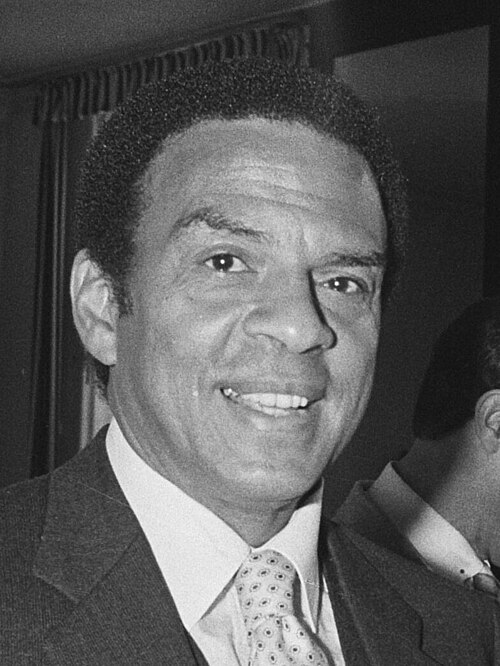
At a Glance
New Orleans, Howard, Hartford: The Formation of a Minister-Organizer
Andrew Young's New Orleans childhood was shaped by the particular circumstances of middle-class Black life in a city whose Jim Crow system was comprehensive and brutal but whose Black community had, over generations, developed institutions of considerable sophistication and depth. His father's dental practice gave the family a material security that was rare in the Black South of the 1930s and 1940s, and that security was accompanied by high expectations: Young was expected to be educated, to be professional, to be excellent. The family's Catholicism — New Orleans's Black community included a significant Catholic element whose institutional connections and cultural traditions distinguished it from the Protestant-dominated Black South of most other cities — was another element of the formation that shaped his later career.
He attended Howard University, the historically Black institution in Washington D.C. that served as the intellectual center of Black America in the mid-twentieth century — where Thurgood Marshall had studied law, where E. Franklin Frazier had taught sociology, where the legal and intellectual strategy of the civil rights movement was being worked out in classrooms and faculty offices. The Howard experience exposed Young to the full range of Black American intellectual and political life and gave him a peer group that would become the leadership class of the civil rights era.
His decision to enter Hartford Theological Seminary and pursue ordination as a Congregationalist minister was a choice that would define his subsequent career more than any other. The Congregationalist tradition's emphasis on local church autonomy, on the social gospel connection between religious faith and social action, and on the educated, articulate ministry as a vehicle of community leadership gave Young a framework for his political engagement that was genuinely theological rather than merely instrumental — he was not a minister who used the pulpit as a platform for political organizing but a man whose political organizing flowed from his understanding of what his faith required of him in the world as he found it.
Joining the SCLC: The Strategy of Negotiated Change
Young's entry into the SCLC in 1961 came through his work with youth voter registration programs in rural Georgia — work that brought him into contact with the movement's organizational infrastructure and that demonstrated to SCLC leadership that he had both the energy and the strategic intelligence that they needed. He rose through the organization's hierarchy with unusual speed, reaching the position of executive director within three years of joining — a trajectory that reflected the combination of his abilities and the SCLC's need for people who could do what Young could do.
What Young could do, distinctively, was negotiate. The SCLC's strategy of nonviolent direct action was designed to create crises — to make the maintenance of segregation so costly, in economic disruption, national embarrassment, and political pressure, that white authorities and business interests would agree to change. But creating the crisis was only half the strategy; resolving it on terms favorable to the movement required someone who could sit across the table from white Birmingham businessmen or white Alabama officials and translate the movement's demands into agreements that those men could accept and that the movement could live with. Young was unusually good at this — good at understanding what the other side needed and what they could give, at finding the formulation that allowed both parties to say they had won while the movement's core demands were met.
His role in the Birmingham campaign of 1963 was a demonstration of this capacity. When the SCLC's strategy of filling the jails had produced the confrontation with Bull Connor's fire hoses and police dogs — the images that shocked the nation — it was Young who spent long hours negotiating with Birmingham's Senior Citizens Committee, the city's white business establishment, to produce the settlement of May 1963 that desegregated downtown businesses and committed to Black employment. The settlement was imperfect — it was resisted by the most extreme elements of white Birmingham, and the bombing of the Gaston Motel and A.D. King's home followed within hours — but it was real, and it was achieved through the combination of nonviolent pressure and skilled negotiation that Young embodied.
The Birmingham Campaign, Selma, and the Legislative Victories
Young's strategic contribution to the civil rights movement's campaign years — 1963 through 1965 — was to provide the institutional and negotiating capacity that translated demonstrations into agreements and agreements into legislative action. He was part of the SCLC delegation that traveled to Washington to lobby for the Civil Rights Act in 1963 and 1964, using his relationships with white moderates and his reputation as a reasonable interlocutor to make the case for federal action in rooms where a more overtly confrontational approach would have been less effective.
In Selma during the voting rights campaign of 1965, Young was again one of the SCLC's principal operatives — present through the demonstrations, the march attempts, and the negotiations with the Johnson administration that eventually produced the Voting Rights Act. His particular skill was in maintaining the relationship between the movement and its federal allies without allowing those allies to use the relationship to slow down or dilute the movement's demands. The Johnson administration needed the SCLC's cooperation, and the SCLC needed Johnson's action, and Young was one of the people who managed that mutual dependency with sufficient tactical sophistication to extract maximum legislative results from it.
His position within the SCLC leadership also gave him a close working relationship with Martin Luther King Jr. that was one of the formative relationships of his life. King trusted Young's judgment, relied on his negotiating skills, and gave him significant authority within the organization's decision-making processes. Young was present for the key moments of the campaign years — the Birmingham settlement, the Selma marches, the March on Washington, the Poor People's Campaign — not as a bystander but as an active participant whose contributions shaped outcomes at every stage.
Memphis, April 4, 1968: Witnessing the Assassination
Andrew Young was at the Lorraine Motel in Memphis on the evening of April 4, 1968, the night that James Earl Ray shot Martin Luther King Jr. on the motel balcony. Young was in the courtyard below, engaged in conversation with other SCLC staff, when the shot was fired. He was the one who looked up at the sound of the shot and then pointed — toward the rooming house across the street from which the shot had come, in the instinctive gesture of someone identifying the direction of unexpected violence.
King was dead within an hour. Young was thirty-six years old. He had joined the SCLC seven years earlier as a young minister with strategic intelligence and extraordinary negotiating skills, and the organization he had given those years to had just lost its center, its moral authority, and its organizing focus in a single shot fired from a white man's rifle. The years that followed — the fragmentation of the movement, the rise of Black Power politics that were skeptical of the SCLC's coalition-building strategy, the Vietnam War's drain on both federal resources and national attention — were years in which the movement that Young had helped to build was struggling to find its next form.
His response to that moment of loss and fragmentation was to move from movement politics to electoral politics — to translate what the civil rights campaigns had won, in terms of voting rights and political access, into the actual exercise of political power through the institutions of American democracy. This was not a retreat from the movement's values but an evolution of its strategy: having won the right to vote and the formal right to equal treatment under law, the next phase required using those rights to build the political power that could defend and extend the movement's gains.
Congress, the UN, and the Practice of Black Diplomacy
Young's 1972 congressional campaign in Georgia's 5th District — which included Atlanta and was majority white — was in itself a demonstration of the transformation that the Voting Rights Act had produced. A Black candidate winning a majority-white congressional district in Georgia in 1972 would have been literally impossible before 1965; it required not only the formal right to vote but the organizational infrastructure, the political relationships across racial lines, and the strategic campaign capacity that Young had been developing for a decade in the civil rights movement. He won, becoming the first Black congressman from Georgia since 1871, and he won in a way that demonstrated the viability of the coalition politics that he had always believed in — a campaign built on Black voter mobilization plus white liberal and moderate support.
His three terms in Congress gave him a national platform and a focus on foreign policy that would define the next stage of his career. He developed expertise in African affairs at precisely the moment when the decolonization of the continent was producing a set of new nations whose relationship with the United States was being shaped in part by the civil rights movement's international resonance — African leaders who had been watching Bull Connor's fire hoses and the March on Washington with intense interest were now in a position to make choices about alignment and relationship that had real consequences for American foreign policy.
President Carter's appointment of Young as UN ambassador in 1977 gave him a platform from which to practice what might be called Black diplomacy — an approach to American foreign policy shaped by the experience of racial oppression and by the conviction that American credibility in the developing world required demonstrating that the United States was actually committed to the principles of equality and self-determination that it claimed to champion. His advocacy for majority rule in Zimbabwe and Namibia and his engagement with African liberation movements placed him in conflict with the more cautious elements of the Carter State Department but built relationships with African leaders that gave the United States access and credibility it would not otherwise have had.
His resignation over the PLO meeting controversy in 1979 ended his UN career but not his political career. The controversy illuminated the limits of what an African American diplomat could do within the constraints of American Middle East policy, and Young's unauthorized meeting with the PLO representative — motivated by his belief that direct engagement was more productive than isolation — was the kind of pragmatic, boundary-testing diplomacy that had served him well in the civil rights movement but that the formal structures of American foreign policy could not accommodate.
Mayor of Atlanta and the 1996 Olympics Legacy
Young's two terms as Mayor of Atlanta from 1982 to 1990 were the culmination of a trajectory that had taken him from rural Georgia ministry to the SCLC to Congress to the UN and back to the city that had been the capital of the civil rights movement. Atlanta under Young continued the transformation that his predecessor Maynard Jackson had begun — from a southern regional city to an international business and transportation hub — and Young's particular contribution was to use his diplomatic relationships to accelerate that transformation.
His pursuit of the 1996 Summer Olympics for Atlanta began before he left the mayor's office and continued through the years of his successors. The successful bid — announced in 1990, when Tokyo, Melbourne, Manchester, and Belgrade were all considered stronger candidates — was one of the most remarkable coups in modern Olympic politics, and Young's role in it was central. His relationships with African National Olympic Committees, built during his years of advocacy for African liberation movements, were decisive in the vote that awarded the Games to Atlanta over Athens, the sentimental favorite for the centenary Olympics. The 1996 Games brought investment, infrastructure, and international attention to Atlanta on a scale that transformed the city's physical and economic landscape, and they were won in significant part because Andrew Young had spent three decades building relationships with African leaders who had long memories and were ready to do a favor for the man who had championed their causes in Washington and New York.
Legacy: The Long Arc from Movement to Institution
Andrew Young's career represents one of the clearest available illustrations of the proposition that movement politics and institutional politics are not alternatives but sequential phases of the same project. The civil rights movement won formal rights through nonviolent direct action, legal challenge, and political pressure; consolidating and extending those rights required building institutional political power through electoral politics, executive office, and diplomatic engagement. Young moved through both phases with unusual effectiveness, bringing the movement's values and relationships into the institutions of American political life and using those institutions to advance the agenda that the movement had defined.
The criticisms of his career — that his pragmatism sometimes shaded into accommodation, that his willingness to work within existing power structures led him to make compromises that more uncompromising activists would not have made — are real and have substance. His later years included positions and associations that critics found inconsistent with his civil rights legacy, particularly around corporate relationships and development projects in Atlanta. These criticisms are part of the honest accounting of a long career in public life, and they do not erase the genuine achievement of what he did in Birmingham, in Selma, in Congress, and at the United Nations.
He is the rare figure whose biography spans the full transformation of Black American political life in the second half of the twentieth century — from the mass meetings at Brown Chapel to the UN Security Council, from the streets of Birmingham to the mayor's office of one of America's major cities. The world he helped to make, and the institutions he helped to build, are the measure of his life's work.