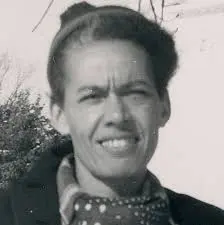
At a Glance
Durham, the Genealogy of Contradiction, and the Education of a Lawyer
Pauli Murray grew up in Durham, North Carolina, in a family whose genealogy was a compressed version of American racial history's full contradictions. Her father's family included free Black people and formerly enslaved people from antebellum North Carolina; her mother's family included prominent white slaveholders. The specific family history that she documented in "Proud Shoes" — the memoir of her family's North Carolina roots published in 1956 — was one of the most direct excavations in American literature of what the racial order's insistence on clear racial categories obscured: the actual history of racial mixing that made those categories fictions their enforcers were determined to maintain.
Durham's particular racial environment — a city with a substantial Black middle class anchored by the North Carolina Mutual Life Insurance Company and with a relatively developed Black institutional life, but also a city where the racial order's policing was especially ferocious because the history of racial mixing made it especially insecure — was the specific context in which Murray developed her understanding of what the racial order was and what it required of those who challenged it. Her rejection from the University of North Carolina in 1938 on grounds of race was the formal expression of this order; her rejection from Harvard Law School in 1944 on grounds of sex was the formal expression of its gender dimension. Both rejections shaped the legal analysis she subsequently developed.
Howard University's School of Law in Washington D.C. was, in 1944, the institutional home of the most sophisticated civil rights legal thinking in America — the place where Thurgood Marshall and Charles Hamilton Houston had developed the legal strategy that would eventually produce Brown v. Board of Education, where the NAACP's legal team had been training and the cases had been being built. Murray's senior thesis at Howard — the argument that Plessy v. Ferguson's separate but equal doctrine was constitutionally incoherent because segregation necessarily produced inequality — was the product of this intellectual environment and was, by Thurgood Marshall's own subsequent acknowledgment, the argument that the Brown strategy adopted and that won.
The Fourteenth Amendment for Women: The Argument Ruth Bader Ginsburg Used
Murray's insight that the Fourteenth Amendment's equal protection clause applied to sex as well as to race — articulated most formally in the 1965 article she co-wrote with Mary O. Eastwood — was one of the most consequential legal arguments in American constitutional history, and it was made more than a decade before Ruth Bader Ginsburg began using it in her Supreme Court advocacy. The argument's structure was the same as the argument Murray had made about race in her Howard thesis: that the equal protection clause's prohibition on arbitrary discrimination applied to sex-based classifications just as it applied to race-based ones, and that the legal framework for challenging racial segregation could be applied to the legal framework for challenging sex discrimination.
Ginsburg, who was developing the ACLU Women's Rights Project's Supreme Court strategy in the early 1970s, found Murray's argument and built her legal strategy on it. She acknowledged Murray explicitly — including Murray as a co-author on briefs and naming her in Supreme Court opinions — in ways that were both accurate about the intellectual debt and unusual in the legal profession's ordinary practices of attribution. The landmark gender equality cases that Ginsburg argued in the 1970s — Reed v. Reed, Frontiero v. Richardson, Craig v. Boren — were applications of Murray's constitutional argument to specific discriminatory laws, and the doctrinal framework for sex-based equal protection that those cases established was the framework that Murray had theorised.
The term "Jane Crow" that Murray coined to describe the intersecting oppressions of racism and sexism was not merely a rhetorical flourish but a substantive analytical contribution: it named a form of discrimination that was not adequately captured by either "Jim Crow" (which foregrounded race) or the sex discrimination that the women's movement was analysing (which often foregrounded white women's experience). Murray's "Jane Crow" concept anticipated by decades the intersectionality framework that Kimberlé Crenshaw would develop in the late 1980s, identifying the specific experience of Black women as requiring analysis that neither a race-only nor a sex-only framework could provide.
The 1940 Bus Refusal and the Pattern of Principled Confrontation
Murray's 1940 refusal to move to the back of a Greyhound bus in Petersburg, Virginia — fifteen years before Rosa Parks's December 1955 arrest in Montgomery — was part of a pattern of principled confrontation with the racial order that characterised her entire life and that was inseparable from her legal analysis. She was not a person who developed legal arguments about civil rights from a safe distance; she was a person who had been living the conditions that the legal arguments were addressing and who brought that lived experience to the analytical work.
The 1940 bus arrest did not produce a nationally organised boycott or a Supreme Court case, because the movement infrastructure that would have been required to sustain either did not yet exist in the form it would take by 1955. But Murray's documentation of the experience — her written account of what had happened, her analysis of its legal dimensions — was part of the accumulation of documented confrontations and legal analyses that eventually produced the framework the Montgomery movement would use. The individual confrontation mattered even without the organisational infrastructure to follow through on it; it contributed to the record from which the movement subsequently drew.
The First Eucharist at the Chapel of the Cross
Murray's ordination as an Episcopal priest in January 1977 — at sixty-six years old, becoming the first Black woman to be ordained in the Episcopal Church — came after decades of civil rights law, feminist advocacy, and the full range of her intellectual and political work. Her choice to celebrate her first Eucharist at the Chapel of the Cross in Chapel Hill, North Carolina, was the most theologically rich act of her life: she celebrated the Eucharist at the church where her grandmother Cornelia Smith Fitzgerald had been baptised as an enslaved person.
The act was a statement about the continuity of faith across the rupture of enslavement — about the persistence of spiritual life through conditions designed to destroy the personhood of the people who maintained it. It was also a statement about the arc of her family's history: from the grandmother baptised as property in that chapel to the granddaughter serving as its celebrant as an ordained priest of the church that had once refused to recognise her grandmother's full humanity. The chapel itself, the sacrament, and the person administering it were all connected through the specific family history that Murray had spent her life living and documenting.
She died in Pittsburgh in July 1985, before the full recognition of her contributions had been established. The subsequent decades have produced the recognition — the canonisation, the Yale college, the Ginsburg attributions — that the pattern of her career had made predictable: the most analytically important figures of the civil rights movement being recognised posthumously, their contributions acknowledged only when the people who built on them had achieved enough prominence to force the attribution. She was claimed by everyone who came after her. She deserved to be known by everyone who came before them.