Libya's Resistance — The Desert War Against Italian Fascism
Italy's invasion of Ottoman Libya in September 1911 was justified by the Italian government as a "civilising mission" to a territory it described as an empty desert. It was neither empty nor a desert: Libya's population of roughly a million people included settled farmers in the Jabal Akhdar hills, nomadic pastoralists across the Cyrenaican plateau, merchants and scholars of the coastal cities, and the network of Sanussi lodges — zawiya — that had spread Islamic education, trade facilitation, and community organisation across the Sahara since the 1840s. The Italian army expected to occupy Libya in weeks. It was still fighting there twenty years later. The resistance it encountered — led by a succession of Ottoman officers, Sanussi sheikhs, tribal leaders, and eventually by the extraordinary figure of Omar Mukhtar — was among the most sustained and costly armed resistances to European colonialism in African history.
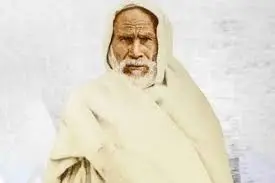
Omar Mukhtar was born in approximately 1858 in a village in the Jabal Akhdar and spent his early adult life as a teacher of the Quran in the Sanussi network. He had already fought the French in the Sahara before the Italian invasion, and when Italy landed at Tripoli he was in his early fifties — an age at which most men of his era were old. He commanded the Sanussi guerrilla forces in Cyrenaica with a tactical intelligence that repeatedly frustrated the Italian army for two decades, keeping a force of several thousand fighters mobile, supplied, and effective across some of the most inhospitable terrain on earth. He was given multiple opportunities to negotiate and repeatedly refused. "We do not surrender," he told his captors when he was finally taken wounded near Slonta in September 1931. "We win or we die." He was seventy-three years old. The Italians convened a military tribunal on 15 September 1931 and hanged him the following day at the Suluq concentration camp before a crowd of twenty thousand Libyans brought there to witness the execution. The hanging was designed as a demonstration of Italian power. It made Mukhtar the most celebrated martyr of the Arab and African anti-colonial struggle.
The methods Italy used to suppress the Libyan resistance have been examined by historians as an early instance of what would later be called genocide. Governor Pietro Badoglio and General Rodolfo Graziani — who would later lead Italian forces in Ethiopia and became known as "the Butcher of Fezzan" — constructed a 300-kilometre barbed-wire fence along the Libyan-Egyptian border to prevent the guerrillas from resupplying from Egypt, herded the entire civilian population of the Jabal Akhdar — roughly 100,000 people — into concentration camps along the coast, used poison gas in the field, and executed civilians by aerial bombardment. Between 1911 and 1943, Libya's population fell from roughly 1.5 million to approximately 800,000. The demographic collapse — caused by warfare, famine in the camps, disease, and mass deportation — was proportionally among the worst visited on any African population during the colonial era.
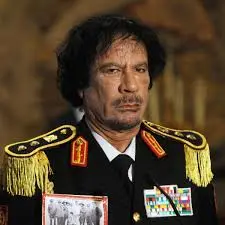
The Sanussi leader Idris al-Senussi had spent most of the Italian period in exile in Egypt, maintaining the Sanussi organisation abroad while negotiating with both Italian authorities and the British, who used the Sanussi network as an intelligence and military asset during the Second World War. When the war ended and the United Nations debated Libya's fate, Idris emerged as the consensus candidate for a Libyan monarchy: acceptable to the British, who wanted a military base; acceptable to the Americans, who wanted an air base at Wheelus; and acceptable to enough of Libya's factional political landscape to permit a constitutional settlement. Libya became independent on 24 December 1951 as a constitutional monarchy under King Idris — the poorest country on earth at that moment, with a per capita income lower than that of India, no universities, and a literacy rate estimated at around five percent. The discovery of oil in 1959 transformed the material basis of the state without transforming its political character. In September 1969, a group of army officers under the twenty-seven-year-old Muammar Gaddafi overthrew Idris while he was in Turkey for medical treatment. Libya has not had a stable government since the 2011 revolution that killed Gaddafi. The political consequences of Italian colonialism — the demographic catastrophe, the destruction of pre-colonial institutions, the artificial unity of three historically distinct regions — have never been resolved.