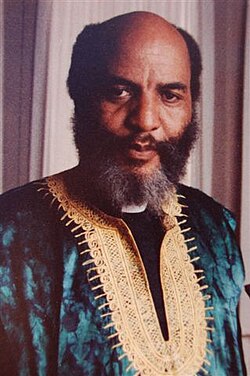
James Bevel, SCLC strategist and Nashville movement veteran who designed the Birmingham Children's Crusade and organised the Selma to Montgomery marches — whose extraordinary contributions to the civil rights movement are inseparable from his subsequent conviction for sexual abuse of his own children.
United States · Civil Rights Movement

James Bevel

James Luther Bevel was born on October 19, 1936, in Itta Bena, Mississippi, the son of a sharecropper family, and grew up in the Mississippi Delta's most unrelenting poverty before his exceptional intelligence and his restless energy drove him north to the American Baptist Theological Seminary in Nashville, Tennessee — the same seminary where John Lewis, Diane Nash, and Bernard Lafayette were studying, and where James Lawson's workshops in Gandhian nonviolence were training the generation of activists who would found SNCC and shape the SCLC's most important campaigns. Bevel was, by the consensus of people who worked with him during the movement's campaign years, the most intellectually creative and the most tactically daring of the SCLC's strategists — the person most likely to come up with the unconventional idea that would break a campaign's stalemate, and the person most willing to implement it regardless of the risks or the objections of colleagues who preferred more cautious approaches. He designed, with Diane Nash (whom he married in 1961), the Birmingham Children's Crusade of May 1963 — the decision to use thousands of Black schoolchildren as demonstrators in Birmingham's streets, sending them into Bull Connor's fire hoses and police dogs in a strategy that was controversial within the movement and that produced the most consequential photographs of the civil rights era, breaking open the political conditions for the Civil Rights Act. He organised the Selma to Montgomery marches of 1965, working in the period leading up to the first march to build the community mobilisation that made the marches possible and serving as one of the SCLC's principal organisers throughout the Selma campaign. He worked on the Chicago open housing campaign of 1966, King's attempt to extend the movement's methods to northern urban conditions — a campaign whose failure revealed the limits of the SCLC's southern direct action methodology in a context where the mechanisms of residential segregation were more diffuse and more resistant to the confrontational tactics that had worked in Birmingham and Selma. He proposed, to King's initial resistance and eventual agreement, the Vietnam moratorium that became the Poor People's Campaign's companion demand — the insistence that the movement could not remain silent about a war that was simultaneously killing disproportionate numbers of Black soldiers and diverting federal resources from the anti-poverty programmes that the movement's economic justice agenda required. After King's assassination in 1968, Bevel's career became erratic — he pursued various causes with the same intensity but without the organisational structure that the SCLC had provided, and his personal behaviour became increasingly problematic. In 2008, he was convicted in Virginia of incest — sexual abuse of one of his daughters, with evidence of similar conduct toward other children — and sentenced to fifteen years in prison. He died of pancreatic cancer in prison on December 19, 2008, at the age of seventy-two, having served only a few months of his sentence. His story is the most extreme example in the civil rights movement's history of the coexistence of genuine strategic genius and genuine moral catastrophe in a single person.

United States SCLC Nashville Sit-Ins Birmingham Children's Crusade Selma Vietnam War Opposition

Born: 19 October 1936, Itta Bena, Mississippi, USA  |  Died: 19 December 2008, Lorton, Virginia, USA — aged seventy-two

At a Glance

Full NameJames Luther Bevel; born 19 October 1936, Itta Bena, Leflore County, Mississippi; attended American Baptist Theological Seminary in Nashville where he was trained by James Lawson; participated in the Nashville sit-in movement; participated in the Freedom Rides; joined the SCLC as a field organiser; married Diane Nash in 1961 (they later divorced); the couple worked together as the SCLC's most creative strategic team; was convicted of incest in Virginia in 2008 and sentenced to fifteen years; died of pancreatic cancer in prison on 19 December 2008
Born19 October 1936, Itta Bena, Leflore County, Mississippi; grew up in the Mississippi Delta's sharecropper poverty; his exceptional intelligence and energy drove him to the American Baptist Theological Seminary in Nashville, where he encountered James Lawson's nonviolence workshops and the student activist community that would become SNCC; his Mississippi origins gave him a visceral understanding of the racial violence that the movement was confronting and a personal urgency about confronting it that distinguished him from more comfortable movement participants
Died19 December 2008, Lorton, Virginia; died of pancreatic cancer in the Pocahontas State Correctional Center after serving approximately four months of a fifteen-year sentence for incest; his death in prison, in conditions of disgrace, is the final fact of a career that combined extraordinary strategic contribution to the civil rights movement with conduct that was, by his own children's testimony, a serious violation of the same human dignity principles the movement was built on; the coexistence of these facts in a single life is not a paradox to be resolved but a complexity to be held
Nashville Movement and Lawson's TrainingParticipated in James Lawson's nonviolence workshops at Nashville's Kelly Miller Smith First Baptist Church and became one of the Nashville sit-in movement's most important participants; his training in Gandhian Satyagraha gave him the philosophical framework that his tactical creativity would later apply to specific strategic challenges; participated in the Freedom Rides of 1961; joined the SCLC as a field organiser and quickly became one of its most valued and most unconventional strategic thinkers
Birmingham Children's Crusade, 1963Designed, with Diane Nash, the strategy of using Black schoolchildren as demonstrators in Birmingham — the Children's Crusade that sent thousands of children aged six to eighteen into Bull Connor's streets in May 1963; the decision was controversial: Robert Kennedy, Walter Reuther, and several civil rights leaders argued that it was irresponsible to expose children to violence; Bevel and Nash argued that the children were already living under a violent system, that they understood the stakes, and that their participation was both morally valid and strategically essential; the marches produced the photographs of fire hoses and police dogs used against children that broke open the political conditions for the Civil Rights Act
Selma and the MarchesOrganised the community mobilisation in Selma that preceded the Selma to Montgomery marches of March 1965; his organising work in the weeks and months before Bloody Sunday built the community capacity for the sustained demonstrations that culminated in the march; continued to work in the Selma campaign through the successful third march that ended at the state capitol on March 25, 1965; his contribution to the Selma campaign is sometimes overshadowed by the more dramatically visible roles of Lewis, Williams, and King, but the community organising that made those visible moments possible was substantially his work
The 2008 ConvictionWas convicted in October 2008 by a Loudoun County, Virginia jury of incest — sexual abuse of one of his daughters; testimony in the trial included accounts from multiple children; was sentenced to fifteen years in prison; died of pancreatic cancer four months after sentencing; the conviction was the outcome of criminal conduct that had been occurring for years, during and after his civil rights career, and that multiple people in his personal circle had known about without acting on; the failure of the movement community to hold him accountable during his lifetime is part of the story's accounting

Itta Bena, Nashville, and the Making of a Strategic Genius

James Bevel grew up in Itta Bena, Mississippi — a small Delta town in Leflore County whose name is derived from the Choctaw words for "camp in the woods" and whose conditions for its Black residents in the 1930s and 1940s were those of the sharecropper South at its most unrelenting. His intelligence and his energy were evident from early on, and they drove him away from the Delta to the American Baptist Theological Seminary in Nashville, where he arrived in the mid-1950s and entered the orbit of James Lawson's nonviolence workshops at a moment when that orbit was producing the movement's most important generation of strategists.

At Nashville, Bevel encountered not only Lawson's Gandhian framework but the peer group that would shape his subsequent career: Diane Nash, John Lewis, Bernard Lafayette, C.T. Vivian — people of comparable commitment and energy who were working out, in the workshops and in subsequent demonstrations, how to apply the theory of nonviolent direct action to the specific conditions of the American South. Among this already exceptional group, Bevel was distinguished by the quality of his tactical thinking — his ability to see strategic possibilities that others had not seen, to think about how confrontations could be designed to produce specific political outcomes, and to push past the conventional limits of what the movement was willing to try.

His Mississippi origins were not merely biographical background but a resource: he understood the Delta's racial system from the inside, in ways that Nashville students who had grown up further from its most extreme conditions could not. He knew what the movement was actually fighting against, not abstractly but in the specific physical and psychological terms of what sharecropper poverty and racial terror looked like lived from within. This knowledge gave his strategic thinking a quality of moral urgency that complemented his tactical creativity — he was not merely designing clever campaigns but designing campaigns whose purpose was the transformation of a system he had experienced personally.

The Children's Crusade: The Most Controversial Strategic Decision in the Movement

The Birmingham Children's Crusade of May 1963 — the decision to use thousands of Black schoolchildren as demonstrators — was Bevel's most important and most contested strategic contribution to the civil rights movement. The Birmingham campaign had been running for weeks with limited results: the jails were filling, the demonstrations were continuing, but the Birmingham business community had not yet reached the point of negotiating on the movement's terms, and the national political pressure that the SCLC's strategy required had not yet been generated. The campaign needed a breakthrough, and Bevel proposed one that most of the movement's leadership initially found unacceptable.

His argument was straightforward and, in retrospect, correct: the children of Birmingham were not being shielded from the racial system by their youth — they were already living under it, attending segregated schools, seeing its effects on their families and community every day, and many of them were eager to participate in resisting it. Their participation was not exploitation but agency; not exposure to a danger they had not previously faced but willingness to make visible a danger that was already present in their lives. The movement's refusal to involve them was, in Bevel's analysis, a form of the paternalism that the racial order itself practised — the assumption that young Black people could not make meaningful choices about the risks they were willing to take in defence of their own dignity.

The march began on May 2, 1963. Thousands of children — some as young as six years old — left their schools and gathered at Sixteenth Street Baptist Church and then marched into Birmingham's streets. Bull Connor's response was exactly what the SCLC's strategy had predicted and required: fire hoses and police dogs, deployed against children, in full view of the press photographers and television cameras that had gathered in Birmingham. The images were published across the country and the world. President Kennedy was shown the photographs. The national revulsion at what the images showed — children being knocked down by fire hoses, children being bitten by police dogs — transformed the political environment in ways that months of adult demonstrations had not accomplished. The movement's Birmingham settlement followed within weeks, and the political momentum generated by the campaign contributed directly to the passage of the Civil Rights Act in 1964.

Selma, the Poor People's Campaign, and Chicago

Bevel's contribution to the Selma campaign of 1965 was primarily organisational: the work of building the community mobilisation in Selma in the months before the Selma to Montgomery marches that made those marches possible. This work was less visible than the dramatic moments of Bloody Sunday and the successful third march, but it was the foundation that those moments required. Bevel was one of the SCLC's most important ground-level organisers — the person who went into communities, trained people, and built the organisational capacity that sustained campaigns through the months between their dramatic public moments.

His proposal that the SCLC add opposition to the Vietnam War to its agenda — a proposal that King initially resisted and eventually accepted, leading to King's famous April 1967 "Beyond Vietnam" speech at Riverside Church — was another example of his willingness to push past the conventional limits of what the movement was willing to do. The argument Bevel made was both moral and strategic: moral, because a movement committed to nonviolence could not remain silent about a war that was killing hundreds of thousands of people in Southeast Asia; strategic, because the war was consuming the federal resources that the movement's economic justice agenda required, and the movement's silence on the war was making it impossible to hold the Johnson administration accountable for both its war policy and its anti-poverty commitments simultaneously.

The Chicago open housing campaign of 1966 — King's attempt to extend the movement's methods to northern urban conditions — was one of the SCLC's most important and most revealing failures. The mechanisms of residential segregation in Chicago were diffuse and legally complex in ways that the explicit segregation ordinances of the South had not been, and the white mob violence that greeted the open housing marches in Chicago's all-white neighbourhoods — violence that King described as worse than anything he had encountered in the South — could not be translated into the kind of nationally broadcast confrontation that had worked in Birmingham and Selma. Bevel was one of the campaign's organisers, and its failure informed his subsequent thinking about the limits of the SCLC's strategy in contexts where the racial order's mechanisms were not the explicit, visible ones that direct action could most effectively confront.

After King: Erratic Career and the Descent

King's assassination in April 1968 removed the organisational and personal context that had given Bevel's strategic genius its most productive field of operation. Without King and without the SCLC's structured campaign framework, Bevel's energy and his unconventionality — assets in a context where they were directed toward specific strategic goals by a larger organisational discipline — became more problematic. He pursued various causes in the years following King's death with the same intensity but without the same effectiveness, his life becoming increasingly erratic and his behaviour increasingly troubling to those around him.

The specific nature of that troubling behaviour — the sexual abuse of his children — was, by the testimony of those children and others, not a post-movement development but a pattern that had been occurring during his movement years as well. The movement community's failure to confront this behaviour — the specific failure of an organisation whose stated values included human dignity and the protection of the vulnerable to protect the people most vulnerable to one of its own members — is part of the accounting of his story that cannot be avoided.

The 2008 conviction and the death in prison brought an ending to a career that the civil rights movement's history cannot adequately account for without holding both its contributions and its crimes simultaneously. His strategic contributions were real and consequential: the Children's Crusade's photographs broke open the Civil Rights Act; the Selma campaign's organisational groundwork made the Voting Rights Act possible; the Vietnam War position pushed the movement toward the moral consistency that King's "Beyond Vietnam" speech represented. These contributions are not diminished by the crimes, and the crimes are not mitigated by the contributions. Both are true. The capacity to hold them both is required for honest engagement with a life that produced both.

Other Civil Rights Movement Profiles

USA · Civil Rights Diane Nash Bevel's wife and co-designer of the Birmingham Children's Crusade strategy — the movement's most consequential strategic partnership USA · Civil Rights Martin Luther King Jr. SCLC leader who accepted Bevel's unconventional strategies, including the Children's Crusade and the Vietnam War position USA · Civil Rights James Lawson Bevel's nonviolence trainer in Nashville — the philosophical foundation for his tactical creativity USA · Civil Rights John Lewis Fellow Nashville movement participant who marched at Bloody Sunday that Bevel's Selma organising had made possible USA · Civil Rights Fred Shuttlesworth Birmingham ACMHR leader whose local infrastructure made the Children's Crusade possible USA · Civil Rights Addie Mae Collins One of four girls killed in the Birmingham church bombing that September — in the same city whose children Bevel had sent into the streets four months earlier USA · Civil Rights Andrew Young SCLC executive director who negotiated the Birmingham settlement that Bevel's Children's Crusade had made possible USA · Civil Rights Bernard Lafayette Fellow Nashville movement participant who did in Selma before 1965 what Bevel did in Birmingham before 1963 USA · Civil Rights Hosea Williams Fellow SCLC front-line organiser whose fearlessness complemented Bevel's strategic creativity USA · Civil Rights Bayard Rustin Movement strategist whose understanding of how nonviolent confrontation produces political change paralleled Bevel's tactical framework
Share X Facebook WhatsApp LinkedIn