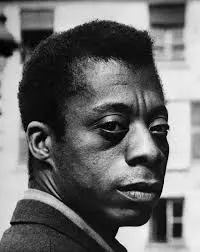
At a Glance
Harlem, the Church, and the Education of an Exile
James Baldwin's Harlem was not the romanticised Harlem of the Renaissance but the Depression-era and wartime Harlem of crushing poverty, religious intensity, and the specific psychological damage that the racial order inflicted on the people it confined to its designated spaces. His stepfather David Baldwin — a man of genuine religious conviction whose inner life had been broken by the accumulated humiliations of Black life in the South and then in the North — was both the source of his earliest understanding of what faith and its perversions looked like and the central figure of his most important early work, the novel and essay collection through which he worked out his relationship to the church, to Harlem, and to the racial world that had produced both.
The teenage ministry he entered at fourteen was a genuine expression of the spiritual intensity that the Pentecostal tradition cultivated — the ecstatic worship, the speaking in tongues, the conviction of divine presence that he describes in "Go Tell It on the Mountain" with an insider's precision. His departure from the ministry at seventeen was equally genuine: he had concluded that the church's God was inadequate to the world he was living in, that the salvation it offered was a spiritual escape from material conditions that required material address, and that the alternative salvation he needed was not the church's but literature's.
He educated himself through the same combination of public library reading and intellectual conversation that had educated Langston Hughes and Ralph Ellison and Richard Wright before him — the self-education of the Black intellectual in a city that offered free access to books but not to the institutions where books were professionally studied. He read voraciously and indiscriminately, absorbing the European literary tradition alongside the African American one, developing the stylistic synthesis — the Jamesian sentence structure, the King James Bible's cadences, the Baldwin voice that was unmistakably his own — that would distinguish his prose from everything around it.
Paris and the Distance That Made Honesty Possible
Baldwin left for Paris in November 1948, aged twenty-four, with approximately forty dollars and a half-completed novel, driven by the fear that if he stayed in America he would be consumed by the rage that the racial order was generating in him. He has described this fear with precision in multiple essays: not the fear of violence from without but the fear of destruction from within — the specific form of psychological damage that a human being with intelligence and integrity suffers when the society around them systematically asserts that what they are is less than human, and when the psychological response to this assertion is a rage that, if allowed to become defining, destroys the person whose rage it is.
Paris provided the distance that allowed him to see America clearly — not because Paris was free of racism or because the expatriate life was comfortable, but because being outside America gave him the perspective that the daily experience of being inside it prevented. He could see what America was from the outside in ways that the pressure of being inside it made difficult to maintain. He was still Black in Paris; he was poor in Paris; he was gay in Paris in ways that the city made somewhat more possible to be openly. But he was not inside the American racial system's specific gravity, and that exemption gave him the clarity that produced "Notes of a Native Son" and "Go Tell It on the Mountain."
He returned to America in the late 1950s not because the problems that had driven him to leave had been resolved — they had not — but because the civil rights movement was producing events that he felt he needed to witness and to which he felt he had something to contribute. He came back as a writer whose reputation was established, whose clarity of vision about American racial life was extraordinary, and whose willingness to say what he saw without the diplomatic hedging that political survival in America seemed to require made him both invaluable to the movement and uncomfortable for it.
The Fire Next Time: The Essay That Named the Crisis
"The Fire Next Time," published in January 1963, was the most important piece of writing the civil rights movement produced — more important, in the sense of its moral and analytical depth, than any speech or organisational statement, though it was not the most immediately consequential for the movement's specific legislative goals. The book's argument was not about what Black Americans needed — that was, in 1963, already widely understood — but about what white Americans needed to do and why they were failing to do it. Baldwin's thesis was that white Americans had built their identities on a fiction — the fiction of white superiority, which required the complementary fiction of Black inferiority — and that this identity-sustaining fiction was destroying both them and the country they claimed to love.
The first essay, "My Dungeon Shook: Letter to My Nephew," addressed directly to his fifteen-year-old nephew James, was one of the most precise pieces of political and moral writing in American literary history. It told James that he had been born into a society that had decided he had no value — not as a matter of individual judgment but as a structural feature of how that society organised itself — and that the task before him was to refuse this verdict, not by meeting the society's terms but by insisting on the terms of his own humanity. The insistence would not be comfortable, the essay made clear, and it would require the nephew to understand and even to love the white people who had organised the society in ways that denied his humanity — to understand them without approving of them, because understanding them was necessary to the work of changing them.
The second essay, "Down at the Cross," described Baldwin's encounter with Elijah Muhammad and the Nation of Islam in the context of his analysis of the relationship between Christianity and racism — between the white Christianity that had sustained slavery and the Muslim alternative that the Nation was offering to Black Americans who had concluded that Christianity was the oppressor's religion and could not be the liberated person's faith. Baldwin's analysis of both traditions — his acknowledgment of the power of the Nation's critique and his simultaneous refusal of its racial essentialism — was characteristic of his willingness to give full weight to positions he ultimately rejected, to take seriously what serious people were saying rather than dismissing them with the comfortable condescension that less honest analysis permitted.
Kennedy, Malcolm X, King, and the Movement's Witness
Baldwin's May 1963 meeting with Attorney General Robert Kennedy — organised by Baldwin and including Lena Horne, Harry Belafonte, Lorraine Hansberry, and other Black artists and intellectuals — was one of the more famous confrontations between the civil rights movement's cultural wing and the federal government. Kennedy had hoped for a productive conversation; what he encountered was a group of people who were not interested in productive conversation in the sense of mutual accommodation but in communicating to someone with actual governmental power the precise nature and the precise urgency of what was happening in America. The meeting lasted approximately three hours and ended in frustration on both sides.
Baldwin's subsequent account of the meeting — in interviews and in his writing — was characteristically honest about what had failed: Kennedy could not understand, from within his own experience, why Black Americans were as angry as they were, because he had not experienced what had made them angry, and the meeting's dynamics did not provide him with that experience. This was not a personal failure of Kennedy's but a structural feature of the situation: the people in the room were trying to communicate an experience to someone who had not had it and whose position made it difficult to receive it honestly.
His encounters with both Martin Luther King Jr. and Malcolm X produced essays and interviews that were among the most perceptive accounts either man received during their lifetimes. Baldwin admired both and was entirely comfortable with the admission that both were needed — that King's moral vision and Malcolm's uncompromising demand were not alternatives but complements, that a movement that had only one would be missing something essential. His refusal to choose between them — at a time when choosing between them was almost a political requirement — was characteristic of the double vision that his position outside the normative allowed him to maintain.
The Later Work, the FBI, and the Long Exile
The FBI's surveillance of Baldwin — running to more than 1,800 pages by his death, documenting his movements, his associations, his political activities, and his sexuality — was Hoover's recognition that Baldwin's writing was politically dangerous. Hoover was correct. Baldwin's essays were among the most politically dangerous documents produced in the United States in the 1960s and 1970s, not because they called for violence or organisational insurgency but because they described, with extraordinary precision and in language that was beautiful enough to be widely read, exactly what America was doing and why it could not continue doing it without destroying itself. This kind of moral clarity is always politically threatening to the forces whose moral failures it exposes, and the FBI's response — surveillance, attempted discrediting, the weaponisation of his sexuality — was the predictable response of a politically threatened institution.
Baldwin spent increasing amounts of his later life in France — in Saint-Paul-de-Vence, in the south, where he had a house that became a gathering place for artists, writers, and civil rights activists from around the world. He continued to write and to speak, but the late work — however serious and however often brilliant — never quite achieved the concentrated power of "The Fire Next Time" and "Notes of a Native Son," which had been produced at the moment of maximum personal urgency and maximum historical crisis. The movement whose witness he had provided was transforming into something different, the legislative victories of the mid-1960s were being followed by the long unravelling of the Great Society, and Baldwin's prophetic mode — his ability to see what was coming and to name it precisely — became increasingly directed toward the disappointments of the post-movement period rather than the urgencies of its peak.
He died in Saint-Paul-de-Vence on November 30, 1987, of stomach cancer, at the age of sixty-three. His body was brought back to New York for burial. He had spent his life giving America the most precise and the most uncomfortable account it has ever received of what it actually is — not what it claims to be, not what it aspires to be, but what its history and its practice reveal it to be — and the account remains as accurate in its essentials as it was when he produced it. This is the measure of a prophet: not that they say things that are comfortable to hear, but that they say things that are true, and that the truth they say does not become untrue with the passage of time.