Algeria's Long Road to Independence — Politics, War, and Memory
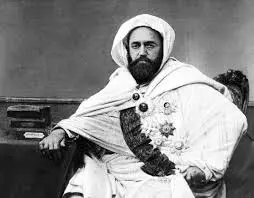
Algeria's encounter with French colonialism was among the most violent and deeply entrenched in African history. France invaded in 1830 under the pretext of a diplomatic dispute and stayed for one hundred and thirty-two years, during which the settler population grew to over a million and the indigenous Algerian population was systematically dispossessed of its land, its language, and its political rights. The resistance began immediately. Emir Abdelkader organised the first major armed resistance in the 1830s and 1840s, creating embryonic state institutions — an army, a treasury, a postal system — in the territories under his control before French military superiority finally forced his surrender in 1847. His example haunted the colonial period and shaped every generation of Algerian nationalists that followed.
The modern independence movement emerged in the interwar period from three competing currents: the assimilationist politics of Ferhat Abbas, who initially argued that Algerian Muslims deserved full French citizenship; the Islamic reformism of the Association of Algerian Muslim Ulama; and the radical nationalism of Messali Hadj, whose Étoile Nord-Africaine and later Mouvement pour le Triomphe des Libertés Démocratiques demanded outright independence. The massacre at Sétif and Guelma on 8 May 1945 — in which French forces and settler militias killed between 8,000 and 45,000 Algerians in reprisal for nationalist demonstrations — made clear to an entire generation that the French Republic had no intention of extending liberty to its Algerian subjects. The nine young men who founded the FLN's predecessor organisation, the Organisation Spéciale, in the late 1940s drew the logical conclusion: armed struggle was the only path.
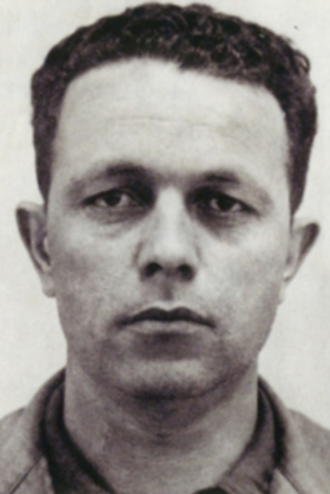
The War of Independence began in the early hours of 1 November 1954, when the FLN launched coordinated attacks across the country. The six historic commanders who led the six wilayas — military districts — into which the country was divided included Mostefa Ben Boulaïd in the Aurès, Mourad Didouche in the north-east, Rabah Bitat in Algiers, Larbi Ben Mhidi in the Oranie, Krim Belkacem in Kabylie, and Mohamed Boudiaf as coordinator. Ben Boulaïd was killed by a booby-trapped radio the following year. Mourad Didouche was killed in January 1955. Larbi Ben Mhidi was captured in Algiers in 1957 and tortured to death by French paratroopers under General Massu. Of the nine historic founders, only a handful survived to see independence.
The political architecture of the revolution was largely the work of Abane Ramdane, a former colonial civil servant who had spent five years in French prisons and arrived in Algiers in January 1955 with the analytical ferocity of a man who had spent his imprisonment thinking through every problem the movement faced. In August 1956 he convened the Soummam Congress in the Kabyle mountains — the most important event in the history of the FLN — at which the movement adopted a national charter, established a collective leadership, created the structures of a government-in-waiting, and committed itself to the principle of the primacy of the internal over the external and the political over the military. Abane was murdered by his own colleagues in Morocco in December 1957, one of the movement's most grievous self-inflicted wounds.
The Battle of Algiers — waged from 1956 to 1957 — brought the conflict into the city and onto the world stage. The FLN cell network in the Casbah, organised by Yacef Saadi and including fighters such as Ali La Pointe and women bombers like Djamila Bouhired, Hassiba Ben Bouali, and Zohra Drif, carried out a campaign of bombings against French civilian and military targets. The French response — General Massu's systematic use of torture against detainees, mass arrests, and the disappearance of prisoners — shocked international opinion and fundamentally delegitimised the French position. Hassiba Ben Bouali was killed when French forces demolished the building in which she was hiding. Ali La Pointe died in the same operation. Djamila Bouhired was captured, tortured, and sentenced to death — her case became an international cause célèbre, and she was eventually released.
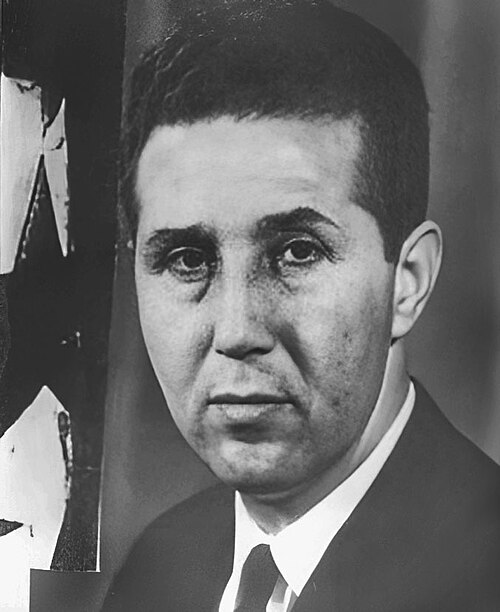
Independence came on 5 July 1962, after eight years of war that killed between 300,000 and 1.5 million Algerians — the precise figure remains disputed, a measure of how politically charged the memory of the conflict remains in both Algeria and France. The leaders of the FLN's external delegation — Ahmed Ben Bella, Mohamed Boudiaf, Hocine Aït Ahmed, Mohamed Khider, and Rabah Bitat — had spent much of the war in French custody after their plane was intercepted in 1956. Ben Bella became Algeria's first president but was deposed in 1965 by Houari Boumédiène, the army commander who built the authoritarian state that governed Algeria until the democratic opening of 1989 and the catastrophic civil war of the 1990s. The revolution that began in 1954 had produced a free Algeria — but the political settlement it had promised, democratic and secular, remained in many respects unrealised.