Egypt's Long Struggle — From the Urabi Revolt to Suez
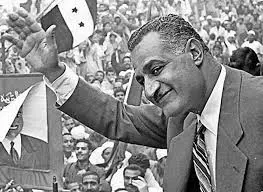
Egypt's struggle against foreign domination is one of the longest and most richly documented in the history of African and Arab resistance — a story that begins in the khedival period, runs through British military occupation, interwar nationalist politics, feminist mobilisation, and culminates in the extraordinary moment of 26 July 1956 when Gamal Abdel Nasser stood in Alexandria and told a crowd of hundreds of thousands that Egypt had nationalised the Suez Canal Company. The speech lasted four hours. When Nasser spoke the code word — the name "Ferdinand de Lesseps," the canal's French builder — engineers waiting at listening posts across the country began the takeover of canal installations. The canal that had been built with Egyptian corvée labour, that had been sold by a bankrupt khedive to British creditors in 1875, that had been the primary justification for British military occupation since 1882, was Egyptian again. The roar that rose from the crowd in Alexandria was heard across the Arab world and the colonised world beyond it.
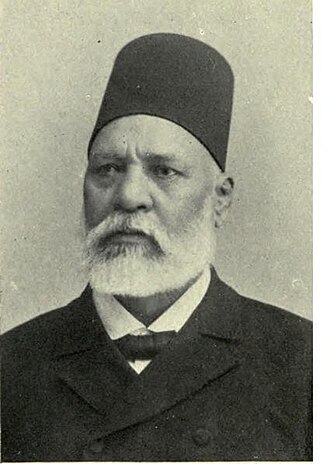
But the Suez moment was the culmination of nearly eighty years of organised resistance that had begun with Ahmad Orabi. Orabi was an army officer from a peasant background — the first of his class to rise to senior military rank in a system dominated by Circassian and Turkish officers — who in 1879 led a petition of Egyptian army officers to the Khedive Tewfik demanding equal pay and an end to the privileged position of foreign officers. The movement grew into a political demand for constitutional government and an end to foreign financial control. "Egypt for the Egyptians" became its slogan. Britain and France, alarmed by the threat to their financial interests and to the Suez Canal, pressured the Khedive to resist. When the crisis escalated to the point of popular mobilisation, Britain intervened militarily. The Royal Navy bombarded Alexandria in July 1882, and British forces destroyed Orabi's army at the Battle of Tel el-Kebir in September. Orabi was captured, tried, and exiled to Ceylon. The "temporary" British occupation that began in 1882 lasted until 1956.
The intellectual foundation of Egyptian nationalism was built in the two decades after Orabi's defeat by Mustafa Kamil — a lawyer and orator of incandescent talent who founded the National Party (Al-Hizb al-Watani) in 1907 and died of tuberculosis in 1908 at the age of thirty-three, leaving behind a movement, a newspaper, a political vocabulary, and a generation of cadres who would carry the struggle forward. Kamil's nationalism was pan-Islamic as well as Egyptian — he appealed to Ottoman solidarity and toured Europe making the case against British occupation before European audiences — but his central insight was that Egyptian national consciousness had to be cultivated through education, press, and political organisation if resistance was to be sustained. His funeral in Cairo was attended by tens of thousands and was itself a political demonstration. His successor, Muhammad Farid, maintained the party's militancy until his own exile in 1912.
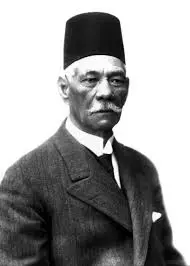
The 1919 Revolution was Egypt's first mass uprising — a genuinely cross-class, cross-religious, cross-gender mobilisation triggered by Britain's arrest and deportation of Saad Zaghloul and the Wafd Party leadership in March 1919, just months after the end of a world war in which Egyptian peasants had been conscripted in their hundreds of thousands to serve the British war effort. The Wafd had demanded to present Egypt's case for independence at the Paris Peace Conference; Britain's response was deportation. Within days, Egypt was in revolt — strikes, demonstrations, railway sabotage, the killing of British soldiers, attacks on infrastructure. What distinguished 1919 from earlier moments was the participation of Egyptian women. Hoda Shaarawi organised women's demonstrations in Cairo — veiled women marching through the streets of the city in defiance of British bayonets, a spectacle that shook both the British occupation authorities and Egyptian conservative opinion. Zaghloul was released, returned to a hero's welcome, and eventually became Prime Minister in 1924, though he died in 1927 without achieving the full independence he had pursued.
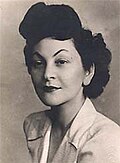
Egyptian women did not win the rights the 1919 Revolution had implicitly promised. Hoda Shaarawi founded the Egyptian Feminist Union in 1923 and spent the rest of her life campaigning for women's education, political rights, and legal equality. Her most famous act — removing her face veil at Cairo railway station upon returning from an international feminist conference in Rome in 1923, an act immediately copied by her companion Ceza Nabarawi — was a deliberate public statement about modernity and women's autonomy that reverberated across the Arab world. But it was Doria Shafik who took feminist politics to its confrontational extreme: in February 1951 she led fifteen hundred women to storm the Egyptian parliament demanding women's suffrage and equal rights, standing at the doors of the chamber and refusing to leave. The stunt worked — a constitutional amendment committee was instructed to examine the demand — but when Nasser's Free Officers took power in 1952 and eventually granted women the vote in 1956, they did so on their own terms, and Shafik's independent feminist organisation was dissolved. She was placed under house arrest in 1957 after a hunger strike protesting Egyptian authoritarianism, and spent her final years in effective silence.
The Free Officers' revolution of 23 July 1952 swept away the monarchy and the old Wafdist political class, and in Gamal Abdel Nasser produced the most charismatic Arab leader of the twentieth century — a man who understood that Egypt's revolutionary moment had to be articulated not just in Egyptian national terms but in the language of pan-Arabism and global anti-imperialism. The Suez Crisis of 1956 — in which Britain, France, and Israel colluded in a military attack on Egypt to reverse the nationalisation, only to be stopped by American and Soviet pressure — became Nasser's greatest political triumph and transformed him into a symbol of resistance for the entire decolonising world. That the canal remained Egyptian after the crisis was the outcome of geopolitical forces beyond Egypt's control as much as of Egyptian resistance, but Nasser understood how to claim the victory — and the claiming mattered as much as the fact.