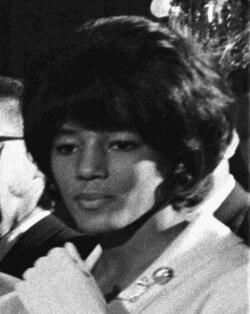
Vivian Malone Jones, one of the two Black students who registered at the University of Alabama on June 11, 1963, walking past Governor George Wallace's stand in the schoolhouse door to become the first Black student to graduate from the University of Alabama.
United States · Civil Rights Movement

Vivian Malone Jones

Vivian Juanita Malone was born on July 15, 1942, in Brecon, Alabama, and grew up in Mobile in a family whose emphasis on education and achievement gave her the preparation and the aspiration that would eventually bring her into one of the most photographed confrontations in the history of American civil rights. She attended Alabama Agricultural and Mechanical College before applying to the University of Alabama in Tuscaloosa — the flagship state university that had remained all-white since its founding and whose defence of segregation had produced, in 1956, the expulsion of Autherine Lucy, the first Black student admitted under a federal court order. The legal basis for admission that Lucy's case and subsequent NAACP litigation had established was the foundation on which Malone and James Hood built their application, working with the Justice Department and with the NAACP Legal Defense Fund. They were admitted in January 1963. Governor George Wallace, who had promised in his inaugural address that January to defend "segregation now, segregation tomorrow, segregation forever," announced that he would personally stand in the schoolhouse door to prevent their registration. On June 11, 1963, the day of registration, Deputy Attorney General Nicholas Katzenbach arrived at Foster Auditorium on the Tuscaloosa campus with Malone and Hood and a federal escort. Wallace, flanked by state troopers, stood at the door and delivered his statement. Katzenbach read the federal order. Wallace did not move. Malone and Hood returned to their dormitories to wait. President Kennedy federalised the Alabama National Guard. General Henry Graham arrived and told Wallace, in one of history's more polite demands, that he must step aside. Wallace stepped aside. Malone and Hood registered. The integration of the University of Alabama was complete. James Hood left the university in the fall of 1963, overwhelmed by the hostility of the environment and the psychological pressure of being one of two Black students in a campus of thousands of hostile white ones. Vivian Malone stayed. She attended classes, navigated the social isolation, maintained her academic work, and in 1965 became the first Black student to graduate from the University of Alabama. She received her degree in business management. She worked for the Civil Rights Division of the United States Department of Justice for sixteen years, helping to enforce the civil rights legislation that her registration had contributed to producing. She worked for the United Negro College Fund for many years. She was awarded the Lister Hill Award, Alabama's highest state honour. She met George Wallace near the end of his life, when he had expressed regret for his segregationist career, and she accepted his apology. She died on October 13, 2005, in Atlanta, at the age of sixty-three.

United States University of Alabama Schoolhouse Door George Wallace First Black Graduate Justice Department

Born: 15 July 1942, Brecon, Alabama, USA  |  Died: 13 October 2005, Atlanta, Georgia, USA — aged sixty-three

At a Glance

Full NameVivian Juanita Malone Jones; born 15 July 1942, Brecon, Alabama; grew up in Mobile; attended Alabama Agricultural and Mechanical College; applied with James Hood to the University of Alabama; admitted January 1963; registered June 11, 1963, after George Wallace's stand in the schoolhouse door; first Black student to graduate from the University of Alabama 1965; worked for the Civil Rights Division, U.S. Department of Justice, sixteen years; worked for United Negro College Fund; awarded Lister Hill Award; met and accepted apology from George Wallace late in his life; died 13 October 2005, Atlanta, Georgia, aged sixty-three
Born15 July 1942, Brecon, Alabama; grew up in Mobile, Alabama; attended Alabama A&M before applying to the University of Alabama; worked with the NAACP Legal Defense Fund and the Justice Department to build her admission application; was one of two Black students — along with James Hood — whose admission to Alabama became the occasion for George Wallace's June 1963 "stand in the schoolhouse door"
Died13 October 2005, Atlanta, Georgia; died of a stroke at the age of sixty-three; had been in declining health for some time; her death was mourned in Alabama and nationally as the passing of one of the civil rights movement's most significant individual acts of courage — the young woman who stayed at the University of Alabama when James Hood left, who earned her degree in conditions of profound social hostility, and who spent her subsequent career working to expand the educational opportunities that her registration had helped to open
The Stand in the Schoolhouse DoorOn June 11, 1963, Governor George Wallace stood in the entrance of Foster Auditorium at the University of Alabama, flanked by state troopers, and delivered a statement opposing the federal government's enforcement of the court order requiring the university to admit Malone and Hood; Deputy Attorney General Nicholas Katzenbach read the federal order and asked Wallace to step aside; Wallace refused; Kennedy federalised the National Guard; General Henry Graham arrived and told Wallace he must step aside; Wallace stepped aside; Malone and Hood registered; the entire confrontation had been carefully choreographed by Wallace to fulfil his promise without actually defying the federal government in a way that would have led to his arrest
Staying When Hood LeftJames Hood, who had registered alongside Malone on June 11, left the University of Alabama in the fall of 1963 — overwhelmed by the psychological pressure of being one of two Black students in an overwhelmingly white and hostile campus environment, the constant harassment, the social isolation, and the burden of being a symbol as well as a student; Malone stayed; she attended classes, navigated the environment, maintained her academic work, and in May 1965 received her bachelor's degree in business management — becoming the first Black student to graduate from the University of Alabama; her decision to stay when it would have been entirely understandable to leave is one of the civil rights movement's less celebrated but more genuinely courageous acts
Justice Department and UNCF CareerWorked for the Civil Rights Division of the United States Department of Justice for sixteen years after graduation, helping to enforce the civil rights legislation that the movement she had been part of had produced; the specific irony of using the legal powers of the Justice Department — the same department whose Deputy Attorney General had faced down George Wallace at Foster Auditorium — to enforce civil rights law was not lost on her; subsequently worked for the United Negro College Fund, advancing the educational opportunities for Black students that her own registration and graduation had helped to establish
The Meeting with George WallaceMet George Wallace near the end of his life — Wallace had suffered a serious assassination attempt in 1972 that left him partially paralysed and in chronic pain, and in his final years he had expressed regret for his segregationist career and sought forgiveness from some of the people he had harmed; Malone met with him and accepted his apology; the meeting was one of the civil rights era's more unusual reconciliation moments — the young woman who had walked past him at Foster Auditorium accepting the late repentance of the man who had stood in her way

Mobile, Alabama A&M, and the Application That Changed Alabama

Vivian Malone grew up in Mobile, Alabama, in a family whose emphasis on education gave her both the preparation and the aspiration that would eventually bring her to the University of Alabama's doorstep. Mobile's Black community had its own educational infrastructure — the historically Black colleges and the segregated public schools that provided whatever education was available within the constraints of the Alabama system — but the best professional opportunities required credentials from the flagship state university that Alabama's segregation laws made inaccessible.

Her application to the University of Alabama, prepared with the assistance of the NAACP Legal Defense Fund and the Justice Department, was built on the legal foundation that Autherine Lucy's admission and subsequent expulsion had established in 1956. Lucy had been the first Black student admitted to the university under a federal court order; she had been admitted, had attended classes for three days, and had been expelled on a pretext while white mobs rioted on the campus. The NAACP had not immediately pursued further litigation, but the legal precedent her case established — that the university's racial exclusion was unconstitutional — remained available, and Malone and James Hood built on it seven years later.

Their admission in January 1963 — announced by the university, confirmed by the courts — was the legal fact that Wallace's June stand at the schoolhouse door was attempting to forestall. Wallace knew he could not actually prevent their admission; the legal question had been settled. What he was doing was performing resistance for his constituency, fulfilling his inaugural promise symbolically while ensuring that the performance would not lead to his arrest. The choreography of the June 11 confrontation — every movement planned in advance, every statement prepared — was a political theatre designed to give Wallace the image of defiance without the consequences of defiance.

Foster Auditorium: The Day the Performance Ended and the Registration Began

The events at Foster Auditorium on June 11, 1963, were among the most carefully orchestrated confrontations in the civil rights movement's history. The Kennedy administration had negotiated with Wallace about the specific sequence of events — Wallace had agreed that he would make his stand and that the national guard would be federalised and that he would step aside, allowing the registration to proceed — so that the confrontation could serve its political purposes for both sides without producing a genuine constitutional crisis. Wallace needed the image of defiance; Kennedy needed the desegregation to proceed; both got what they needed.

Malone and Hood experienced this choreographed confrontation from the perspective of the people whose lives were most directly affected by it. They had been working toward this moment for months; they had the legal right to register; they were being asked to stand in the July heat while a governor performed his segregationist commitments for the cameras. The specific quality of patience required to wait while this performance was completed — to maintain composure, to not react to the provocation, to hold the moral high ground while the spectacle played out around them — was of a piece with the quality required by the nonviolent direct action tradition throughout the movement.

When Wallace stepped aside and Malone walked through the door of Foster Auditorium to register, she was completing a process that had begun with Autherine Lucy's admission seven years earlier and with the legal work the NAACP had been doing across Alabama for decades. She was not doing it alone — she had James Hood beside her, she had the Justice Department behind her, she had the federal courts above her. But she was the one who walked through the door. That specific act, and the fact that she stayed when Hood left and completed her degree, is what makes her story worth knowing.

Graduating When It Would Have Been Easier to Leave

James Hood's departure from the University of Alabama in the fall of 1963 is comprehensible in human terms: he had been one of two Black students in an overwhelmingly white and hostile campus environment, had been subjected to constant harassment and social isolation, and had been carrying the psychological burden of being a symbol as well as a student at an age when most people are simply trying to figure out who they are. The pressure was real and its effects were real, and his decision to leave rather than continue to subject himself to conditions that were damaging his health and his wellbeing was a reasonable response to an unreasonable situation.

Malone stayed. She attended the same classes, navigated the same social isolation, absorbed the same harassment, and carried the same burden of symbolism — and she did all of this while maintaining the academic performance that would eventually produce her degree. Her decision to stay was not made in a single dramatic moment but in the succession of ordinary moments that a sustained hostile environment produces: each morning she got up and went to class, each week she completed her assignments, each semester she returned to a campus that did not want her there and that made its unwillingness clear in dozens of daily ways.

When she received her bachelor's degree in business management in May 1965, she became the first Black student to graduate from the University of Alabama. The degree was both a personal achievement and a political statement: the university that George Wallace had pledged to keep segregated forever had graduated its first Black student. The statement was less dramatic than the schoolhouse door confrontation and more durable.

The Wallace Meeting and the Question of Forgiveness

Malone's meeting with George Wallace near the end of his life — when Wallace had expressed regret for his segregationist career and sought some form of reconciliation with the people he had harmed — was one of the civil rights era's more unusual and more debated reconciliation moments. Wallace had suffered a serious assassination attempt in 1972 that left him in a wheelchair and in chronic pain, and the experience had produced in him, or at least in his public statements, a degree of remorse for what he had done and said during the 1960s. He sought meetings with Black leaders and civil rights figures and expressed his regret in terms that many accepted and others regarded as too late and too convenient.

Malone met him and accepted his apology. Her willingness to do so was consistent with the spirit of reconciliation that the civil rights movement's nonviolent tradition had always held out as a possibility — the conviction that the goal was not the destruction of the people who had enforced the racial order but the transformation of the conditions that had made them enforcers of it. Whether Wallace's remorse was genuine or calculated was ultimately unknowable, and Malone's acceptance of it was not a judgment about its sincerity but a choice about the kind of person she wanted to be in the encounter with someone who had tried to block her way.

Other Civil Rights Movement Profiles

USA · Civil Rights Autherine Lucy The first Black student admitted to the University of Alabama in 1956, whose expulsion established the legal precedent Malone's admission built on USA · Civil Rights James Hood Co-registered with Malone on June 11, 1963, and walked past Wallace alongside her — but left Alabama in the fall while Malone stayed and graduated USA · Civil Rights Martin Luther King Jr. Was in Birmingham that June 11 — the same day as the schoolhouse door confrontation Kennedy was using to build momentum for civil rights legislation USA · Civil Rights Fred Shuttlesworth Birmingham ACMHR founder whose campaigns were creating the political pressure that made Kennedy's June 11 civil rights address and the schoolhouse door confrontation part of the same political moment USA · Civil Rights Fred Gray Montgomery civil rights attorney whose legal tradition and methodology the NAACP Legal Defense Fund used to build Malone's admission case USA · Civil Rights Fannie Lou Hamer Fellow Alabama Black woman whose civil rights activism was contemporaneous with Malone's registration — the grassroots and the institutional dimensions of the same struggle USA · Civil Rights John Lewis SNCC chairman during the schoolhouse door confrontation whose movement's pressure made the Kennedy administration act on civil rights USA · Civil Rights Rosa Parks Whose 1955 refusal demonstrated the same quality of quiet determination under pressure that Malone's decision to stay at Alabama embodied USA · Civil Rights Septima Clark Whose Citizenship Schools were building the educational infrastructure for Black Southerners at the same time Malone was integrating the flagship state university USA · Civil Rights Andrew Young SCLC leader who later became Georgia governor — the parallel path from movement participation to southern political power that Malone's career also traced
Share X Facebook WhatsApp LinkedIn