Morocco's Independence — The Rif, the Istiqlal, and the Sultan's Return
Morocco's independence struggle encompasses one of the most astonishing military victories in the history of anti-colonial resistance — Abd el-Krim's destruction of a Spanish army at the Battle of Annual in 1921 — and one of the most brazen political assassinations of the Cold War era: the kidnapping and murder of Mehdi Ben Barka from a Paris pavement in October 1965, with the involvement of the French and Moroccan secret services and, according to some investigators, American intelligence. Between those two events lie thirty-five years of constitutional nationalism, royal politics, French deportations, armed resistance, and the 1956 independence that formally ended the French and Spanish protectorates but left the question of what kind of Morocco would emerge from them unresolved for decades.
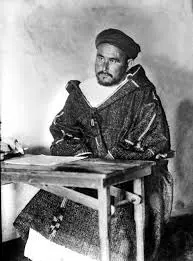
Muhammad ibn Abd al-Karim al-Khattabi — Abd el-Krim — was the son of a qadi in the Rif mountains of northern Morocco, educated at the University of Fez and briefly employed as a journalist and minor official in the Spanish zone before his father's death at Spanish hands in 1920 turned him definitively toward armed resistance. The military campaign he organised in 1921 was one of the great strategic achievements of the anti-colonial era: using a combination of indigenous knowledge of the terrain, captured Spanish weapons, and tactical innovations that military historians have compared to those of Lawrence of Arabia, his Riffian forces annihilated General Silvestre's Army of Africa at Annual, killing between 8,000 and 12,000 Spanish soldiers — the worst defeat of a European colonial army since Adwa. He then proclaimed the Republic of the Rif, established a functioning government with its own currency, postal service, and diplomatic contacts, and held off Spanish and French forces simultaneously until 1926, when half a million French and Spanish troops under Marshal Pétain finally pushed him to surrender. He spent the rest of his life in exile — first on Réunion, then in Egypt, where he refused the offer of return to Morocco after independence, dying in Cairo in 1963 without setting foot in the country he had tried to free. His tactics were studied by Mao Zedong, Ho Chi Minh, and Che Guevara; his example shaped the guerrilla theory of the twentieth century.
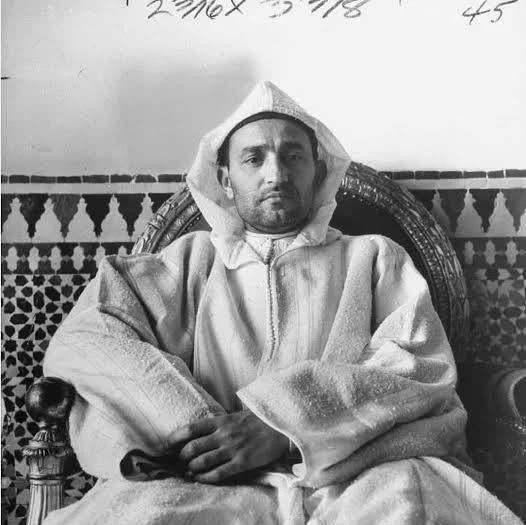
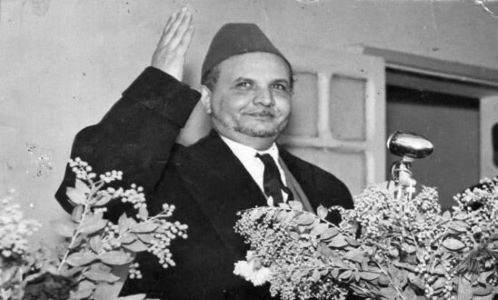
The constitutional nationalist movement took shape in the 1930s around the Istiqlal Party — founded in 1943 by Allal al-Fassi, Ahmed Balafrej, Abderrahim Bouabid, and others — and around the Alaoui monarchy. Sultan Mohammed V had already demonstrated his political independence by refusing to sign the Vichy government's anti-Jewish laws during the German occupation of France, and he became the symbolic centre of Moroccan nationalism by signing the Throne Speech of 1947 in Tangier, in which he publicly identified with the independence movement. France responded in August 1953 by deposing and deporting him to Madagascar, replacing him with a compliant cousin. The deportation was intended to decapitate the independence movement. It produced the opposite effect: Mohammed V became a martyr-king, and the violence of the independence movement's armed wing — the Liberation Army — escalated sharply. France returned him in November 1955. Independence followed on 2 March 1956.
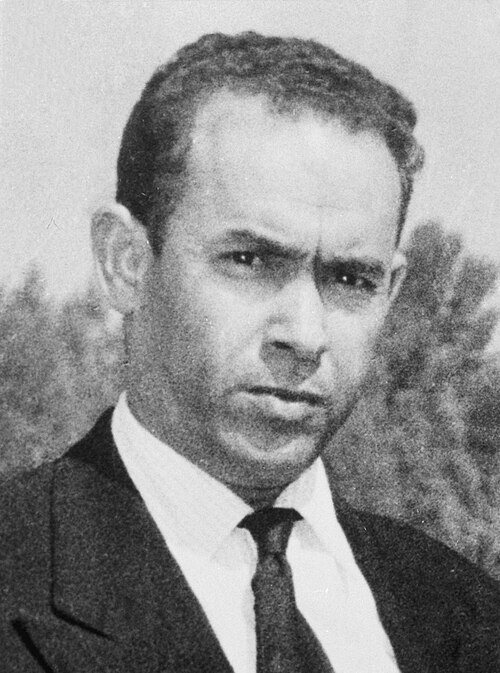
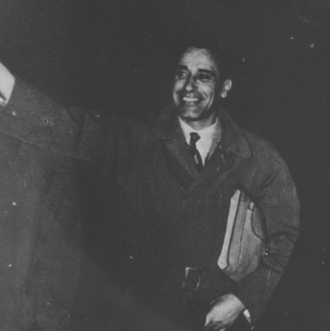
The left wing of the independence movement — embodied above all by Mehdi Ben Barka, the mathematics teacher who had been one of Mohammed V's tutors and became the most dynamic political organiser of his generation — found that independence did not settle the question of what Morocco was to become. Ben Barka led the Union Nationale des Forces Populaires after the Istiqlal split in 1959, championed land reform and workers' rights, and became an international figure as one of the organisers of the Tricontinental Conference — the gathering of liberation movements from Asia, Africa, and Latin America planned for Havana in January 1966. On 29 October 1965, he was lured to a meeting outside the Brasserie Lipp in Paris by a French police officer working for Moroccan intelligence. He was bundled into a car. He was never seen again. French and Moroccan intelligence, the CIA, and Moroccan Interior Minister Mohammed Oufkir have all been implicated in what followed. His body has never been found. The assassination removed from Moroccan and pan-African politics the person most likely to have led a left-democratic challenge to the monarchy that governed Morocco through the "Years of Lead" — decades of systematic repression — until the 1990s.