At a Glance
Dorchester County and the Making of Moses
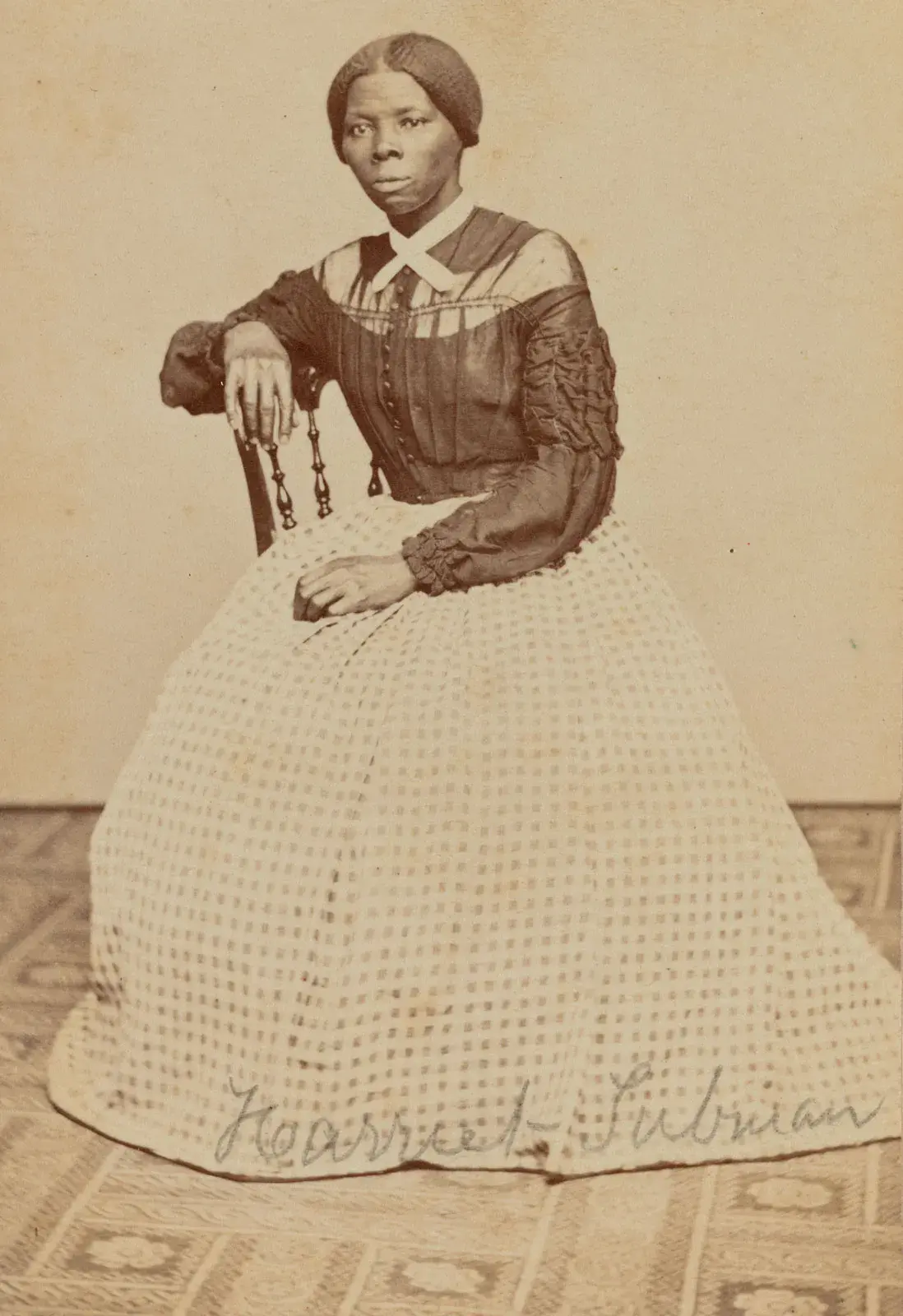
Harriet Tubman grew up in Dorchester County, Maryland, in the specific conditions of the Eastern Shore's mixed agricultural economy — not the cotton plantation slavery of the Deep South with its massive gang labour and its extreme physical brutality, but a system of smaller-scale enslavement in which enslaved people were routinely hired out to neighbouring families and businesses, which gave them somewhat more mobility but subjected them to the authority of multiple enslavers rather than one. The hired-out system was, in its way, its own form of dehumanisation: it treated enslaved people as rental property, moving them between households as economic need dictated, with no regard for the human relationships and community bonds that such movement disrupted.
The head injury she sustained around age twelve — when an overseer threw a two-pound lead weight at another enslaved person and struck her instead — was the formative physical event of her life, producing the narcoleptic episodes that would recur throughout her years as an Underground Railroad conductor and Civil War operative. She could fall into sudden deep sleep at any moment, from which nothing could wake her, and recover with no memory of what had happened. That this should have made her vulnerable — that a person who could lose consciousness without warning should have been unable to sustain the sustained alertness that thirteen missions through hostile territory required — is one of the most striking facts about her career. It did not make her vulnerable. Either the episodes were controllable in ways she did not describe, or they occurred at moments that did not endanger her operations, or she managed them through a combination of trusted companions and the navigational system of the North Star that allowed her to orient herself without continuous full consciousness.
Her interpretation of the episodes as divine guidance — as moments in which God spoke to her and provided instructions for her work — was not merely a theological framework but a psychological one: it gave her a confidence in the correctness of her decisions that the objective uncertainty of Underground Railroad work would otherwise have made unsustainable. She was making decisions whose consequences were the freedom or recapture of the people in her charge, and she was making them in the dark, in unfamiliar territory, with slave catchers behind her, with informants of uncertain reliability ahead of her. The conviction that God was guiding her was not a luxury but a necessity — the psychological foundation of the courage that the work required.
The First Escape and the Terrible Freedom of Isolation
Tubman's escape in September 1849 was triggered by the practical fear of being sold south — a fear that was universal among enslaved people on the Eastern Shore and that intensified sharply when an enslaver died and the estate was to be settled, because estate settlements often required the liquidation of human property. Edward Brodess's death in March 1849 put Tubman and the other enslaved people on the estate in exactly this position, and she acted rather than waiting to learn whether the fear would be realised.
The journey to Philadelphia took approximately two weeks, conducted entirely at night, using the North Star as a compass and the Underground Railroad's network of sympathetic stationmasters — particularly Thomas Garrett, a Quaker in Wilmington, Delaware, who provided money, shoes, and information — as the infrastructure of her passage. She arrived in Philadelphia free, and her description of that arrival — in the interview she gave to Kate Clifford Larson, whose biography of Tubman is the most authoritative available — conveys the specific nature of freedom-without-family: she was free, and she was utterly alone in a city where no one knew her, and the freedom was real but incomplete. She knew immediately that she would go back for her family.
The decision to return — not once but thirteen times — was the act that made her Moses. The Underground Railroad was dangerous for everyone in it; for the conductor who led parties north, the danger was multiplied by each person in the party, each person being another potential source of capture or betrayal. Tubman carried a pistol and was explicit about its purpose: anyone who decided to turn back after the mission had begun was a threat to the safety of everyone else, and she would not allow a threat to the mission to live. Whether she would have actually shot someone is unknowable; the credibility of the threat was sufficient — no one turned back, no one betrayed the mission, no one was captured.
The Method: Intelligence, Timing, Chemistry, and Fear
Tubman's success on thirteen consecutive missions through territory where she was actively hunted was not merely a matter of courage — it was a matter of method. She developed a systematic operational approach that combined intelligence gathering about slave catcher movements, careful timing of departures, route planning through the Eastern Shore's forested back country, and a set of specific tactics that her experience had refined into a reliable system.
She travelled on Saturday nights because Sunday was the day when newspapers were not published, which meant that the advertisement of escaped slaves — which required publication — could not appear until Monday, giving a two-day head start before the public was aware of the escape. She used the Choptank River's watershed as a navigation system in addition to the North Star, following watercourses that she had learned during her hired-out labour in the Eastern Shore's agricultural economy. She used disguise — including once posing as an old man, walking in the opposite direction from where she was going to confuse pursuers, and on another occasion buying chickens and walking toward the farm of one of her former enslavers to deflect suspicion. She administered laudanum to infants in the parties she was leading to prevent their crying from alerting searchers — a measure whose risk to the infants was real and whose necessity was equally real.
The total number of people she brought north on her thirteen missions is approximately seventy — a number derived from the accounts of those she led, from Underground Railroad records, and from the testimony she gave later in life. The exact number is uncertain because the Underground Railroad did not keep comprehensive records for obvious reasons. What is certain is that the collective reward posted for her capture eventually reached amounts described as high as forty thousand dollars — a sum that represented the slaveholder class's genuine assessment of the threat she posed — and that she was never caught. The operational security she maintained was impeccable.
John Brown, Frederick Douglass, and the Abolitionist Network
Tubman's connections to the abolitionist movement's leadership placed her at the intersection of its different strategies and temperaments. Her relationship with John Brown — the radical abolitionist whose theory of change required violence against the slavery system — was one of deep mutual respect. Brown called her "General Tubman" and included her in his planning for the Harper's Ferry raid of 1859, though she was not present at the raid itself due to illness. Her admiration for Brown was genuine, and it reflected her own understanding that the peaceful conduct of the Underground Railroad existed alongside and in relationship with the violent resistance to slavery that Brown represented.
Her relationship with Frederick Douglass — expressed most fully in his famous letter to her, which described her deeds as excelling those of anyone in the history of liberation struggles — was a relationship between two people who had escaped the same Eastern Shore slavery and who had taken different routes to the same destination. Douglass had used words; Tubman had used action. Both were necessary. His letter to her, with its acknowledgment that her work was "far more meritorious" than his own, was a recognition of the limits of his own approach and of the specific heroism of what she had done: she had gone back, repeatedly, into the place she had escaped from, to bring others out. Douglass had not gone back. She had.
The Combahee River Raid: The Largest Liberation
Tubman's Civil War service as a spy, scout, and military operation planner represented an extension of the operational intelligence she had developed on the Underground Railroad into a formal military context. She arrived in South Carolina in May 1862 and quickly established herself as an invaluable asset to the Union Army's Department of the South, not only through the nursing work she performed with the formerly enslaved people who were flooding into Union lines but through the intelligence network she built among those same people — a network that provided the Union Army with information about Confederate troop movements, fortifications, and supply lines that its own white intelligence operatives could not have obtained.
The Combahee River Raid of June 2, 1863, was the culmination of this intelligence work. Tubman had spent months gathering information about Confederate obstacles — including contact mines — placed in the Combahee River, about the locations and strengths of Confederate pickets along the river's banks, and about the plantation infrastructure that was the raid's military target. She provided Colonel James Montgomery with a detailed operational plan and guided his gunboats personally up the river, directing them away from the mines she had mapped. The raid destroyed Confederate rice plantations and supply infrastructure, and it liberated more than seven hundred enslaved people who came to the riverbanks as word of the approaching gunboats spread through the plantation networks. The people crowded onto the boats in numbers that nearly swamped them, and Tubman — according to the account she gave later — stood on the shore and sang to calm the crowd and manage the boarding. More than seven hundred people arrived in Port Royal, South Carolina, as free people, in a single night's operation planned and guided by a woman who had been born enslaved in Maryland forty years earlier.
Auburn, Suffrage, and the Pension She Was Owed
After the Civil War, Tubman settled in Auburn, New York — in a house she had purchased from William Seward, Lincoln's Secretary of State and a longtime supporter — where she cared for her elderly parents and built a life in the small upstate city's free Black community. She continued to be involved in political causes, working with Susan B. Anthony and Elizabeth Cady Stanton on the women's suffrage movement and participating in the National Association of Colored Women. She established the Harriet Tubman Home for the Aged on property adjacent to her own, providing care for elderly Black people in the Auburn area.
Her decades-long effort to obtain a federal pension for her Civil War service was one of the most consistent and most consistent frustrations of her later life. She had served the Union Army as a spy and scout at extraordinary personal risk, producing intelligence that had military value, including her role in the Combahee River Raid. Union generals attested to this service; Frederick Douglass and other public figures supported her claims; and the federal government denied them for approximately thirty years, finally providing a pension in 1899 that was based on her second husband's service rather than on her own. The denial was consistent with the federal government's broader treatment of the contributions of Black women to the Civil War, which were systematically underrecognised and undercompensated. It was also a specific injustice to a specific person who had done extraordinary things in service of a government that would not acknowledge what she had done.
She died on March 10, 1913, in the home she had built for the aged, surrounded by family and friends. Her last recorded words were to the people at her bedside: "I go to prepare a place for you." She had been preparing places for people to go to for sixty years — first the free North, then the Union lines, then the Auburn home for the elderly — and the phrase had, in her mouth, a practical as well as a theological meaning. She had spent her life making places where people could be free, and she was going to make another one.