Nigeria's Independence — Nationalism Across the Divide
Nigerian nationalism is inseparable from Nigerian complexity — the complexity of a country that the British had assembled from hundreds of distinct political entities, governing the Muslim north through its emirate system and the south through a mixture of indirect rule and direct administration, amalgamating the whole in 1914 into a single colony that many of its inhabitants had no particular reason to regard as a natural unit. The independence movement that emerged from this complexity was not a single movement but several overlapping ones, organised predominantly along ethnic and regional lines: the National Council of Nigeria and the Cameroons, led by Nnamdi Azikiwe and drawing its strength from the Igbo east; the Action Group, led by Obafemi Awolowo and rooted in the Yoruba west; the Northern People's Congress, led by Ahmadu Bello and representing the Muslim north's establishment. The relationships among these three parties — competitive, suspicious, and occasionally cooperative — determined the shape of Nigeria's independence and of the political crisis that produced the first military coup in January 1966, three years after independence.
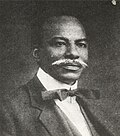
Herbert Macaulay stands at the origin of Nigerian organised politics. Grandson of Bishop Samuel Ajayi Crowther — the first African Anglican bishop — and trained as a civil engineer in England, Macaulay returned to Lagos to become the most effective critic of British colonial policy in the first three decades of the twentieth century, using his newspaper the Lagos Daily News and his formidable legal knowledge to challenge the colonial administration on land rights, taxation, and political representation. He founded the Nigerian National Democratic Party in 1923 — the first political party in Nigerian history — and won control of the three elected seats on the Lagos Legislative Council at every election until 1938. His achievement was not just electoral: he created the idea of a public political sphere in Lagos in which African opinion had weight and colonial policy could be contested. When Azikiwe returned from America and Gold Coast in 1937 with his own newspaper and his pan-Africanist programme, it was the political culture Macaulay had built that he inherited and transformed. Macaulay died in May 1946 at eighty-one, on a nationwide tour to build the NCNC — he had never stopped working, and it killed him.
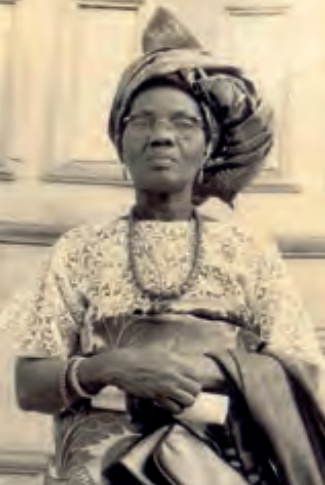
Funmilayo Ransome-Kuti represents a dimension of Nigerian nationalism that the conventional political history tends to underemphasise — the mass women's movement that challenged colonial authority not through constitutional petitions but through direct action. A teacher from Abeokuta who had been educated in England and returned to found the Abeokuta Ladies' Club, she progressively radicalised her politics through the 1940s as she engaged with the market women of Abeokuta — predominantly Egba women who sold in the town's markets and were subject to a system of colonial taxation that required them to carry identity cards and pay levies they could barely afford. She organised the Abeokuta Women's Union, which grew to fifty thousand members, and led a campaign of demonstrations, boycotts, and all-night vigils that in 1949 forced the abdication of the Alake of Abeokuta — the traditional ruler who had collaborated with the colonial administration in implementing the tax system — and the suspension of the tax itself. It was one of the most significant popular victories over colonial authority in West African history. She became an international figure, received in Moscow by Stalin and in Beijing by Mao, and was eventually stripped of her Nigerian passport by the military government for her political radicalism. She died in 1978 after being thrown from a window during a military raid on her son Fela Kuti's Kalakuta Republic compound.
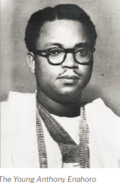
The parliamentary road to independence was driven in large part by Anthony Enahoro, an Action Group journalist and politician who in March 1953 moved the motion in the Federal House of Representatives calling for Nigerian self-government in 1956 — a motion that the northern parties opposed because they believed the north was not yet ready for independence without British tutelage. The crisis the motion provoked — the northern walkout from Lagos, the Kano riots, the constitutional conferences of 1953 and 1954 — restructured Nigerian politics and set the timetable for independence. When independence finally came on 1 October 1960, with Tafawa Balewa as Prime Minister and Azikiwe as Governor-General, Nigeria was simultaneously the most populous country in Africa, the most complex, and the one most shadowed by the unresolved tensions that the independence settlement had papered over rather than addressed. The January 1966 coup ended the First Republic. The history of Nigerian democracy since then — interrupted by coups in 1966, 1975, 1983, and 1993, and restored only in 1999 — has been in many respects the unfinished business of the independence generation.