Historical Context
Two Nations, One Peninsula, an Unfinished Argument
The Basque Country and Catalonia occupy different positions on the map of the Iberian Peninsula and different positions in the history of Spanish nationalism, but they share the essential experience of being distinctive nations — linguistically, culturally, historically — within a Spanish state that has, at various moments in its history, been willing to accommodate that distinctiveness partially and unwilling to accept its logical political conclusion. Both produced, in the late nineteenth and early twentieth centuries, nationalist movements of exceptional vitality; both were subjected to brutal suppression under Franco's dictatorship; and both have spent the decades since Franco's death pressing, by different means and with different degrees of intensity, for political autonomy that satisfies their national identity.
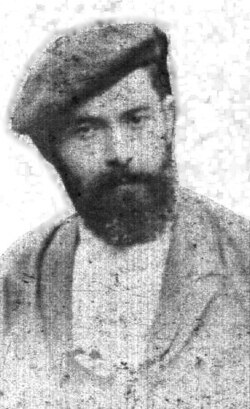
Sabino Arana's construction of Basque nationalism in the 1890s was an act of almost pure invention — the flag, the party, the name of the homeland, the standardised orthography of the language, all created within a decade by a single tubercular young man in Bilbao whose father had fought on the losing side of the Carlist Wars and who saw in the industrialising transformation of his city the cultural annihilation of everything that made the Basque Country distinct. The movement he founded — the PNV, the Basque Nationalist Party — outlasted Franco's dictatorship, the ETA's armed campaign, and the constitutional settlement of 1978, and remains the dominant force in Basque politics today. That a movement built by one man who died at 38 should prove so durable is a measure of how accurately he identified the conditions that sustained it.
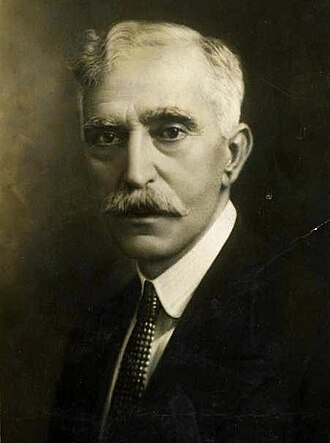
Catalan nationalism had deeper institutional roots — the Generalitat, the autonomous government of Catalonia, had existed in various forms since the mediaeval period, and the memory of its suppression after the War of the Spanish Succession in 1714 was a permanent element of Catalan political consciousness. Francesc Macià's achievement in 1931 was to convert the collapse of the Spanish monarchy into a window of opportunity that he moved through with extraordinary speed — proclaiming the Catalan Republic on the same afternoon that the Spanish Republic was proclaimed in Madrid, then negotiating the restoration of the Generalitat in three days of talks that produced the most substantial Catalan autonomy since 1714.
Lluís Companys's execution at Montjuïc in 1940 — barefoot, by a firing squad, after being handed to Franco by the Nazi Gestapo — closed one chapter of that story in the most brutal possible way. The Generalitat he had led through the Civil War was suppressed for nearly four decades. Catalan was banned from public life. The autonomy statute was shredded. Yet when Franco died in 1975 and Spain began its transition to democracy, the Generalitat was restored — the same institution, the same name, the same constitutional lineage running back through Companys and Macià to the medieval councils of Catalonia. The argument about what that institution ultimately means — regional government within Spain, or the seed of a sovereign state — is the argument that the independence referendum of 2017 dramatised and that remains, as of this writing, without a final answer.