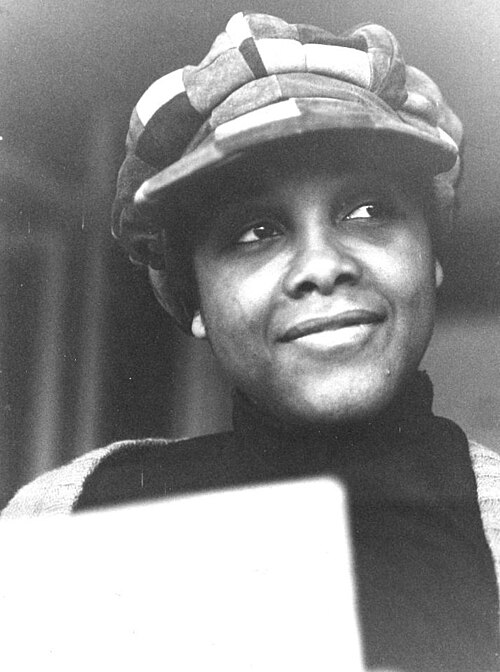
At a Glance
Wilkinson County: A Childhood at the Bottom of the American Economy
Anne Moody was born into a world that the civil rights movement was fighting to change, and she experienced that world from its lowest economic stratum before she ever became a participant in the movement. Wilkinson County in the 1940s was among the poorest places in the United States — a rural Mississippi county where Black sharecroppers worked land that was not theirs under arrangements that systematically prevented the accumulation of any savings or assets, where white landlords and merchants controlled the entire local economy, and where the violence that maintained this economic order was available whenever the social hierarchy seemed threatened.
Her father Fred worked as a sharecropper, her mother Elmira worked as a domestic servant and field laborer, and the family's poverty was not the picturesque poverty of literary convention but the grinding, daily, demoralizing poverty of people who worked constantly and had nothing to show for it. There was never enough food, never reliable shelter, never the kind of material security that most Americans take for granted. Anne, as the eldest child, was expected to contribute to the family's income from an early age, and she worked as a domestic servant to white families throughout her adolescence — cooking, cleaning, caring for white children — in an intimate proximity to the white world that gave her both a detailed knowledge of its assumptions and a visceral understanding of her own assigned place within it.
What distinguished her from many of her contemporaries in the same circumstances was not merely her intelligence — though that was exceptional — but her unwillingness to accept the psychological framework that the racial order tried to impose alongside its material conditions. She observed the white families she worked for with an anthropologist's precision and without the deference that those families expected; she noted the gap between the Christian values they professed and the treatment they provided; she accumulated a body of social observation that would eventually find its way into "Coming of Age in Mississippi" as some of the most quietly devastating portraits of white southern life in the civil rights literature.
Emmett Till, 1955: The Awakening
The murder of Emmett Till in August 1955 — the fourteen-year-old Chicago boy who was kidnapped and brutally murdered in the Mississippi Delta for allegedly whistling at a white woman — was, for Anne Moody as for so many Black southerners of her generation, a watershed moment. She was fourteen years old herself, the same age as Till, growing up in the same state where he was murdered, subject to the same system of racial terror that had killed him. The intimacy of that identification — the recognition that the murdered boy could have been her brother, that the murder could have happened in her county — was shattering.
What compounded the impact was the response: the all-white jury's acquittal of Till's murderers after deliberating for approximately sixty-seven minutes, and the subsequent interview in Look magazine in which Roy Bryant and J.W. Milam, protected from double jeopardy by the acquittal, described in detail how they had kidnapped and murdered Till. The impunity was absolute and was apparently intended to be demonstrative — a statement that Mississippi's racial order would protect the murder of a Black child rather than allow a white man to be held accountable for it. For Moody, this was not an abstraction but a concrete political education: the system that governed her life was one in which her life and the lives of everyone she loved had approximately the same legal protection as Emmett Till's had.
"Coming of Age in Mississippi" documents her response to Till's murder with precision: the fear she felt, the conversations with her mother who tried to explain without alarming, the dawning understanding that the terror she had always vaguely felt had specific faces and specific structures and could not be addressed by individual caution alone. The Till murder is the turning point in the memoir's narrative arc — the moment at which Moody's passive endurance of Mississippi's racial order began to transform into active resistance.
Tougaloo College and the Discovery of Organized Resistance
Tougaloo College, where Moody enrolled after two years at Natchez Junior College, was one of the most unusual institutions in the American South — a historically Black college with a predominantly white faculty that had been founded by the American Missionary Association after the Civil War and that had maintained, throughout the era of Jim Crow, a culture of intellectual freedom and political engagement that was highly unusual in Mississippi. Its faculty included white academics from the North who were genuinely committed to racial equality, and its student body included some of the most intellectually and politically alive young Black Mississippians of the era.
The exposure to organized political thought and organized resistance at Tougaloo transformed Moody's individual anger and awareness into collective action. She joined the NAACP Youth Council — a decision that required courage, since NAACP membership in Mississippi was known to white employers and could result in economic retaliation — and became increasingly involved in the direct action activities that the Jackson civil rights community was organizing. She met Medgar Evers, the NAACP's Mississippi field secretary who would be assassinated in his own driveway two weeks after the Woolworth's sit-in, and whose moral authority and organizational capacity were central to the Jackson movement. She met other Tougaloo students and faculty who were part of the movement's local leadership and who provided her with the organizational context that her individual convictions required.
The decision to engage in direct action — to put her body in the sites of confrontation rather than merely supporting others who did — was shaped by Tougaloo's intellectual culture and by her own temperament. Moody was not a person who could be satisfied with supporting roles or with work that kept her at a safe distance from the conflict. The sit-in at Woolworth's was the most visible expression of this temperament, but it was preceded by years of organizing work, voter registration canvassing, and participation in demonstrations that were less photogenic but equally important.
May 28, 1963: The Woolworth's Sit-In and the Photographs That Defined a Moment
The F.W. Woolworth lunch counter sit-in in Jackson, Mississippi, on May 28, 1963, was planned by the NAACP Youth Council and CORE as a direct action protest against the segregation of downtown Jackson's public accommodations. The date was significant: it came just days after the Birmingham settlement of May 1963 had demonstrated that sustained nonviolent direct action could force major segregationists to negotiate, and just two weeks before Medgar Evers's assassination on June 12. It was a moment of both maximum movement momentum and maximum danger.
Anne Moody, along with fellow Tougaloo students Memphis Norman and Pearlena Lewis, was one of the three who sat at the whites-only counter. They had rehearsed their nonviolent response to whatever came — the rule was to remain seated, to not respond to violence with violence, to maintain dignity regardless of what was done to them. What was done to them was considerable. Within minutes of sitting down, a white mob formed behind them and began attacking. Food was poured over their heads — ketchup, mustard, sugar, pie. They were pulled from their stools, beaten, and dragged across the floor. Other demonstrators who came to join the sit-in were also attacked. Jackson police stood outside the store and watched through the glass without entering.
Moody sat for three hours. The photographs taken during the sit-in captured her at the counter — straight-backed, her clothes and hair covered with food and condiments, her expression focused and determined — and these images were published in newspapers across the country and internationally. The visual language of the photograph was immediately intelligible to anyone who saw it: here was a young woman of extraordinary composure and courage being subjected to degrading violence for the act of sitting at a lunch counter, and the comparison it invited — between her dignity and her attackers' savagery — did more to advance the movement's moral argument than any amount of editorial commentary could have accomplished.
The sit-in was, tactically, a success: it attracted attention, it demonstrated the movement's presence in Jackson, and it contributed to the pressure that was building toward the Civil Rights Act. It also placed Anne Moody — who was twenty-two years old at the time — at the center of the national narrative of the movement in a way that she had not anticipated and that brought with it both recognition and risk. Mississippi's white power structure now knew her name and face. The economic and physical dangers of her situation in the state increased significantly after the sit-in.
Freedom Summer, the March on Washington, and the Ambivalent Conclusion
Moody continued her movement work through the remainder of 1963 and into 1964, participating in Freedom Summer voter registration canvassing in rural Mississippi counties where the threat of violence was constant and the organizational support was minimal. The work of going door to door in rural Mississippi, explaining the voter registration process to sharecroppers who had every reason to fear the consequences of attempting to register, required a combination of courage and personal authority that Moody possessed in abundance. She knew these communities from the inside — she had grown up in one — and the trust she was able to build with rural Black Mississippians was different from what outside organizers could achieve.
She was present at the 1963 March on Washington — the march that A. Philip Randolph and Bayard Rustin had organized, at which Martin Luther King Jr. delivered his "I Have a Dream" speech, which drew a quarter million people to the National Mall in the largest civil rights demonstration in American history. Her account of the March in "Coming of Age in Mississippi" is one of the most interesting passages in the book, precisely because of its ambivalence. She describes being moved by the scale and the energy of the demonstration while simultaneously questioning whether marching in Washington was sufficient to change the conditions of life in Wilkinson County, Mississippi. She wonders aloud whether the movement's momentum and the political victories it was approaching would actually reach the people at the bottom of Mississippi's economic and social hierarchy whose lives had formed her consciousness.
The memoir's final pages — in which Moody is riding a freedom bus south after the March on Washington, listening to other riders singing "We Shall Overcome," and instead of joining in, asking silently "will we ever overcome?" — are among the most discussed and quoted in American civil rights literature. The question is not a rejection of the movement or of its goals; it is a refusal to substitute hope for analysis, a commitment to honesty about the distance between where the movement had come and where it still needed to go that is the literary and moral signature of the entire book.
Coming of Age in Mississippi: A Document of American Life
"Coming of Age in Mississippi," published by Dial Press in 1968, is the book for which Anne Moody is primarily remembered, and it deserves the canonical status it has achieved. The memoir is divided into four sections — Childhood, High School, College, and The Movement — and each section builds on the previous one to create a portrait of a Black southern woman's development from poverty and political innocence to political consciousness and activist commitment that is unlike anything else in the civil rights literature.
What distinguishes the book from other civil rights memoirs is not the events it describes — Moody was not the movement's most prominent figure, and her activities, however courageous, were not those of a King or a Lewis or a Hamer — but the voice in which it is written and the perspective it embodies. Moody writes from the ground up rather than from the top down. The movement as she experiences it is not primarily a story of heroic leaders and strategic decisions but of the daily reality of being Black and poor in Mississippi and of what it costs, materially and psychologically, to resist a system designed to be unanswerable. The poverty of her childhood is described with an unsentimental precision that makes the abstract statistics of Mississippi sharecropping into lived human experience. The violence of the racial order is described not as shocking exception but as constant background — something she has known all her life and that the movement is working to end.
The book was immediately recognized as a major work. It won the National Library Association's Best Book of the Year Award in 1969 and has been continuously in print since its publication. It is taught widely in American high schools and colleges as both a literary text and a historical document, and its influence on the understanding of the civil rights movement — particularly in emphasizing the perspective of Black southern women from working-class and sharecropper backgrounds — has been significant. Scholars of the movement who focus on gender, on class, and on the distinction between the movement's visible leadership and its grassroots participants have found in Moody's memoir an essential counterpoint to narratives centered on prominent male figures and organizational strategy.
Life After Activism: Withdrawal, Writing, and the Question She Left Unanswered
After completing "Coming of Age in Mississippi," Moody largely withdrew from public life and from the civil rights movement. She lived in New York City for many years, working in various capacities and writing additional work — including a collection of short stories — that did not achieve the same recognition as her memoir. She gave occasional interviews and made occasional public appearances, but she never became the movement celebrity that her memoir might have made her, and she did not seek or maintain the public role that other civil rights veterans continued to occupy in the decades after the movement's legislative victories.
Her withdrawal was partly a matter of temperament — she was a private person who had never sought fame and who found the demands of public life difficult — and partly a reflection of the ambivalence that the memoir's final pages expressed. The question "will we ever overcome?" was not answered to her satisfaction by the Civil Rights Act or the Voting Rights Act or the election of Black officials or any of the other milestones of the post-movement period. The conditions of life in Wilkinson County, Mississippi — where she had been born, where the poverty and the racial hierarchy had formed her consciousness — were not transformed by legislation alone, and she knew this better than most.
She returned to Mississippi in her later years and died in Gloster, Mississippi, on February 5, 2015. Her death came in the same year as the fiftieth anniversary of Bloody Sunday and the Voting Rights Act, and it came less than two years after the Supreme Court's Shelby County decision had struck down the central enforcement mechanism of that Act — a development that would have confirmed rather than surprised the woman who had wondered, riding a bus south from Washington in 1963, whether they would ever overcome. She had lived long enough to see both the victories and the erosion of those victories, and the question she asked in 1963 remained as necessary in 2015 as it had been when she first posed it.