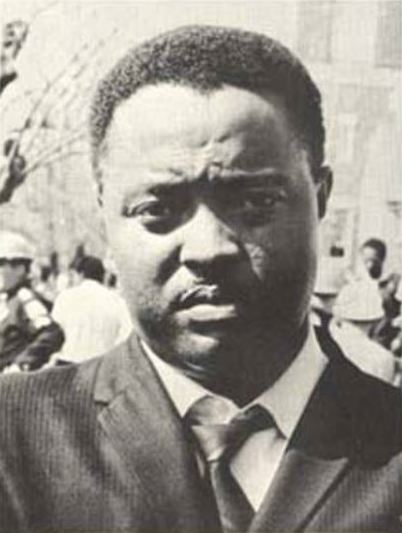
At a Glance
Attapulgus, the White Mob, and What War Taught a Black Soldier
Hosea Williams's formation as a civil rights activist began with violence — not the violence of demonstrations or confrontations with law enforcement but the specific, personal violence of a white mob attack in Attapulgus, Georgia, that left him hospitalised as a teenager. The experience was, in the most direct possible sense, an education in what the racial order was: not an abstract system of rules and conventions but a set of relationships backed by the willingness to injure and kill anyone who challenged its premises. Williams survived the attack and carried its lesson with him for the rest of his life — a lesson about what the racial order was willing to do and what, therefore, was required of those who were determined to change it.
His World War II service deepened rather than resolved the contradictions this lesson had raised. He served in the segregated U.S. Army in the European theatre — in a military that enforced racial separation among the soldiers fighting for a democracy whose most basic principle was the equal dignity of all persons — and survived combat in conditions that required genuine courage and genuine commitment to a cause that did not, in practice, apply its stated values to him. The experience of fighting for democracy while being denied it was common to the generation of Black veterans who came home from World War II to the Jim Crow South, and it was one of the primary catalysts of the civil rights movement's mid-century intensification: men who had survived Normandy and the Pacific were not going to accept the indignities of Jim Crow with the equanimity that had been demanded of earlier generations.
Williams returned to Georgia, earned his chemistry degree from Morris Brown College in Atlanta — one of the city's historically Black colleges — and began working as a research chemist for the U.S. Department of Agriculture while simultaneously building his civil rights career. The combination was characteristic of the generation of Black professionals who staffed the movement's organisations: people with advanced training and professional positions who devoted their evenings and weekends and eventually their careers to the freedom struggle, sustaining themselves economically while the movement they were building remained too resource-poor to pay them adequately.
The SCLC's Front-Line Fighter: Arrested, Beaten, Continuing
Williams joined the SCLC in the early 1960s and quickly became one of its most important field directors — not the most intellectually sophisticated, not the most eloquent, but the most willing to be on the front lines of the confrontations the SCLC's strategy required. He was arrested dozens of times in multiple states. He was beaten on multiple occasions. He was tear-gassed, clubbed, and knocked down in demonstrations from Georgia to Alabama to Mississippi, and he kept getting up and continuing. This quality — the willingness to absorb physical violence without retreating — was the single most important quality available to the SCLC's field staff, and Williams possessed it in extraordinary measure.
His relationship with King was one of the more complex in the SCLC's leadership — marked by genuine respect and genuine tension. Williams's combativeness, his willingness to act independently and to push harder and faster than King's more cautious approach sometimes sanctioned, created friction. He was the kind of movement figure who was easiest to appreciate at a distance — whose courage was indispensable but whose impulsiveness was sometimes inconvenient. King needed Williams's front-line fearlessness; Williams sometimes frustrated King's carefully calibrated strategic patience. The relationship worked because both men understood that they needed each other and because their shared commitment to the cause was stronger than their stylistic differences.
His operations spanned the movement's major campaign years — the Birmingham campaign of 1963, the St. Augustine, Florida campaign of 1964, the Selma voting rights campaign of 1965, the Chicago open housing campaign of 1966. In each of these campaigns, Williams was among the people who went first, who bore the initial force of whatever response the local authorities deployed, and who sustained the pressure through the days and weeks when the initial drama of confrontation had faded but the sustained organising work continued to be necessary. The movement's victories in these campaigns were built in part on his willingness to be the person who walked toward the thing that was going to hurt.
Bloody Sunday: At the Bridge's Crest with Lewis
The planning for the March 7, 1965 march from Selma to Montgomery assigned Williams and John Lewis to lead the column — to be the two people at the front as the approximately six hundred marchers crossed the Edmund Pettus Bridge and encountered whatever was waiting for them on the other side. Neither man could see the state troopers and the possemen until the column had crested the bridge's arch and the far bank came into view. What they saw was a line of Alabama state troopers in blue helmets, backed by Dallas County Sheriff Jim Clark's mounted possemen, blocking the road to Montgomery.
Major John Cloud ordered the column to turn back and gave them two minutes to comply. Williams and Lewis stood at the head of the column and did not move. Cloud ordered the troopers to advance. The troopers charged into the column with clubs, tear gas was deployed, and the possemen on horseback rode into the fleeing demonstrators. Williams was knocked down, tear-gassed, and beaten. The photographs and film footage of the attack — broadcast that evening across the country — showed him on the ground surrounded by troopers, the same images that produced the national revulsion that made the Voting Rights Act politically inevitable within weeks.
Williams's assignment to lead the march alongside Lewis was not accidental. The SCLC had sent two of its most physically courageous front-line figures to be the first people to absorb whatever the troopers deployed, on the theory — confirmed by the outcome — that what they absorbed would be absorbed on camera and would produce a response. The strategy worked precisely because Williams and Lewis were genuinely going to stay on the bridge, genuinely going to face whatever came, and the images of what came when they stayed were the images that broke open the Voting Rights Act's passage. Their courage was not merely personal; it was strategically essential.
St. Augustine, Georgia, and the Full Range of Front-Line Work
Williams's work in the SCLC's campaigns extended far beyond Selma. The 1964 St. Augustine, Florida campaign — organised by the SCLC to challenge the most comprehensively segregated city in Florida in the year the Civil Rights Act was being debated in Congress — was one of his most important and most personally dangerous assignments. St. Augustine's white supremacist community was organised and violent, and the demonstrations there produced some of the most visceral confrontations of the entire movement's campaign years: night marches through hostile white neighbourhoods, wade-ins at segregated beaches where white mobs attacked the demonstrators in the water, confrontations with the Klan whose violence was severe enough to generate the national attention the SCLC's strategy required.
Williams organised and led many of these demonstrations, putting himself in the path of the mob violence that the SCLC's strategy depended on provoking. His ability to maintain nonviolent discipline in the face of genuine violence — not the theatrical nonviolence of participants who believed the violence would stop short of serious harm, but the principled nonviolence of someone who knew the harm might be severe and was prepared to accept it — was what made him valuable in exactly these conditions. The St. Augustine campaign contributed to the political momentum that produced the Civil Rights Act's passage in July 1964, and Williams's front-line organising was part of the pressure that sustained that momentum.
Georgia Politics, Feed the Hungry, and the Post-Movement Career
Williams's transition from movement organising to electoral politics in the early 1970s was characteristic of the movement's broader transition from direct action campaigns to the exercise of political power through democratic institutions — the transition that the Voting Rights Act had made possible by giving Black southerners the formal political power they had been denied. He was elected to the Georgia state legislature in 1974, representing an Atlanta district, and served until 1985, working on issues of economic justice, criminal justice reform, and the continuation of the civil rights agenda through legislative means.
He ran for Atlanta mayor and for the U.S. Senate without success, and the electoral career he built was marked by the same combativeness that had characterised his movement work — he was not a politician who accommodated himself to existing power structures but one who continued to challenge them through the new terrain of electoral politics. His inability to build the broad coalitions that electoral success required was partly a product of the same qualities that had made him invaluable as a front-line field organiser: his directness, his combativeness, and his refusal to moderate his demands in the interest of political palatability were assets in demonstrations and liabilities in electoral campaigns.
The Feed the Hungry programme he founded became the primary expression of his continued commitment to economic justice in the post-movement period. He had understood, throughout his movement career, that the formal political victories of the Civil Rights Act and the Voting Rights Act left untouched the economic structures of poverty that were the material foundation of racial inequality, and that addressing those structures required sustained engagement with the conditions of poor people's daily lives. The Thanksgiving and Christmas meals he served to Atlanta's homeless and poor were not a substitute for structural economic change — he knew this and said it — but they were what he could do, and he did it for more than thirty years, expanding the programme from Atlanta to multiple cities and serving tens of thousands of people annually until his death. His son Hosea Williams II has continued the programme in his father's memory, maintaining the tradition of showing up for the hungry that Hosea Williams built.