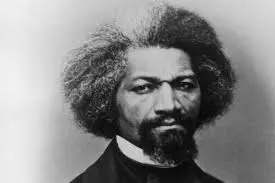
At a Glance
Talbot County, the Prohibition on Literacy, and the Education It Produced
Frederick Douglass was born in the specific material circumstances of Maryland's Eastern Shore slave economy — tobacco and grain farming on the Chesapeake's tidal flats, with a slave system that was somewhat different in character from the cotton plantation slavery of the Deep South but no less comprehensive in its dehumanisation. He was owned, used, separated from his mother in infancy, and sent to work for various branches of his enslaver's family before ending up in Baltimore, where the urban environment gave him more mobility and more encounters with the free Black and white working-class world than plantation slavery would have provided.
The moment that crystallised his political consciousness was not one of violence or spectacular cruelty — it was a sentence spoken by Hugh Auld to his wife Sophia, when Auld discovered she had been teaching young Frederick to read. Auld told Sophia that teaching a slave to read was dangerous and illegal, that it would make him dissatisfied and unmanageable, and that she must stop immediately. Douglass, who was listening, absorbed the prohibition as the most important political education he had ever received: if literacy made a slave unmanageable, then literacy was what he needed. He taught himself to read by every available means — trading bread for reading lessons with poor white boys he encountered, decoding letters chalked on lumber in the Baltimore shipyard where he later worked, reading whatever he could find — and each increment of literacy confirmed what Auld's prohibition had told him: that what the system most feared was a Black person with the tools to understand his own situation and to articulate it to others.
The copy of "The Columbian Orator" that Douglass acquired as a child — a collection of speeches and dialogues that included arguments for human liberty, for the rights of the oppressed, and against the legitimacy of slavery — was the most consequential single book in the history of American abolitionism. Its effect on Douglass was to give him a language for what he had been experiencing — a language that named slavery as a crime against humanity, that articulated the arguments for freedom in terms he could deploy, and that demonstrated that the spoken and written word could be a form of power. He read and reread it until he had absorbed not merely its arguments but its rhetorical methods, and those methods were the foundation of the oratorical style that would make him the most celebrated speaker in the American abolitionist movement.
The Escape and the New Name: September 1838
Douglass's escape from slavery on September 3, 1838, was not a spontaneous flight but a planned operation — the product of months of preparation, the assistance of Anna Murray (a free Black woman in Baltimore who would become his wife), and the borrowing of documents that described a free Black sailor. He dressed as a sailor, took a train from Baltimore to Wilmington, a ferry across the Delaware, another train to Philadelphia, and then reached New York City in less than twenty-four hours. The entire journey was conducted in the presence of people who could have identified him as an escaped slave — any encounter with a curious or hostile white person could have ended the escape. He reached New York by keeping his nerve and his disguise.
The choice of the name Douglass — taken from a character in Walter Scott's poem "The Lady of the Lake" — was the first act of self-authorship available to him, and he took it with a deliberateness that characterised everything he did. He did not choose his enslaver's name or any name that connected him to the system he had escaped; he chose a name from literature, from the same tradition of language and story and argument that he had been teaching himself to access since Sophia Auld's reading lessons and Hugh Auld's prohibition. The name was a statement: he was a free man who had named himself from the cultural tradition that free men had access to.
He and Anna Murray married in New York and moved to New Bedford, Massachusetts, where the large free Black community and the active abolitionist networks offered both safety and opportunity. New Bedford was also a whaling town with a mixed-race working class, and Douglass worked as a caulker and labourer while attending the abolitionist meetings that were central to the town's intellectual and political life. Three years after his arrival he was invited to speak at a Massachusetts Anti-Slavery Society meeting on Nantucket, and the speech he gave — drawing on the experience of his enslavement, described in his own voice with a directness and a power that audiences had never encountered before — produced a response that immediately transformed his position in the abolitionist movement from a new member to its most compelling public voice.
The Narrative of 1845: Writing Against Legal Safety
Douglass's decision to publish "Narrative of the Life of Frederick Douglass, an American Slave" in 1845 was an act of political courage that required him to make himself legally vulnerable in order to make the movement's argument concrete. The narrative named his enslaver, named the plantation, named the specific incidents of violence and cruelty he had witnessed and experienced — all of which made him identifiable and therefore legally subject to recapture under the Fugitive Slave Act. His Garrisonian abolitionist mentors urged caution; he published anyway, because he understood that the abstraction of "the slave" was less powerful than the specific, named, documented reality of Frederick Douglass's slavery.
The book was an immediate sensation. It sold forty-five thousand copies in its first five years, was translated into multiple European languages, and was read by audiences who had never previously had access to a first-person account of slavery from someone who had experienced it and escaped it. Its literary quality — the precision of its observation, the control of its narrative voice, the rhetorical sophistication of its argument — was itself a political statement: here was a man who had been defined by his enslavers as property, as subhuman, as incapable of the intellectual and moral capacities that human dignity required, and who had produced a piece of writing that demonstrated those capacities in every sentence.
The book's publication required him to leave the United States for his own safety. He went to Britain, where he spent nearly two years lecturing to abolitionist audiences across England, Ireland, Scotland, and Wales, and where British admirers raised the approximately 150 pounds needed to purchase his legal freedom from Thomas Auld. The British reception confirmed something that Douglass had understood about the relationship between the American antislavery movement and international opinion: that the embarrassment of having the world see what American slavery actually was, as described by a man who had experienced it, was a form of political pressure on the American government that complemented the domestic abolitionist campaign.
The North Star and the Break with Garrison
Douglass's decision to found the North Star newspaper in Rochester, New York, in December 1847 was also a decision to break, gradually and then definitively, with William Lloyd Garrison and the wing of the abolitionist movement whose patronage had launched his career. Garrison's abolitionism was doctrinally committed to the proposition that the U.S. Constitution was a pro-slavery document — he famously burned copies of it — and to the refusal of electoral politics on the grounds that participating in a corrupt political system legitimated it. Douglass had come to believe, based on his own reading of the Constitution and his own assessment of what tactics were most likely to produce results, that the Constitution could be interpreted as an anti-slavery document and that electoral politics, including the nascent Republican Party, were instruments that the abolitionist movement should use.
The break with Garrison was painful for both men and became bitter — Garrison was not gracious in opposition, and the dispute produced personal attacks that were unworthy of both parties' stated commitment to the principles of human dignity they were fighting for. But the break was necessary and the strategic judgment behind it was correct: the abolitionist movement that changed American law did so through electoral politics, through the Republican Party, through the election of Abraham Lincoln, and through the constitutional amendments that abolished slavery and granted Black citizenship. The movement that refused electoral engagement on principle remained morally pure but politically marginal.
The North Star — and its successive renamed versions, Frederick Douglass' Paper and Douglass' Monthly — was the most important Black-owned and Black-edited newspaper of the antebellum period, providing Douglass with a platform independent of any white abolitionist organisation and with a continuous public presence between his major speeches and lecture tours. The newspaper's motto — "Right is of no sex — Truth is of no colour — God is the Father of us all, and we are all brethren" — reflected Douglass's consistent commitment to both racial equality and gender equality: he was among the first prominent public figures to publicly support women's suffrage, attending the Seneca Falls Convention in 1848 and endorsing its Declaration of Sentiments.
What to the Slave is the Fourth of July: The Speech America Has Never Finished Answering
"What to the Slave is the Fourth of July?" — delivered at Corinthian Hall in Rochester on July 5, 1852, at the invitation of the Rochester Ladies Anti-Slavery Society — is the most powerful speech in American political history on the subject of the gap between America's stated values and its actual practices. Its argument is not complicated, but its execution is devastating: Douglass begins by acknowledging the genuine achievements of the Founding Fathers, the genuine courage it took to declare independence from the greatest empire of the era, the genuine significance of the principles articulated in the Declaration of Independence. He acknowledges all of this. And then he turns.
He turns, and he asks what all of this means to him — to a man who was born enslaved, who escaped, and who now lives in a country that still holds four million people in bondage and that celebrates its freedom with a self-congratulation that is, in his presence and in the presence of those four million people, not merely hollow but obscene. The speech does not merely criticise American slavery; it indicts American democracy's capacity for self-deception — the ability of a nation that holds human beings as property to celebrate its commitment to human freedom without experiencing the contradiction as the moral emergency it actually is. The famous passage — "This Fourth of July is yours, not mine. You may rejoice, I must mourn" — is the most direct statement of that indictment, and it has not become less true in the century and a half since it was delivered.
Lincoln, the Civil War, and the Long Disappointment of Reconstruction
Douglass's relationship with Abraham Lincoln was one of the most significant political relationships in American history — a relationship between the most powerful and the most morally urgent voices in the nation's response to the crisis of slavery, conducted in the specific context of a war whose stakes were the existence of the Union and the survival of slavery. Douglass met Lincoln three times; Lincoln listened to him with a seriousness that no other Black American received from any president of the era; and the Emancipation Proclamation, however limited in its immediate scope, was a product of the political and moral pressure that Douglass and the abolitionist movement had maintained for decades.
He saw the Thirteenth Amendment abolish slavery, the Fourteenth Amendment establish Black citizenship and equal protection under law, and the Fifteenth Amendment establish Black male voting rights. He watched Reconstruction build the first genuinely biracial democratic governments in the South's history, with Black elected officials at every level of government from school boards to the United States Senate. And then he watched all of it be destroyed — the withdrawal of federal troops from the South in 1877, the rise of the Redeemer governments, the systematic disenfranchisement of Black voters through terror and legal manipulation, the imposition of the Black Codes and the sharecropping system that reproduced slavery's essential economic features under a different legal form.
Douglass died in February 1895, two months before Booker T. Washington delivered the Atlanta Compromise speech that would accept the withdrawal of Black political rights in exchange for economic opportunity — the accommodation that Douglass had spent his entire life arguing against. The debate that his life's work had been conducting with the forces of accommodation and with American democracy's recurring failure to live up to its stated values did not end with his death. It has not ended yet.