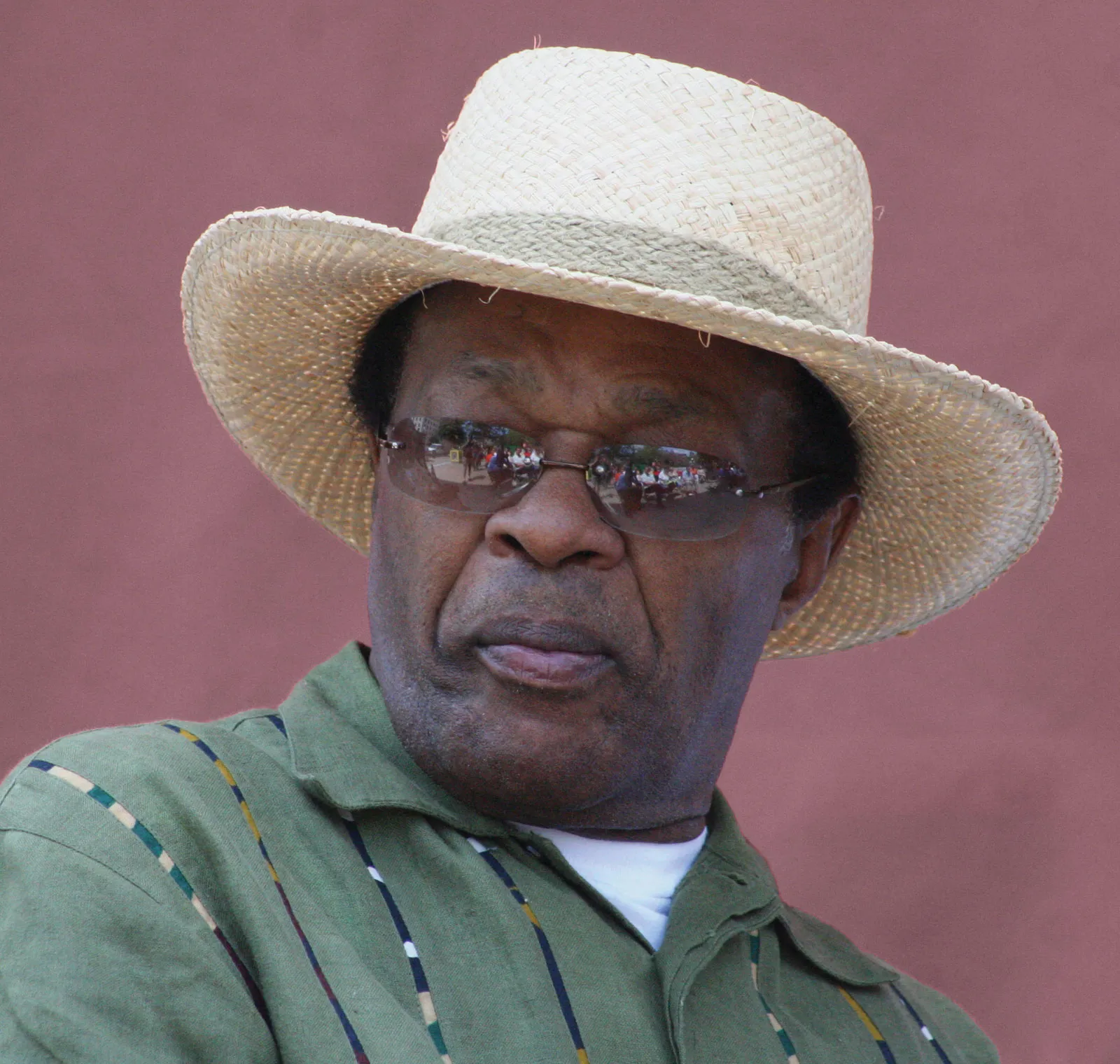
Marion Barry, SNCC organiser and four-time Washington D.C. mayor whose career combined genuine achievement in urban governance and advocacy for the poor with personal conduct that provided his enemies with the instrument of his destruction.
United States · Civil Rights Movement

Marion Barry

Marion Shepilov Barry Jr. was born on March 6, 1936, in Itta Bena, Mississippi, the son of a sharecropper family in Leflore County, the same county where Emmett Till would be murdered nineteen years later and where SNCC would later concentrate some of its most dangerous voter registration work. He moved with his mother to Memphis, Tennessee, after his father's death, excelled academically, earned a scholarship to LeMoyne College in Memphis, and went on to Fisk University in Nashville where he encountered the civil rights movement through the student activism that was beginning to transform the city in the late 1950s. He participated in the early Nashville movement, attended meetings, and eventually became the first chairman of the Student Nonviolent Coordinating Committee when SNCC was founded at the Shaw University conference in April 1960. His SNCC leadership was relatively brief and was followed by graduate study in chemistry at Kansas and Tennessee before he dropped out to become a full-time civil rights organiser. He moved to Washington D.C. in 1965 to work for SNCC's D.C. project, recognised immediately the political potential of a city with a majority Black population and a tiny Black political class, and began building the political base that would eventually carry him to the mayor's office. He was elected to the D.C. school board in 1971, to the city council in 1974, and to the mayoralty in 1978, 1982, and 1986 — three consecutive terms during which he transformed Washington D.C.'s Black community's access to government employment and city contracts, built the Summer Youth Employment Program that put thousands of young Black D.C. residents to work, and maintained genuine loyalty among the city's poorest residents by being accessible and responsive to them in ways that more respectable politicians rarely were. He was arrested in January 1990 in an FBI sting operation — lured to a hotel room by a former girlfriend who was working as a federal informant, where he was filmed buying and smoking crack cocaine. He was convicted of a misdemeanour cocaine possession charge after the jury deadlocked on thirteen other charges. He served six months in federal prison, returned to Washington D.C., was elected to the city council from Ward 8 in 1992, and was elected mayor for a fourth time in 1994. He died in office as a city council member on November 23, 2014, at the age of seventy-eight. His story is the civil rights movement's most complete and most uncomfortable example of the gap between what the struggle's participants aspired to be and what power and its corruptions produced in some of them.

United States SNCC Washington D.C. Mayor Itta Bena Summer Youth Employment

Born: 6 March 1936, Itta Bena, Mississippi, USA  |  Died: 23 November 2014, Washington, D.C., USA — aged seventy-eight

At a Glance

Full NameMarion Shepilov Barry Jr.; born 6 March 1936, Itta Bena, Mississippi; first SNCC chairman 1960; moved to Washington D.C. 1965; elected D.C. school board 1971; D.C. city council 1974; mayor of Washington D.C. 1979-1991 (three terms); arrested in FBI sting January 1990; convicted of misdemeanour cocaine possession; served six months in federal prison; elected D.C. city council Ward 8 1992; elected mayor fourth time 1994; served as D.C. city council member Ward 8 until his death; died 23 November 2014, Washington D.C., aged seventy-eight
Born6 March 1936, Itta Bena, Leflore County, Mississippi; son of a sharecropper family; his father died when he was young and his mother moved the family to Memphis, Tennessee; he excelled academically, attended LeMoyne College in Memphis, transferred to Fisk University in Nashville where he encountered the civil rights movement, and became SNCC's first chairman at the April 1960 Shaw University conference
Died23 November 2014, Washington D.C.; died of cardiac arrest at the age of seventy-eight; was still serving as Ward 8 city council member at the time of his death; was mourned by Washington D.C.'s Black community with a grief that reflected both his genuine contributions to the city's poorest residents and their awareness that his story was more complicated than grief alone could hold
SNCC First ChairmanWas elected the first chairman of the Student Nonviolent Coordinating Committee at the founding conference at Shaw University in April 1960; his tenure as SNCC chairman was relatively brief and was not the most influential period of his civil rights career; his subsequent significance was in Washington D.C. politics rather than in SNCC's Mississippi and Georgia organising, but his founding role in SNCC placed him in the movement's most important generation of student activists and gave him the political formation and the community organising skills that his subsequent political career drew on
Three Terms as Mayor: The Genuine AchievementsServed as mayor of Washington D.C. from 1979 to 1991; during his three terms he dramatically increased Black employment in D.C. government — replacing a largely white city bureaucracy with one that reflected the majority-Black population; expanded city contracting with Black-owned businesses; created the Summer Youth Employment Program that provided jobs to tens of thousands of young D.C. residents; was genuinely accessible to the city's poorest residents in ways that more respectable politicians were not; his coalition was built on Ward 8 and other poor Black communities who received from him a quality of attention and responsiveness that they had not received from his predecessors
The FBI Sting and the ConvictionWas arrested in January 1990 after FBI agents, using a former girlfriend named Rasheeda Moore as an informant, lured him to a hotel room where he was filmed buying and smoking crack cocaine; the case became one of the most widely watched prosecutions of a sitting mayor in American history; the jury deadlocked on thirteen of the fourteen charges; Barry was convicted on one misdemeanour cocaine possession charge; sentenced to six months in federal prison; the prosecution was widely seen in Washington D.C.'s Black community as selectively targeted, regardless of what the conduct itself represented
The Return and the Fourth TermWas released from prison in 1992; was elected to the D.C. city council from Ward 8 later that year; was elected mayor for a fourth time in 1994, defeating incumbent Sharon Pratt Kelly — a victory that was simultaneously a demonstration of the loyalty his core constituency maintained for him and a reflection of the incumbent's failures; his fourth term was constrained by a federal financial control board imposed by Congress due to the city's fiscal crisis; remained on the city council until his death in 2014

Itta Bena, Memphis, Nashville, and the Journey to Washington

Marion Barry was born in Itta Bena, Mississippi, in Leflore County — the same county where Emmett Till would be murdered in 1955 and where SNCC's voter registration work would concentrate some of its most dangerous efforts in the early 1960s. His Mississippi origins were the specific material conditions of the racial order that he would spend his life responding to, in ways that were various and sometimes contradictory but that were never divorced from the specific experience of growing up Black in one of America's most violently white-supremacist states.

His mother's move to Memphis after his father's death gave him a different educational environment — one in which his academic gifts could be recognised and supported — and eventually led him to LeMoyne College and then to Fisk University in Nashville, where the civil rights movement was beginning the period of student activism that would produce SNCC. His encounter with the Nashville movement, his attendance at the meetings, and his participation in the founding conference at Shaw University in April 1960 that made him SNCC's first chairman were the formation of a political person whose subsequent career in Washington D.C. was both a continuation of and a departure from what the movement had been.

His move to Washington D.C. in 1965 was a recognition of political opportunity: a city with a majority Black population, almost no Black political representation in city government, and the specific paradox of being the capital of a democracy whose residents lacked congressional voting representation. Barry saw, more clearly than most people in the city's civil rights community at the time, that the combination of D.C.'s Black demographic majority and the city's imminent move to home rule created conditions in which a skilled community organiser with movement credibility could build the political base for something unprecedented.

Three Terms: What Barry Built and Who Benefited

Barry's three terms as mayor of Washington D.C. — from 1979 to 1991 — produced genuine changes in who had access to power and resources in the city, and those changes were most significant for the residents who had previously had the least access. His systematic replacement of the largely white city government workforce with Black employees reflected the movement's argument that the purpose of political power was to change who held economic power, and his expansion of city contracting with Black-owned businesses was an application of the same principle to the private sector.

The Summer Youth Employment Program was his most enduring and most broadly praised programme — a city-funded employment initiative that put tens of thousands of young D.C. residents to work each summer, providing not just income but work experience, professional connections, and the kind of public investment in young people's futures that Ward 8 and similar neighbourhoods had not historically received from city government. The programme was the practical expression of Barry's political coalition: his core constituency was the city's poorest Black residents, and he maintained their loyalty by providing them with something concrete.

His accessibility to poor constituents was a genuine political virtue, not merely a tactical calculation. People who could not get appointments with other elected officials could reach Barry. His presence at community events in Ward 8 and similar neighbourhoods was regular and substantive. He treated the residents of the city's poorest communities as political actors whose support he was accountable to rather than as clients whose votes he was managing. This quality — genuine political responsiveness to the people who had the least leverage — was the foundation of the loyalty that survived his arrest, his conviction, and his imprisonment.

The FBI Sting: What It Was and What It Meant

The January 1990 FBI sting operation that produced Barry's arrest was, simultaneously, an accurate documentation of real conduct and an exercise of federal law enforcement power against a Black political figure that Washington D.C.'s Black community experienced as selective prosecution. Both things were true. The footage of Barry smoking crack cocaine in the Vista Hotel was not fabricated; the conduct it documented was real. The FBI's willingness to deploy the resources and the informant relationships required to obtain that footage against a sitting mayor of Washington D.C. was not politically neutral; the federal government's relationship to Washington D.C. was a relationship of considerable power, and the use of that power against the city's Black mayor was experienced by his constituency as an act of political warfare as well as law enforcement.

The jury's deadlock on thirteen of the fourteen charges — and conviction only on the misdemeanour possession count — was one of the most discussed jury outcomes in American legal history, interpreted variously as jury nullification by Black jurors who refused to convict their mayor on the more serious charges, as a reasonable response to the weakness of the evidence on those charges, and as a demonstration of what happens when federal prosecutors pursue a case against someone whose constituency regards the prosecution itself as politically motivated. All three interpretations had some merit.

Barry's statement after his arrest — "the bitch set me up" — became the most quoted sentence of the episode, but the sentence that received less attention was his subsequent observation that he had a problem and he needed help. The combination of genuine addiction, genuine political recklessness, and genuine understanding that his conduct had been wrong was compressed into those two moments, and the compressed version was less interesting than the uncompressed reality: a man whose political gifts had been extraordinary, whose personal conduct had been self-destructive, and whose constituency's loyalty had survived both.

The Return, the Fourth Term, and the Complicated Legacy

Barry's election to the city council in 1992, two years after his arrest and less than a year after his release from prison, was a demonstration of what his political base understood about what his career had been: not a fraud but a complicated reality in which real service to the city's poorest residents coexisted with personal conduct that had provided his enemies with the instrument of his downfall. His election as mayor for a fourth time in 1994 extended that understanding: the voters of Washington D.C. who chose him knew what they were choosing, and what they were choosing was the person who had been most accessible to them, most responsive to their specific needs, most willing to use city power in ways that changed who benefited from it.

The civil rights movement's most uncomfortable legacies are the figures whose genuine contributions to Black liberation coexist with conduct that the movement's stated values cannot accommodate. Barry is among these figures: a man who had been SNCC's first chairman, who had built a political career on the specific demands of Washington D.C.'s poorest Black residents, who had made the Summer Youth Employment Program and the expansion of Black city employment real, and who had also governed with the kind of corruption and personal recklessness that made federal prosecution possible and gave the movement's enemies the evidence they needed to take him down.

He died on November 23, 2014, still serving on the city council from Ward 8 — the ward of Washington D.C. whose residents had remained his most loyal constituency through everything, who had given him his political longevity and his political meaning. The civil rights movement produced people who were saints and people who were merely human, and the merely human ones are often more instructive about what the movement actually was than the saints are. Barry was decidedly, comprehensively, and finally human.

Other Civil Rights Movement Profiles

USA · Civil Rights John Lewis Fellow SNCC founding generation member who took the path of principled electoral politics that contrasted with Barry's more complex arc USA · Civil Rights Ella Baker SNCC founding mentor who organised the conference where Barry became first chairman — whose group-centred philosophy Barry's charismatic-mayor model diverged from USA · Civil Rights Fannie Lou Hamer Whose genuine grassroots accountability to the poor was the movement standard that Barry's career both aspired to and failed to maintain USA · Civil Rights Bob Moses SNCC director whose consistent refusal of personal power and celebrity was the direct contrast to Barry's embrace of the mayoral office USA · Civil Rights Julian Bond Fellow SNCC founding generation member who chose the path of legislative politics and maintained his movement principles more consistently than Barry USA · Civil Rights Jesse Jackson Fellow simultaneously celebrated and controversial Black political figure whose career arc had structural parallels to Barry's USA · Civil Rights Lawrence Guyot SNCC organiser who moved to Washington D.C. and organised there for decades in the same city Barry came to govern USA · Civil Rights Andrew Young SCLC figure who also transitioned from movement organising to elected office as Atlanta mayor — whose arc was smoother and less controversial than Barry's USA · Civil Rights Louis Farrakhan Fellow figure whose genuine community contributions and documented personal failings created the same uncomfortable accounting problem as Barry's USA · Civil Rights Martin Luther King Jr. The movement's moral standard against which all its subsequent figures are measured — and by which Barry's career requires the most honest assessment
Share X Facebook WhatsApp LinkedIn