Essential Profiles
The men and women who decided that nonviolent petition was not enough — that Black liberation required power, not just rights; dignity, not just integration; revolution, not just reform. They built armed community patrols that policed the police, ran free breakfast programmes that fed 20,000 children a day, organised across colour lines in coalitions that terrified the FBI, theorised new forms of resistance from prison cells, and paid with their lives, their freedom, and their exile. From Malcolm X's electrifying redefinition of what Black people owed America, to Fred Hampton's Rainbow Coalition, to Angela Davis's decades of prison abolitionist work — these are the people who refused to wait.
The Civil Rights Act and the Voting Rights Act were signed. Legal segregation was dismantled. And yet Black Americans in northern cities lived in overcrowded ghettos with substandard schools, faced routine police brutality, and were excluded from economic opportunity by discrimination no law had touched. For a new generation — shaped by the Vietnam War, by decolonisation movements across Africa and Asia, and by the murders of Medgar Evers, Malcolm X, and Martin Luther King Jr. — integration into a burning house was no longer the point. The point was power.
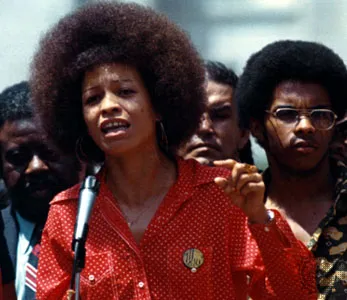
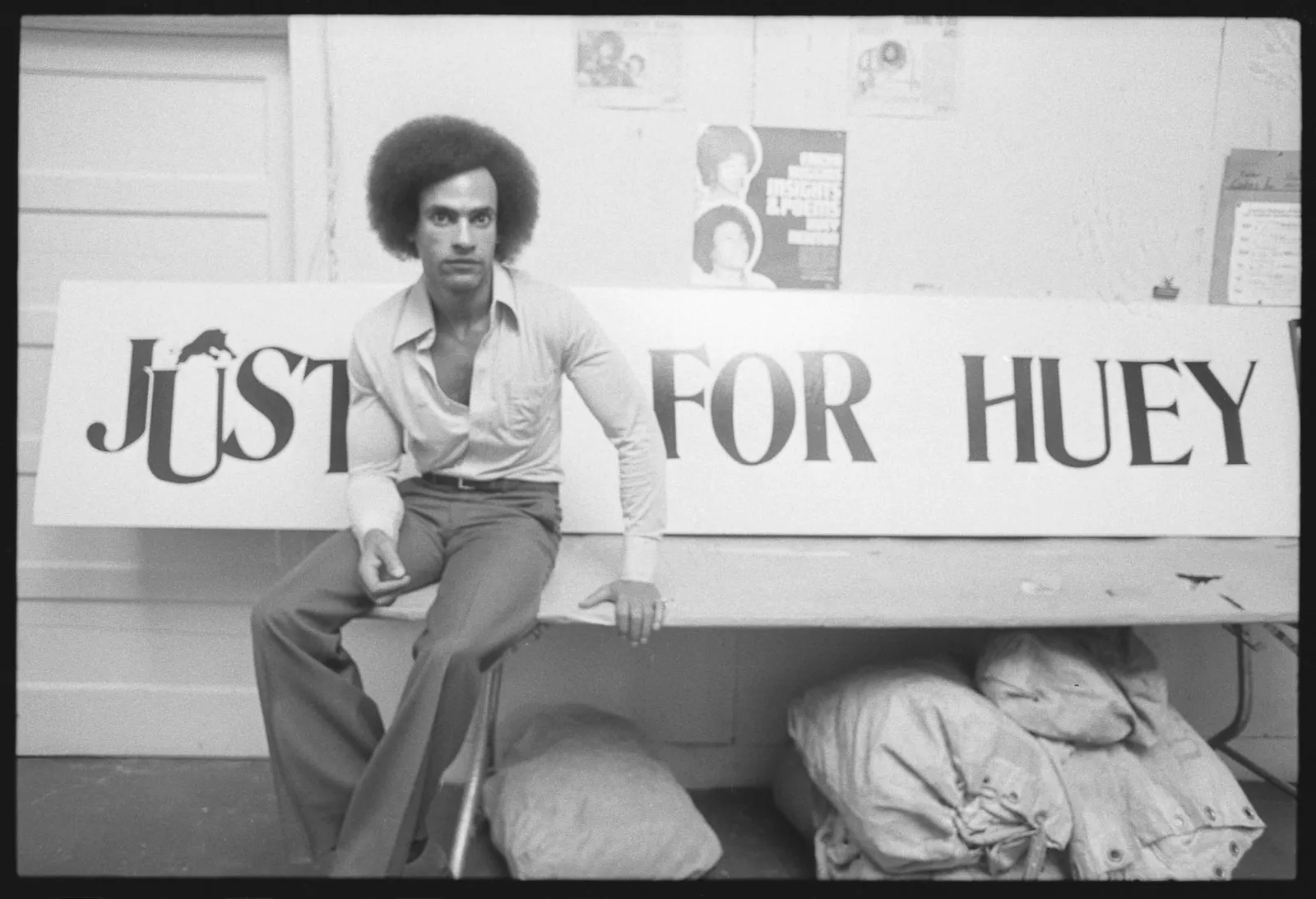
The Black Panther Party's Ten-Point Program, drafted by Huey P. Newton and Bobby Seale in 1966, demanded decent housing, education, employment, and an end to police brutality. The party's Survival Programs — free breakfasts, health clinics, legal aid, sickle-cell testing — delivered what the state refused to. At its peak the BPP had 5,000 members across 68 chapters nationwide. Elaine Brown turned the Oakland chapter into a political machine capable of running candidates for city office.
J. Edgar Hoover declared the Black Panther Party "the greatest threat to the internal security of the country." COINTELPRO — the FBI's Counter Intelligence Programme — deployed informants, forged letters, fabricated evidence, and coordinated with local police to destroy the movement. Fred Hampton was drugged and shot in his bed. Geronimo Pratt spent 27 years in prison for a murder the FBI knew he did not commit. The full scale of the government's war on Black liberation remains one of the great unreckoned crimes in American history.
Long before Stokely Carmichael first shouted "Black Power!" into a microphone in Greenwood, Mississippi in June 1966, a parallel tradition to nonviolent integration had always existed within Black America. It ran through David Walker's incendiary 1829 Appeal, through Nat Turner's rebellion, through the Civil War regiments that fought for their own freedom, through Marcus Garvey's Universal Negro Improvement Association, through Robert F. Williams's armed NAACP chapter in Monroe, North Carolina. What the mid-1960s did was make this tradition visible, urgent, and organisationally powerful in a new way.
No individual shaped the intellectual and emotional landscape of Black Power more than Malcolm X. Born Malcolm Little in Omaha, Nebraska, orphaned in effect by the terror and poverty that destroyed his family, imprisoned at twenty, transformed by the Nation of Islam's message of Black pride and self-determination — he emerged as the most electrifying orator in America, the man who said what millions thought but had been told never to say. Where King spoke to white liberals, Malcolm spoke to the Black working class and the poor. Where King demanded integration, Malcolm demanded self-determination. Where King preached nonviolence, Malcolm insisted on the right of self-defence. His assassination in February 1965 — while he was evolving toward a more internationalist, less separatist vision — cut short what might have been the most important political mind of the twentieth century.
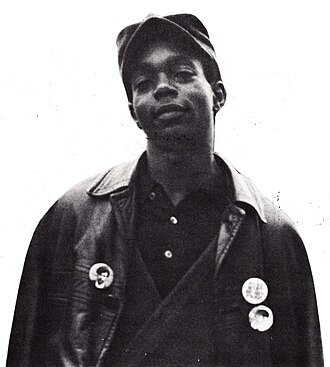
In October 1966, Huey P. Newton and Bobby Seale founded the Black Panther Party for Self-Defense in Oakland, California. Their first act was to read the California Penal Code and the state's open-carry firearms law. Their second act was to stand on street corners in Oakland with loaded rifles, watching the police. The police, accustomed to brutalising Black residents without witnesses, were suddenly being monitored and documented. The Panthers' legal — if explosive — act of armed self-policing spread across the country within months. When they marched into the California State Legislature in Sacramento in May 1967 carrying loaded weapons to protest a gun-control bill targeting them, they became front-page news around the world.
The Panthers are remembered for their guns. Their most lasting material impact was their social programmes. The Free Breakfast for Children Program, initiated in Oakland in January 1969, was eventually serving 20,000 children a day across 19 cities — providing more free breakfasts than the federal government. The BPP also ran free health clinics, legal aid offices, ambulance services, pest-control programmes, and sickle-cell anaemia testing. Elaine Brown, who took over the party when Newton went into exile in Cuba, ran these programmes while simultaneously building the political infrastructure that nearly elected a Black mayor of Oakland. The FBI found the breakfast programme so threatening that agents pressured school principals to refuse cooperation and sent letters to parents claiming the food was poisoned.
Fred Hampton was twenty years old when he became Deputy Chairman of the Illinois Black Panther Party. In less than two years he had forged an alliance that should have been impossible: the Black Panthers, the Young Patriots (poor Southern white migrants), the Young Lords (Puerto Rican gang), the Brown Berets (Chicano activists), and several Chicago street gangs including the Blackstone Rangers. He called it the Rainbow Coalition. "We don't think you fight fire with fire best," he said. "We think you fight fire with water best. We're going to fight racism with solidarity." On 4 December 1969, FBI informant William O'Neal provided the floor plan of Hampton's apartment. Chicago police raided it at 4:45 a.m. Hampton, drugged by O'Neal, never woke up. He was shot twice in the head at point-blank range. He was 21 years old. Mark Clark was also killed in the raid.
J. Edgar Hoover's COINTELPRO was not a legitimate law-enforcement programme. It was a political assassination programme — legal and literal — targeting organisations and individuals the FBI considered threats to the established racial and political order. Between 1956 and 1971, COINTELPRO deployed forged letters designed to trigger gang wars between the Panthers and US Organisation, planted informants who incited violence and provided intelligence for raids, pressured employers to fire activists, and coordinated with local police departments to prosecute Panthers on fabricated charges. Geronimo Pratt served 27 years for a murder committed while he was at a Panthers meeting in Oakland — a fact the FBI knew from surveillance tapes they withheld. Dhoruba Bin Wahad served 19 years before suppressed FBI evidence exonerated him. The programme, when finally exposed by the Senate Church Committee in 1975, revealed a government willing to commit serious crimes to prevent Black political organisation.
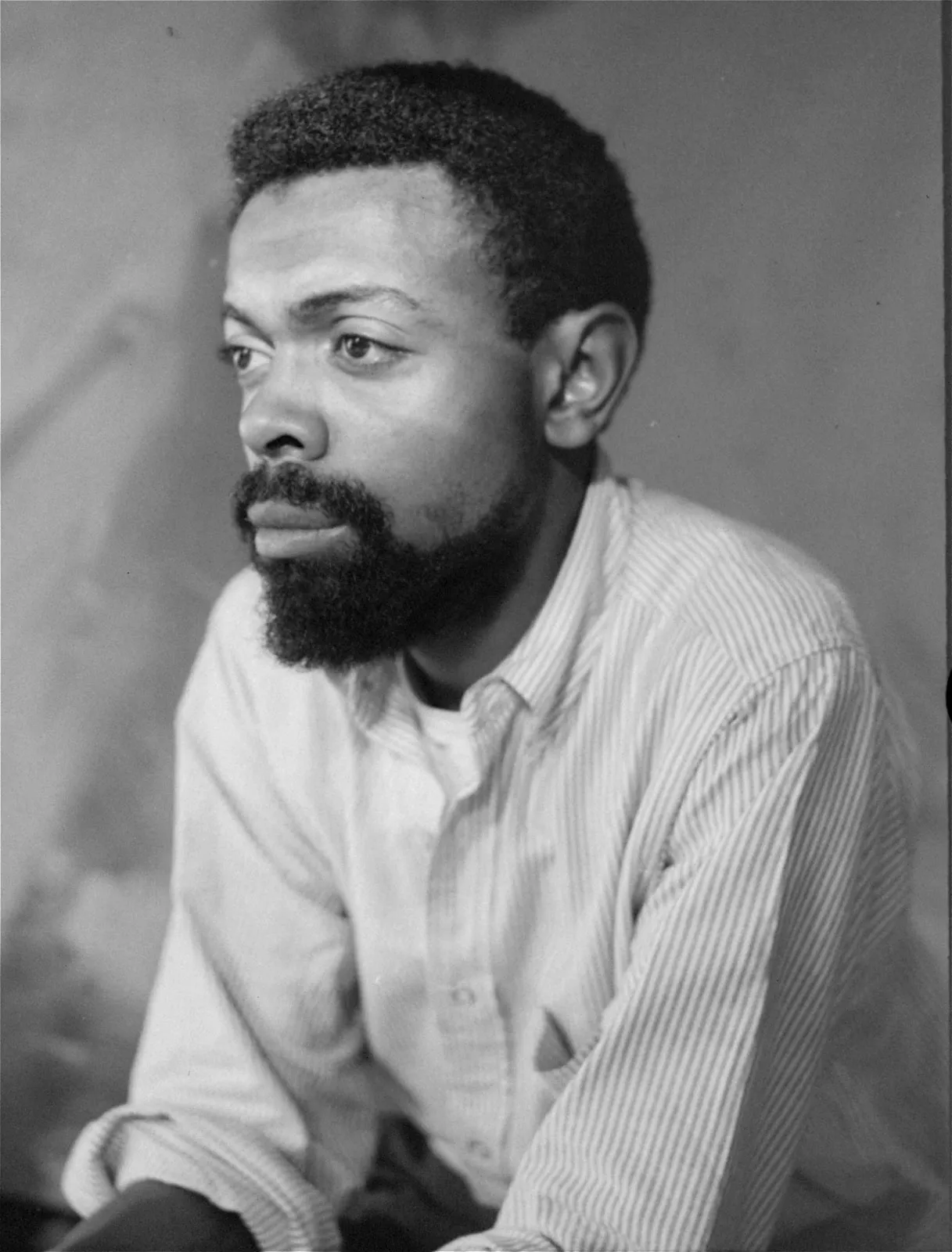
The Black Power movement produced a body of political and cultural thought that continues to shape how the world understands race, capitalism, imperialism, and liberation. Angela Davis, acquitted of murder charges in 1972 after an international campaign, spent the following five decades developing a theory of race, gender, and incarceration that prefigured the modern prison abolition movement. George Jackson, writing from his prison cell, produced Soledad Brother and Blood in My Eye — theoretical works of extraordinary force that remain in print. Amiri Baraka built the Black Arts Movement into the cultural arm of the revolution. Emory Douglas's art gave the movement its visual language. The ideas did not die when the organisations were destroyed. They went underground, into universities, into community organising, into hip-hop, and into the twenty-first-century movements that claim this tradition.

Choose which cookies you're happy for us to use. You can change this at any time from the "Cookie Settings" link in the footer.