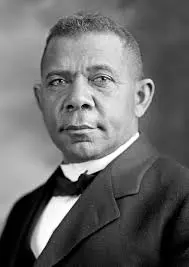
At a Glance
Born Into Slavery: Franklin County and the World That Made Him
Booker T. Washington was born into the most comprehensive form of human unfreedom that nineteenth-century America had produced — chattel slavery, in which his body, his labour, and his children belonged legally to another person and could be sold, separated, and destroyed at that person's will. The plantation on which he was born in Franklin County, Virginia, was a tobacco farm of modest size whose enslaved population included his mother Jane, his siblings, and himself, and whose white owner James Burroughs was neither the most brutal nor the most benign of Virginia's slaveholders but simply a man who owned human beings as a matter of economic and social convention.
Washington's account of his childhood in slavery, in "Up From Slavery," is characteristically restrained — he describes the physical conditions with precision but without self-pity, and he is notably reluctant to express anger at the institution that had owned him. This restraint was partly temperamental and partly strategic: Washington's entire political philosophy was built around the proposition that Black advancement required demonstrating capability and good character rather than expressing grievance, and the autobiography was itself a political document designed to advance that proposition. But the restraint also reflected something genuine about his formation: he was nine years old when slavery ended, and his most vivid memories of it were of physical privation and of the hunger for knowledge that the slave system's prohibition on Black literacy had made both more intense and more clearly political.
The family's move to Malden, West Virginia, after emancipation placed them in a new form of poverty — free but landless, without capital or educational access, in a community that valued their labour but not their advancement. Washington worked in salt furnaces and coal mines, performing the heavy manual labour that West Virginia's extractive economy offered to Black workers. He taught himself to read from a copy of Noah Webster's spelling book, described in "Up From Slavery" as the most important acquisition of his early life, and he pursued his education with an intensity that suggests he understood, even as a child, that literacy was the prerequisite for everything else he wanted.
Hampton Institute: The Philosophy That Shaped a Life
Washington's five-hundred-mile walk to Hampton Normal and Agricultural Institute — undertaken at the age of approximately sixteen, with no money and no connections, driven by the single conviction that Hampton offered the education he needed — is one of the founding myths of his autobiography and of his public persona. The walk was real, and its physical extremity — sleeping under a sidewalk, going without food for days, arriving at the school's door in shabby, road-worn clothing — served as the condition of entry into the world that would form his mature convictions.
General Samuel Chapman Armstrong, Hampton's founder and principal, was one of the most consequential figures in Washington's life — a man whose philosophy of Black advancement Washington absorbed so completely that it became indistinguishable from his own. Armstrong had commanded Black Union soldiers during the Civil War and had come away convinced that what formerly enslaved people needed most was not classical education or political rights but practical training in vocational skills, the cultivation of moral character through disciplined work, and the development of the economic capacities that would eventually, in Armstrong's view, earn them the respect and the political rights that could not be simply legislated from above.
This philosophy — which historians have described as simultaneously genuinely committed to Black advancement and deeply accommodating of the racial hierarchy that made that advancement difficult — became Washington's own. He absorbed Armstrong's conviction that industrial education was the right strategy for Black uplift not as an external imposition but as a genuine belief, and he spent the rest of his life building institutions and making arguments on its basis. Whether that belief reflected an honest assessment of the possible within the constraints of post-Reconstruction America, or an internalisation of the racial order's own account of what Black people were capable of and entitled to, is a question that Washington's critics raised in his lifetime and that historians have continued to debate ever since.
Building Tuskegee: Institution as Argument
Washington arrived in Tuskegee, Alabama, in June 1881 to establish a normal school for Black students that the Alabama legislature had authorised with a two-thousand-dollar appropriation for salaries but nothing for buildings or land. What he built over the next three decades was one of the most remarkable feats of institution-building in American educational history: a campus of more than one hundred buildings, most of them constructed by students as part of their industrial education curriculum; a faculty that eventually included George Washington Carver, whose agricultural research at Tuskegee transformed the economic possibilities of southern farming; an endowment built through decades of fundraising from northern philanthropists including Andrew Carnegie, who donated the Tuskegee library; and a student body of fifteen hundred that represented the largest concentration of Black higher education students in the country.
Tuskegee was itself an argument — a physical demonstration of the proposition that Black people, given the opportunity, could build and maintain institutions of quality and complexity that required precisely the skills and character traits that the racial order claimed Black people lacked. Washington used Tuskegee as evidence in every speech he gave and every article he wrote: here was what Black hands and Black minds could build, when given the chance. The argument was real and the achievement was genuine. The question that Du Bois and others raised was whether the argument's terms — accept the racial order's premises about what Black people should aspire to, and demonstrate competence within those terms — were adequate to the scale of the injustice that needed to be addressed.
Washington's fundraising operation was extraordinary in its scope and sophistication. He cultivated relationships with the wealthiest men in America — Carnegie, John D. Rockefeller, Collis Huntington — with a combination of charm, genuine intellectual substance, and strategic flattery that made donating to Tuskegee feel, to its donors, like participation in a project of civilisational importance. The money that flowed into Tuskegee financed not only the institution itself but Washington's broader political operation: the staff, the travel, the communications infrastructure of the Tuskegee Machine that controlled so much of Black institutional life in the early twentieth century.
The Atlanta Compromise and the Du Bois Critique
The Atlanta Exposition speech of September 18, 1895, was the single most consequential public address in Washington's career and one of the most consequential in African American history. He delivered it to a mixed-race audience at the Cotton States and International Exposition — white southerners, northern investors, and a few Black observers in the segregated gallery — and it proposed a bargain: Black southerners would accept social separation from whites, would not agitate for social equality or the restoration of the political rights that Reconstruction had briefly granted, and would focus on economic development through vocational labour and business enterprise within the segregated South. In exchange, white southerners and northern investors would provide the educational and economic opportunities that Black advancement required.
The white response was ecstatic. Washington was the most celebrated Black man in America overnight. President Grover Cleveland wrote him a congratulatory letter. Northern newspapers praised the speech's wisdom and moderation. Andrew Carnegie and other philanthropists increased their giving to Tuskegee. Washington had done something that white America found enormously reassuring: he had offered Black accommodation of the racial order in terms that allowed white Americans to feel that the problem of race was being managed rather than confronted.
The Black response was more divided. Many shared Washington's pragmatic assessment that the post-Reconstruction racial terror had made political agitation not merely ineffective but dangerous, and that economic development was the only strategy that could produce lasting improvement within the constraints of the existing system. But others — including Frederick Douglass, who died in the same year as the Atlanta speech — had always insisted that political rights were not a reward for demonstrated economic competence but a birthright of citizenship that could not legitimately be traded away. And W.E.B. Du Bois, who had initially praised Washington's pragmatism, grew increasingly convinced that the Atlanta Compromise was not a strategic concession but a structural capitulation — that by publicly accepting the withdrawal of political rights, Washington had given white America the justification it needed for a disfranchisement that would prove far more durable and far more damaging than Washington had apparently understood.
Du Bois's 1903 critique in "The Souls of Black Folk" — "Of Mr. Booker T. Washington and Others" — remains one of the most powerful pieces of political writing in American history. Its argument was not merely that Washington was wrong but that his accommodation of the racial order had made things worse: that the years since the Atlanta speech had seen the systematic disfranchisement of Black voters across the South, the passage of Jim Crow laws institutionalising segregation, and the withdrawal of federal protection for Black civil rights — and that Washington's public acceptance of this trajectory had provided white America with a Black imprimatur for its own worst impulses.
The Tuskegee Machine: Power, Suppression, and Secret Dissent
Washington's dominance of Black institutional life in the early twentieth century rested on a political machine of considerable sophistication and reach. The Tuskegee Machine — as his critics called the network of relationships and dependencies he built — operated through his control of the primary channels through which northern philanthropic money flowed to Black institutions, his influence over Black newspaper coverage through advertising relationships and personal connections with editors, and his cultivation of relationships with white politicians who could make or block appointments to Black colleges, the customs service, and other federal positions that represented the patronage available to Black Americans in this period.
The machine's primary function was to maintain Washington's dominance and to suppress public criticism of his accommodationist position. Black editors who published criticism of Washington found their advertising withdrawn; Black educators who publicly disagreed with his educational philosophy found their institutions cut off from philanthropic support; Black politicians who aligned themselves with Du Bois's position found federal patronage less available. The suppression was real and systematic, and it represented a form of internal Black political control that was as comprehensive, within its domain, as the external white political control that Washington had publicly accepted.
What makes Washington's political portrait more complex than the simple accommodationist it can appear is the evidence of his secret support for legal challenges to segregation and disfranchisement. Washington funded, through intermediaries and in ways that could not be traced back to him publicly, a series of legal challenges to Alabama's disfranchisement laws, to the exclusion of Black men from jury service, and to other legal structures of the racial order that his public speeches had appeared to accept. This private resistance suggests a man who understood the situation more clearly than his public statements revealed — who knew that accommodation was insufficient but who had concluded, rightly or wrongly, that public political challenge was too dangerous to support openly and that economic development was the most productive publicly defensible strategy.
Legacy: The Long Argument with Du Bois and the Civil Rights Movement
The argument between Washington and Du Bois — accommodation versus confrontation, economic development versus political rights, gradualism versus immediacy — structured African American political debate for decades after both men's deaths, and it was never entirely resolved. The civil rights movement of the 1950s and 1960s was implicitly a repudiation of Washington's accommodationist position — it was built on the conviction that political rights were not a reward for demonstrated economic competence but a birthright that could and must be demanded now, through nonviolent direct action and legal challenge, regardless of whether white America was ready to concede them.
But the civil rights movement also built on Washington's institutional legacy in ways that complicated simple repudiation. Tuskegee Institute was a centre of civil rights activity in the 1950s and 1960s. The historically Black colleges and universities that Washington's era had built and that his fundraising had sustained were the educational infrastructure from which the movement's student leadership came. The tradition of Black institution-building — of creating the schools, businesses, and organisations that could sustain Black communities within and despite the hostile racial order — was a Washington tradition that the movement inherited and extended even as it rejected his political accommodation of that order.
Washington died in 1915 at fifty-nine, his political dominance already waning as Du Bois's NAACP grew and as the gap between the promise of the Atlanta Compromise and the reality of Jim Crow's entrenchment became impossible to ignore. He died at Tuskegee, as he had wished — in the institution he had built, in the South where he had spent his life, surrounded by the evidence of what patient, sustained institution-building could accomplish. Whether it had been enough — whether the price paid in political accommodation was justified by the institutional gains — is a question that American history has not finished answering.