The PAIGC — Theory, Arms, and the Murder of Amílcar Cabral
Amílcar Cabral is one of those rare figures in the history of liberation movements who was simultaneously a military leader, a political organiser of the first rank, and a thinker whose writing continues to reward careful reading more than half a century after his death. Born in 1924 in Bafatá in Portuguese Guinea to a Cape Verdean father and a Guinean mother, educated as an agronomist in Lisbon — where he encountered the colonial students from across the Portuguese empire who would form the nucleus of the liberation movements of the 1950s and 1960s — and returned to Guinea to conduct the agricultural census that gave him an intimate knowledge of rural Guinean society and its political possibilities, Cabral co-founded the Partido Africano da Independência da Guiné e Cabo Verde in 1956, launched armed struggle in 1963, and by the late 1960s had built a liberation movement that controlled more than two-thirds of Guinea-Bissau's territory, was running schools and medical clinics in the liberated zones, and was widely regarded by those who encountered it as the best-organised and most intellectually serious guerrilla movement in Africa.
What made Cabral distinctive as a theorist was his insistence on engaging honestly with the questions that Marxist liberation theory tended to evade. Who, in a predominantly peasant society with no industrial proletariat to speak of, was the revolutionary class? His answer — developed in essays like "The Weapon of Theory" and "National Liberation and Culture" — was that the petty bourgeoisie, the educated class that colonial systems had produced as intermediaries, could play a revolutionary role if it was willing to commit "class suicide" and identify itself fully with the peasant masses rather than with its own class interests. This was not just theory: the PAIGC's internal organisation, its political education programmes, its insistence on a disciplined relationship between fighters and the civilian population in the liberated zones, were all expressions of the same commitment. Frantz Fanon had diagnosed the pathologies of the colonial situation; Cabral tried to build the institutional forms that would prevent those pathologies from consuming the revolution.
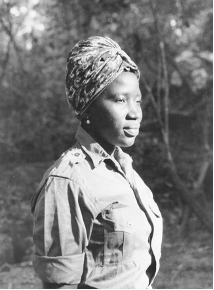
The PAIGC's armed struggle was also remarkable for the role of women. Titina Silá was the movement's most celebrated female military commander — a woman who had joined the PAIGC as a teenager, risen to command a combat unit, and was killed in a Portuguese ambush in March 1973, just months before independence. Carmen Pereira was a political figure of comparable stature: a PAIGC member from the earliest years, member of the permanent secretariat of the party, and later — in a moment that has not received the attention it deserves — briefly acting President of Guinea-Bissau in 1984, the first woman to hold a head of state position in independent Africa. Francisca Pereira and Teodora Gomes were among the women who organised the political structures in the liberated zones, running the people's tribunals, the women's sections, and the social programmes that gave the liberated territories their distinctive character.
The PAIGC's military achievement by the early 1970s was extraordinary. Portuguese forces were pinned down across Guinea-Bissau, sustaining casualties they could not absorb without drawing resources from Angola and Mozambique. In March 1973, the movement's forces shot down a Portuguese Fiat G.91 using a Soviet-supplied SAM-7 surface-to-air missile — the first use of such a weapon in Africa, and a development that transformed the military balance. In September 1973, the PAIGC's National Assembly proclaimed the independence of Guinea-Bissau from the liberated territories, and within weeks over eighty countries had recognised the new state. Portugal — still refusing to negotiate — found itself in the absurd position of being the colonial power of a country whose independence was internationally recognised.
Amílcar Cabral did not live to see any of this. On the night of 20 January 1973, he was shot dead outside his home in Conakry by a group of PAIGC dissidents acting in collusion with Portuguese intelligence. He was forty-eight years old. The assassination was organised with the specific intention of destroying the movement at the moment of its greatest success: the conspirators planned to surrender to the Portuguese and hand over the movement's leadership. The plan failed — Aristides Pereira, Cabral's closest associate, was captured but escaped; the coup was suppressed by PAIGC security forces and Guinean military assistance — but the loss of Cabral himself was irreparable. His brother Luís became the first President of Guinea-Bissau; Aristides Pereira became the first President of Cape Verde. The two countries had been promised a single unified state by the PAIGC's founding programme. The coup of November 1980, which overthrew Luís Cabral, ended that possibility. Guinea-Bissau and Cape Verde have been separate states ever since — one of the many ways in which the murder of Amílcar Cabral deformed the future he had spent his life trying to build.