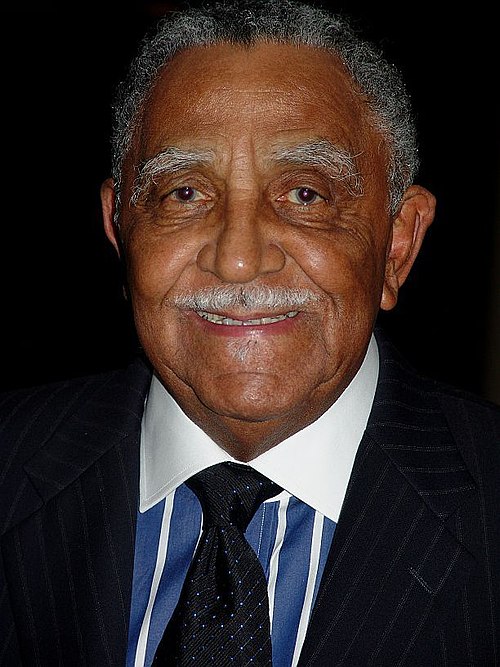
At a Glance
Huntsville, Methodist Formation, and the SCLC's Founding
Joseph Lowery grew up in Huntsville, Alabama — a city that would later become famous as the home of NASA's Marshall Space Flight Center and the birthplace of American rocket development, but that in the 1920s and 1930s was an ordinary Alabama city whose racial order was as comprehensive as anywhere else in the state. His family's relative stability within that order — his father ran a pool hall and the family lived in modest but not impoverished circumstances — gave him the educational foundation and the professional formation that eventually led to Methodist ministry and to his place among the founding generation of the SCLC.
His theological education at multiple institutions — Knoxville College, Paine College, Chicago Ecumenical Institute, and Garrett Theological Seminary — was extensive by the standards of Black ministerial training in the mid-twentieth century, and it gave him both the intellectual formation and the institutional standing that made him credible as a movement figure alongside the PhDs and the Ivy League-trained ministers who populated the SCLC's leadership. His ordination in the United Methodist tradition placed him in a denomination with a national structure and a history of social engagement that complemented his civil rights work in ways that the more locally rooted Baptist tradition did not always provide.
He was pastoring Warren Street United Methodist Church in Mobile when the Montgomery Bus Boycott created the political conditions for what became the SCLC. He was among the ministers who gathered at Ebenezer Baptist Church in Atlanta in January 1957 — the meeting that produced the SCLC's founding — and he remained connected to the organisation through the years when King was its animating spirit and through the much longer years after King's assassination when the organisation's survival required the kind of patient institutional commitment that founding energy alone could not sustain.
The Long Presidency: Sustaining an Institution Through the Post-Movement Years
The twenty years of Lowery's SCLC presidency — from 1977 to 1997 — were the most difficult period in the organisation's history, and his success in sustaining the institution through them is his most substantial contribution to the movement's legacy. The SCLC that he inherited in 1977 was an organisation whose founding purpose had been substantially achieved — the formal legal barriers of segregation had been dismantled, Black voting rights had been established, the major legislative victories had been won — and whose relevance in the post-movement political landscape was genuinely uncertain.
The question of what the SCLC was for after the Civil Rights Act and the Voting Rights Act was not merely organisational but philosophical: the confrontational direct action methodology that had produced those legislative victories was designed for a specific political context — explicit, visible, legally enforced segregation — that no longer existed in the same form. The racial inequality that remained was real but its mechanisms were more diffuse, more embedded in economic structures, more resistant to the kinds of dramatic confrontations that had worked in Birmingham and Selma. Lowery's response was to adapt the organisation's methodology to these new conditions — using selective buying campaigns and corporate negotiations rather than marches and jails — while maintaining the SCLC's voice as a persistent presence in American public life.
His campaigns for economic justice during the 1980s — targeting corporations that did business in Black communities without adequately employing Black workers or contracting with Black businesses — were applications of the movement's economic leverage tradition to the corporate context. The Coca-Cola campaign that produced a significant settlement, including commitments to Black employment and contracting, was one of the most successful examples of this methodology and demonstrated that the SCLC's confrontational tools could be adapted to economic targets that the 1960s campaigns had not directly addressed.
Anti-Apartheid, Nuclear Disarmament, and the Broad Vision of Justice
Lowery's leadership of the SCLC through the 1980s extended the organisation's advocacy beyond the domestic civil rights agenda that had defined it in the 1960s to issues that the movement's founders had sometimes addressed but that the SCLC had not systematically engaged with. His advocacy for sanctions against apartheid South Africa placed the SCLC alongside TransAfrica and other organisations in the American anti-apartheid movement, connecting the domestic civil rights tradition to the global struggle against racial apartheid that eventually produced Nelson Mandela's release and South Africa's democratic transition.
His advocacy on nuclear disarmament and Central American policy during the Reagan administration reflected the same expansive vision of justice that had led King to speak out against the Vietnam War in 1967 — the insistence that a movement committed to human dignity could not remain silent about the massive violence that American military and foreign policy was perpetrating beyond the movement's domestic focus. This position was not without controversy within the movement community, some of whose members believed that the SCLC's credibility depended on maintaining focus on domestic racial justice rather than entering debates about military and foreign policy where the SCLC had less specific authority.
Lowery's response to this position was characteristic of his theological formation: justice was not divisible, and a movement committed to the dignity of every human being could not in good conscience be selective about which violations of that dignity it condemned. This was the same theological logic that had led King to "Beyond Vietnam" in 1967, and Lowery was among the figures in the movement's leadership who had consistently supported that extension of the movement's moral frame.
The Obama Inauguration and the Long Arc
The benediction that Lowery delivered at Barack Obama's inauguration on January 20, 2009, was one of the most watched moments of that extraordinary day — a moment in which an eighty-seven-year-old minister who had co-founded the SCLC with Martin Luther King Jr. fifty-two years earlier stood at the Capitol and prayed over the inauguration of the first Black president of the United States. The weight of what that moment meant — historically, politically, theologically — was something that Lowery was better positioned than almost anyone alive to articulate, because he had been present at every stage of the journey that had led to it.
The rhyming coda of his prayer — the lines about yellow being mellow and white embracing what is right and the red man getting ahead, man — was simultaneously a celebration of progress and an acknowledgment of its incompleteness, delivered in the cadences of the Black church's call-and-response tradition that had been the movement's primary mode of moral communication for sixty years. The crowd's laughter and then applause at the prayer's playful audacity captured something essential about Lowery: his ability to use humour as a form of truth-telling, to say serious and necessary things in forms that made them accessible and memorable.
He received the Presidential Medal of Freedom from Obama later that same year — the formal acknowledgment of a contribution that had begun before Obama was born and that had helped to create the political conditions that made Obama's presidency possible. The specific form of that acknowledgment — the first Black president honouring one of the men who had built the movement that made the first Black president conceivable — was a closure of one kind of historical arc without being any kind of resolution of the work the movement had set out to do.
The Last of the Founders and the Ninety-Eight Years
Lowery died on March 27, 2020, at the age of ninety-eight — in the early weeks of the COVID-19 pandemic, in an America that was simultaneously experiencing a public health emergency and the ongoing racial inequities that the pandemic was revealing with painful clarity. His death came three months after the death of Evelyn Lowery, his wife of sixty-nine years, who had been his partner in ministry and in civil rights work throughout their decades together.
His ninety-eight years spanned almost the entire twentieth century and the beginning of the twenty-first — from 1921, three years after the end of World War One and fifty-six years after the end of the Civil War, to 2020, fifteen years into the twenty-first century and twelve years into the Obama presidency. Within that span he had moved from the Alabama of his birth — where the racial order was comprehensive and its maintenance was violent — to the SCLC's founding, through the movement's campaign years, through two decades of post-movement institutional leadership, to the inauguration of the first Black president, and beyond.
He was the last of the SCLC's founding generation. With his death, the living connection to the specific moment in Atlanta in January 1957 when King and Abernathy and Shuttlesworth and Lowery and the others had decided to build a permanent organisation on the foundation that the Montgomery Bus Boycott had laid was broken. What remained was the organisation they had built, imperfect and diminished from its 1960s prominence but still present, and the world they had helped to change, imperfect and unfinished but substantially different from the one they had set out to transform.