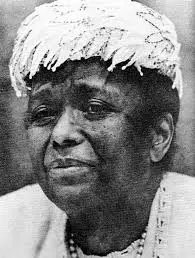
At a Glance
Littleton, North Carolina, and the Grandmother Who Said No
The most formative fact of Ella Baker's early life was not her own experience but her grandmother's: the story of Georgianna Ross, who had been enslaved on the plantation whose land Baker's family later purchased, and who had refused certain conditions of her enslavement at personal cost to herself. The specific nature of what Georgianna had refused — the accounts vary in their particulars — matters less than what the story meant to Baker as she grew up hearing it: that refusal was possible, that personal cost was acceptable, and that the dignity of the person being oppressed was worth defending regardless of the consequences.
This inheritance shaped Baker's entire subsequent career in ways that were both obvious and profound. She was not a person who had come to the civil rights movement from outside and been awakened by it — she was a person who had grown up inside a tradition of Black resistance and self-determination that was as old as the enslavement it had resisted, and who brought to the movement's formal organisations the values and the analysis that this tradition had developed over generations. Her grandmother's refusal was not merely an inspiring story; it was a demonstration, carried in the family's memory and in the land they farmed, that resistance to unjust power was both possible and required.
Her family's ownership of land that had once been part of the plantation where her grandmother had been enslaved was itself an expression of this tradition of Black self-determination — an act of collective purchase and collective farming that demonstrated the possibility of Black autonomy within the hostile environment of the post-Reconstruction South. Growing up on this land, in a community of Black farmers who owned what they worked, gave Baker a formation in Black collective self-sufficiency that was qualitatively different from the formation of civil rights leaders who had grown up as tenants or sharecroppers on land owned by white men.
Shaw University, New York, and the Depression-Era Education in Cooperative Power
Baker graduated from Shaw University in Raleigh — the historically Black institution where she would later organise SNCC's founding conference — in 1927, as valedictorian of her class. She moved to New York City, which in the late 1920s and through the Depression era was undergoing the political and cultural transformation of the Harlem Renaissance and the proliferation of Black radical political organisations, and she threw herself into the city's organisational life with the energy and the analytical intelligence that had already distinguished her at Shaw.
Her work in the Harlem consumer cooperative movement and in consumer education organisations during the Depression years was her first sustained practical experience of the organising methodology that would characterise her entire career. The cooperative movement was built on the proposition that economic power could be developed collectively by people who had been systematically excluded from the institutions through which economic power was normally accumulated — that workers and consumers who individually lacked market power could acquire it collectively through cooperative organisation. This was, at its core, an application of the same logic to economic life that Baker would spend her career applying to political life: that the people who were most affected by a system of power had the capacity to challenge that system collectively, and that developing their capacity for collective action was the fundamental task of any organiser who was serious about change.
She also worked with the Young Negroes' Cooperative League, which George Schuyler had founded to apply cooperative economic principles specifically to Black communities, and she developed through this work a critique of the relationship between economic inequality and racial inequality that would shape her understanding of civil rights work throughout her career. She was not going to be satisfied with formal legal equality in a context of extreme economic inequality, because she understood — and said, repeatedly and clearly — that economic power was the foundation of political power, and that any political victory that left the economic structures of Black poverty intact was incomplete.
NAACP Field Secretary: Six Years Across the South
Baker's six years as an NAACP field secretary — from 1940 to 1946 — were the most intensive period of her practical organising education, and they gave her the knowledge of the South's Black communities and of the specific conditions affecting them that made her subsequent work possible. She travelled constantly, visiting communities across the South to build NAACP branches, recruit members, train local leaders, and identify the specific issues — economic, legal, political, social — that each community most needed to address.
Her approach to this work was distinctive in the context of the NAACP's organisational culture. The NAACP's primary strategy was legal — the court challenges that Thurgood Marshall's Legal Defense Fund was pursuing, which would eventually produce Brown v. Board of Education and the broader legal dismantling of formal segregation. Baker believed in the legal strategy but also believed that it was insufficient without the community organising that would give the legal victories substantive content. What good was a court ruling desegregating schools if the communities whose children were supposed to benefit from it were not organised to enforce the ruling and to demand that its promises be kept?
She also found, in her years of field work, that the NAACP's national leadership was more interested in maintaining the organisation's institutional prestige and its relationships with white liberal allies than in developing the grassroots power that she believed was the foundation of genuine Black political agency. The organisation's tendency to centralise decision-making, to treat local branches as the instruments of national strategy rather than as autonomous organisations developing their own leadership and their own priorities, was exactly the organisational culture that Baker's philosophy of group-centred leadership was designed to counter. She resigned in 1946, frustrated but enriched: the years of field work had given her an incomparable knowledge of the South and an incomparable understanding of what community organising required.
More Than a Hamburger: The Philosophy That Founded SNCC
The Greensboro sit-ins of February 1960 electrified Baker in a way that few events in her long organising career had. She saw in the student direct action — its spontaneity, its moral clarity, its willingness to accept the consequences of confronting the racial order directly — the expression of exactly the kind of grassroots insurgency that she had been arguing the movement needed and that the SCLC's charismatic-leader model had been failing to develop. She moved immediately to create the organisational conditions in which the students' energy could be channelled into a sustained movement without being captured and domesticated by existing organisations.
The Shaw University conference of April 1960 was Baker's most important single act of organisation. She used the SCLC's resources — she was still, nominally, working for the SCLC at this point — to fund and host a conference of student activists from across the South. She shaped the conference agenda, the discussion format, and the atmosphere in ways that were deliberately oriented toward producing an independent student organisation rather than a SCLC youth wing. King and the SCLC leadership preferred absorption — they wanted the student energy inside the SCLC's structure, where it could be channelled through King's leadership. Baker believed that absorption would destroy what made the students valuable: their autonomy, their willingness to move faster and go further than existing organisations would sanction, their rootedness in the communities where they were working rather than in the institutional requirements of national organisations.
Her speech to the assembled students — which has come to be known as "More Than a Hamburger" — was the most direct articulation she ever gave of her organising philosophy. The sit-ins, she told them, were not merely about getting served at lunch counters — they were about the transformation of the entire social order that produced lunch counters that refused to serve Black people. And achieving that transformation required not the development of leaders who would speak for Black communities but the development of the communities' own capacity to speak for themselves. Strong people did not need strong leaders; they needed organisations that developed their own strength. The students who heard this speech carried its message into SNCC's decade of most consequential work.
SNCC's Mentor: The Influence That Cannot Be Titled
Baker's relationship to SNCC in the years that followed its founding was one of the most unusual in the movement's history: she was the organisation's most important intellectual and mentoring influence, but she held no formal position in it and exercised no authority over it. This was precisely as she intended. She had organised SNCC's founding to produce an organisation that would develop its own leadership and its own analysis rather than depending on any external figure, and she maintained her relationship to the organisation in exactly those terms — available when the students needed to think through a problem, present at critical moments, willing to offer analysis and challenge and the accumulated wisdom of decades of organising, but never directing or controlling.
The SNCC field workers who came to Baker with questions — about strategy, about organisational dynamics, about the relationship between their immediate campaigns and the larger transformation they were working toward — found in her a mind that took their questions seriously, that offered analysis rather than instructions, and that consistently pushed them back toward the community they were organising rather than toward the organisational requirements of SNCC itself. Her most consistent message to the students was that the movement's power lay in the communities they were working with, and that their job was to develop that power rather than to substitute their own energy and commitment for it.
She remained connected to progressive causes through the 1960s, 1970s, and into the 1980s — working on anti-apartheid issues, on Puerto Rican independence, on the defence of political prisoners, on every cause that the tradition of Black radical resistance she had grown up in required her to engage with. She died on December 13, 1986 — her eighty-third birthday — having spent nearly six decades building the organising infrastructure and the organisational philosophy that made the civil rights movement's most important achievements possible.
The Legacy: What Baker Understood That the Movement Never Fully Applied
Ella Baker's most important contribution to the civil rights movement was also its most consistently ignored: her insistence that genuine liberation requires that the people being liberated lead their own movement, and that the development of a charismatic leader who speaks for the community is a form of organisational dependency that ultimately weakens rather than strengthens the movement for change. This was not an abstract philosophical position; it was an analysis grounded in decades of practical experience of what happened when movements became dependent on individual leaders and what happened when they developed genuine community-rooted leadership capacity.
The movement honoured her insight in the breach more than in the observance. SNCC, which Baker had shaped most directly, embodied her philosophy most fully in its early years — in its Mississippi voter registration work, in its Albany organising, in its commitment to building local leadership rather than importing national figures. But as SNCC grew and as its most charismatic figures became national celebrities, the same dynamics that Baker had identified in the NAACP and the SCLC emerged within SNCC itself. The movement's tendency to centre charismatic individual leaders was not a failure of any specific organisation but a structural feature of how American political culture worked, and Baker's alternative — patient, community-rooted, distributed-leadership organising — was structurally disadvantaged in a media environment that needed individual faces and individual stories.
The ongoing relevance of Baker's analysis to any serious thinking about how social movements are built and sustained is her most durable legacy. The question she spent her career asking — whose leadership are we developing, and for whose benefit? — is a question that every organiser who has inherited her tradition continues to ask, and that the movements of the twenty-first century are still working to answer.