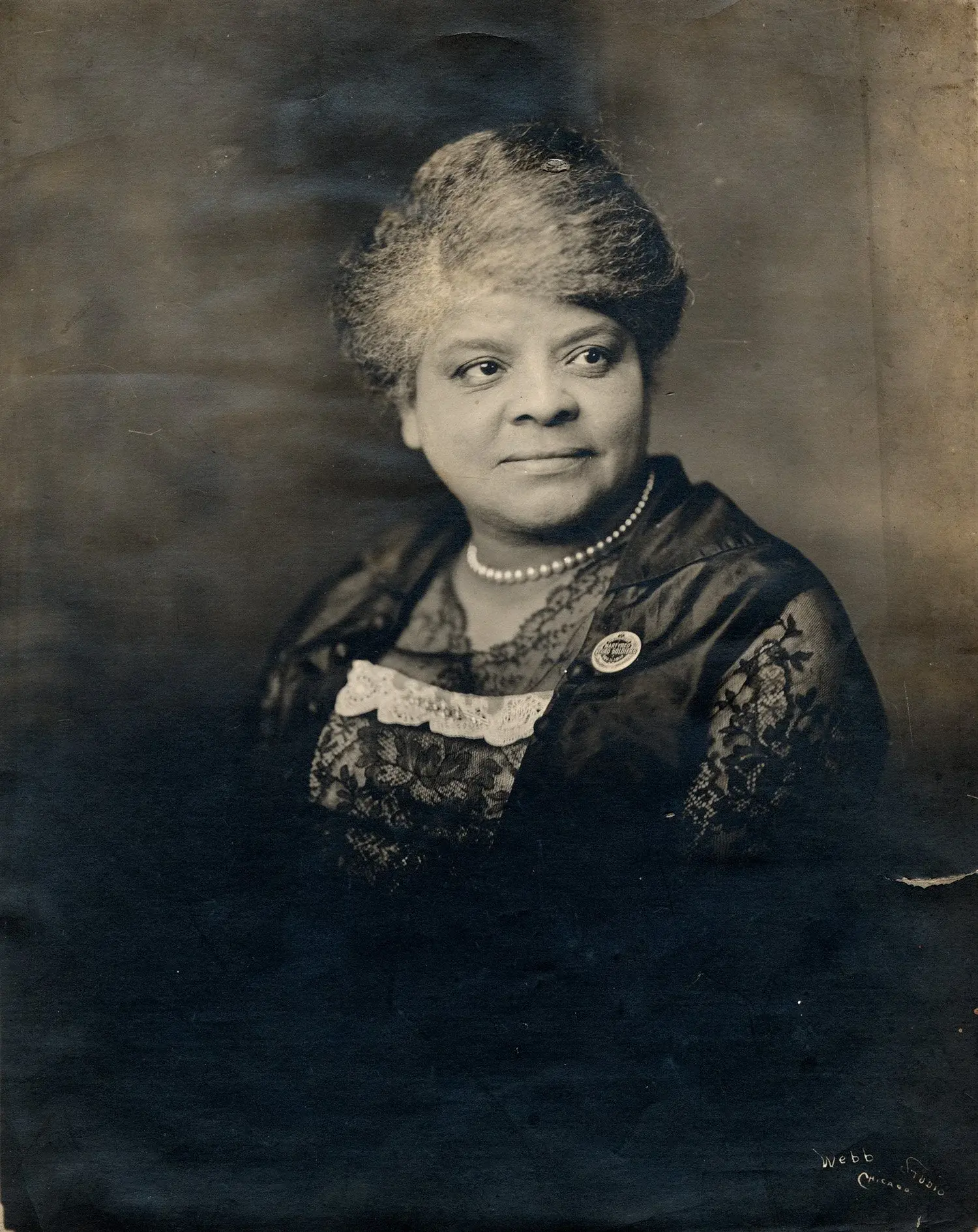
At a Glance
Holly Springs, Yellow Fever, and the Self-Made Educator
Ida B. Wells was born into slavery in Mississippi and freed, at approximately three years old, by the Union Army's advance and the Emancipation Proclamation's application to the territories it reached. Her early life in Holly Springs during Reconstruction gave her a formation in the possibilities — however briefly realised — of Black political participation and community self-determination that the subsequent destruction of Reconstruction would make permanent contrast. She grew up in a family that valued education and civic engagement: her father James was a member of the local Freedmen's Bureau oversight board, her mother insisted on education, and the household she grew up in was politically conscious in the specific way that Reconstruction's brief opening had made possible.
The yellow fever epidemic of 1878 destroyed this formation's material foundation without destroying its values. Her parents and infant brother died; she was sixteen years old; she had five younger siblings to care for. She told the school board that she was older than she was, got a teaching position, and began the dual career of teaching and writing that would sustain her for the next decade. The self-creation this required — the sixteen-year-old girl who fabricated her age to get a teaching job to support her siblings — was a foretaste of the self-determination that would characterise her entire subsequent career: in the absence of institutional support, she created the institutional conditions she needed and proceeded on the basis of them.
Her move to Memphis in the early 1880s placed her in one of the South's most important Black urban communities — a city with a significant Black professional class, active Black newspapers, and a political culture that was, in the immediate post-Reconstruction period, still fighting to maintain the gains that Reconstruction had briefly established. She taught during the day and wrote journalism at night, publishing under the pen name "Iola" in local Black newspapers and developing the analytical and rhetorical style that would make her the most important Black journalist of her generation.
The Memphis Free Speech and the Murders That Changed Everything
Wells became co-owner and editor of the Memphis Free Speech in 1889 — one of the most important Black-owned newspapers in the South — and used the platform to write about the conditions of Black life in Memphis and the South with a directness and a willingness to challenge the racial order that distinguished her journalism from the more cautious approaches of many of her contemporaries. She was sued by the Chesapeake, Ohio and Southwestern Railroad in 1884 for being forcibly removed from a first-class train car, won in the lower court, and lost on appeal — an early experience of the limits of legal redress that shaped her subsequent analysis of what kinds of power were actually available to Black Americans challenging the racial order.
The March 1892 lynching of Thomas Moss, Calvin McDowell, and Henry Stewart — three of her close friends and business colleagues who owned the People's Grocery Company in the Memphis suburb of the Curve — was the transformative event of her journalistic career. The three men had been arrested following a confrontation with the owners and supporters of a competing white-owned grocery store; they were taken from the jail by a mob of approximately seventy-five people, driven outside the city limits, and shot. Their murders could not be explained by the standard justification offered for lynching — they had committed no assault on white women, they had simply been successfully competing in business with white merchants and had been murdered for it.
Wells's editorial response to the murders was published in the Memphis Free Speech in May 1892 and made two arguments that were both politically explosive and factually supported: first, that the stated justification for lynching — the protection of white womanhood from Black male sexual assault — was not the actual reason for most lynchings; and second, that the actual reason for most lynchings was the economic and political threat that successful Black businesses and Black political participation posed to the white supremacist order. She went further: she noted that the relationships between white women and Black men that were described as rape were in many cases consensual relationships that the white community found threatening for reasons that had nothing to do with the women's wellbeing.
The Destruction of the Free Speech and the Beginning of the Campaign
Wells was in the North when her editorial was published, attending a meeting of the African Methodist Episcopal Church. The Memphis white community's response was swift and comprehensive: a group of white men destroyed the Memphis Free Speech office, smashing the printing equipment and warning that Wells would be killed if she returned to Memphis. Her business partner, who was present when the office was destroyed, barely escaped with his life. Wells received letters warning her that if she came back to Memphis she would be hanged.
She did not go back to Memphis. She settled in New York City, where she began writing for T. Thomas Fortune's New York Age, and she launched the investigative campaign that would occupy the next several years of her life and produce the documentation of racial terror that remains her most important contribution to American history. She began systematically collecting accounts of lynchings across the South — the names of the victims, the dates and locations, the charges alleged against them, the circumstances of their deaths — and subjecting this data to the kind of analytical journalism that had not previously been applied to the subject.
The results of this analysis were published in "Southern Horrors: Lynch Law in All Its Phases" in 1892 and more comprehensively in "A Red Record" in 1895, which provided the first systematic statistical analysis of lynching in America. The findings demolished the standard justification: of the thousands of people lynched in the United States since the end of the Civil War, fewer than one in three had even been accused of assault on white women, and the evidence for the accusations in those cases was often negligible. The actual patterns of lynching, as her data revealed them, showed a practice that was used against Black people who challenged the racial order through business success, political activity, or personal relationships with white women that the white community chose to criminalise retroactively.
Britain, International Pressure, and the Strategy of Global Shame
Wells's lecture tours of Britain in 1893 and 1894 were a strategic application of the insight that the American government and American white public opinion could be pressured through international embarrassment in ways that could not be achieved through domestic political campaigns alone. She understood — as Black American activists would understand again during the Cold War period, when the NAACP and other organisations used America's need for international credibility to pressure the federal government on civil rights — that America's self-presentation as a democracy could be leveraged against its actual practices by making those practices visible to international audiences.
The British audiences she addressed were genuinely shocked by her documentation of lynching — not because they were innocent of racism or imperialism, but because the specific practice of mob murder of Black Americans was not something that had been prominently featured in the British press, and the systematic, data-driven account that Wells provided made the scale and the nature of the practice impossible to dismiss as individual aberration. She obtained statements from British civic organisations, journalists, and church leaders condemning lynching; she persuaded British anti-slavery societies to pass resolutions; and she created enough international attention that American newspapers, which had largely ignored her domestic work, were forced to respond to and rebut her claims.
The strategy's long-term impact was limited by the absence of federal anti-lynching legislation, which no amount of international pressure could substitute for. But it established the international dimension of the anti-lynching campaign that organisations like the NAACP would pursue more systematically in the decades that followed, and it demonstrated that the gap between American democratic ideals and American racial practice was a vulnerability that could be exploited through international public opinion — a lesson that the twentieth century's civil rights movement would apply in the context of the Cold War with considerable effect.
Chicago, the NAACP, and the Limits of Moderate Politics
Wells moved to Chicago in 1895, the year she married Ferdinand Lee Barnett and the year she published "A Red Record." Chicago's large and politically active Black community provided a context for her continued journalism and organising, and she threw herself into the city's political life with the same energy and the same willingness to challenge established figures that had characterised her Memphis career. She was active in women's club movements, she organised the Negro Fellowship League to provide services to Black migrants arriving from the South, she worked as a probation officer, and she continued to write about racial justice, women's suffrage, and the broader political questions that her anti-lynching work had connected her to.
Her co-founding of the NAACP in 1909 placed her at the centre of the most important Black civil rights organisation of the twentieth century, but her relationship with the organisation was consistently strained. She found its approach too moderate, its willingness to work within the constraints of white liberal tolerance insufficiently responsive to the urgency of the violence she had documented, and its deference to Booker T. Washington's accommodationist politics incompatible with the uncompromising demands that her data had established as necessary. She challenged Du Bois, challenged the NAACP's white co-founders, and challenged everyone who seemed to her to be settling for less than the immediate action that the scale of racial terror required.
This pattern — of being both indispensable to the movements she participated in and consistently at odds with their leadership over the inadequacy of their responses — was the characteristic shape of her public life. She was right about the inadequacy, and her rightness made her difficult to work with for people who were trying to build coalitions and institutions that required some degree of political accommodation. The federal anti-lynching legislation she spent her life campaigning for was never passed during her lifetime; it was finally passed by the Senate in 2022, ninety-one years after her death, and signed into law by President Biden.
The Posthumous Pulitzer and the Question of What Recognition Means
The Pulitzer Prize Special Citation that Wells received posthumously in 2020 — recognising her "outstanding and courageous reporting on the horrific wave of lynchings in the United States" — was a belated acknowledgment of journalism that was produced in conditions of genuine personal danger, that documented a form of racial terror that the mainstream press was ignoring or justifying, and that produced consequences for Wells that included the destruction of her newspaper office and credible death threats that forced her to leave the city where she had built her career.
The recognition matters and is insufficient simultaneously — it matters because it formally acknowledges what she did and what it cost her, and it is insufficient because it comes ninety years after her death, after the federal legislation she campaigned for has finally passed, and in a media landscape that can now afford to celebrate her precisely because the most dangerous period of the work she was doing has long since passed. The real measure of her contribution is not the posthumous Pulitzer but the documentation she produced — the seven hundred lynching investigations, the systematic statistical analysis of racial terror, the international campaign that forced lynching into public consciousness in Britain and eventually in America — and the movement it helped to build.
Ida B. Wells was born enslaved and died a free woman who had spent forty years telling the truth about what racial terror in America actually was, in terms that were specific, documented, and impossible to dismiss without confronting the evidence she had gathered. The movement that eventually produced the Civil Rights Act and the Voting Rights Act was built on a tradition of bearing witness to racial violence that she had established and that she had sustained alone, with no institutional support, when the institutions that later benefited from her work were not yet in existence. She is the movement's founding journalist, its first systematic investigator of racial terror, and one of the most courageous figures in the history of American political life.