At a Glance
Porbandar and the Arranged Marriage: Kastur Kapadia at Thirteen
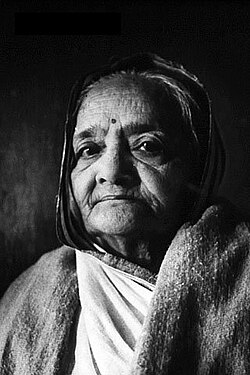
Kasturba Kapadia was born on 11 April 1869 in Porbandar — the same coastal town in the Kathiawar peninsula of Gujarat where Mohandas Karamchand Gandhi was born, in the same year, in the same merchant community. The two families knew each other; the match between Kastur Kapadia and Mohandas Gandhi was arranged in the normal fashion of their community and class, and they were married in 1882 when both were thirteen years old. Child marriage was common in the Kathiawar merchant community in the 1880s — considered neither abnormal nor problematic by the social context in which it occurred — but the fact of it is inseparable from the dynamics of the relationship that followed, in which a young woman was bound to a husband whose developing moral views would make increasingly severe demands on the life they shared.
Kasturba was not literate when she married. Gandhi later wrote about teaching her to read — accounts that mix genuine care with the uncomfortable paternalism of a man who was educating his wife in the way one might educate a child. Whether Kasturba found the arrangement humiliating or simply practical, the historical record does not clearly establish; Gandhi's accounts are filtered through his perspective, and Kasturba left almost no written record of her own interior life. What the record does establish is that she became literate, formed her own opinions, and expressed them — to Gandhi's face, in private and in political contexts — with a directness that women of her generation and class were not generally expected to maintain.
South Africa: The Making of an Activist
Kasturba followed Gandhi to South Africa in 1897, where he had established himself as a lawyer in Natal and had begun the political work that would make him the leader of the South African Indian community's resistance to colonial discrimination. The South Africa years — from 1897 to 1915 — were the crucible in which both Gandhis were formed as political activists, and they were years of considerable hardship: communal life at the Phoenix Settlement near Durban required the abandonment of the comforts of professional middle-class life in ways that Kasturba did not always find easy or natural.
She disagreed with Gandhi about brahmacharya — the vow of celibacy that he took in 1906 without consulting her, which transformed their physical relationship unilaterally and which she had not chosen. She disagreed with him about the Phoenix Settlement's communal arrangements, which she found intrusive and which required her to extend hospitality and domestic labour to an ever-expanding community of his followers and proteges. Gandhi acknowledged these disagreements in his autobiography — noting she had been right about some things and that he had been inflexible about others in ways not entirely to his credit.
The 1913 South Africa satyagraha was the campaign that established Kasturba as a political actor in her own right. The specific issue was the colonial government's requirement that Indians register under the Asiatic Registration Act and carry passes. Gandhi organised a non-violent resistance campaign in which participants deliberately violated the law and submitted to arrest and imprisonment. Kasturba participated, crossing the Natal-Transvaal border without the required permit in a deliberate act of civil disobedience. She was arrested, tried, and imprisoned. She bore the imprisonment with a composure that generated significant press coverage in South Africa and India, and her willingness to go to prison — at a time when Indian women's public political participation was itself unusual — was noted across the nationalist world.
Return to India: Three Decades of Active Participation
The Gandhis returned to India in January 1915. Kasturba's political life in India was shaped by the same rhythms as Gandhi's — the Champaran indigo farmers' campaign of 1917, the Kheda satyagraha of 1918, the Non-Cooperation Movement of 1920–1922, the Civil Disobedience campaigns of the 1930s. She participated in these campaigns not as a passive accompaniment to her husband but as an activist in her own right — addressing meetings, organising women, going to prison when civil disobedience required it. She was arrested multiple times in India and served periods of imprisonment that, while not as long as Gandhi's, were not negligible. She was not a young or physically robust woman in the 1930s, and the imprisonments took a cumulative physical toll.
The nationalist movement knew her as "Ba" — Gujarati for mother — a form of address that expressed both affection and the specific kind of moral authority the movement attributed to her. The designation was not merely sentimental: it acknowledged that Kasturba had her own standing in the movement, that she was not simply Mrs. Gandhi but a person whose participation and suffering had earned respect in its own right. The distinction mattered because the independence movement — like most political movements — had a tendency to remember women primarily in relation to the famous men they were connected to, and "Ba" was an implicit acknowledgement that Kasturba Gandhi deserved to be remembered as something more than a wife.
9 August 1942: The Speech She Was Arrested Before She Could Give
The Quit India Movement launched on 9 August 1942 began with the colonial government's pre-dawn arrest sweep that took Gandhi, Nehru, Patel, and virtually the entire Congress Working Committee before any public action could be taken. Gandhi had planned to speak at Shivaji Park in Bombay to launch the movement publicly. He could not — he was under arrest. Kasturba Gandhi went to Shivaji Park in his place, to deliver his message and to be the physical presence of the Congress's leadership at the moment the leadership had been removed. She was arrested before she could speak.
The arrest was, from the colonial government's perspective, a straightforward security measure. From every other perspective it was a political disaster. The image of a seventy-three-year-old woman being arrested on her way to a public meeting in her own country — arrested specifically to prevent her from speaking — was not one the colonial government could present as a normal operation of legitimate authority. It was circulated widely in the nationalist press and contributed to the public anger that made the Quit India Movement's subsequent underground phase so difficult for the colonial authorities to manage.
The Aga Khan Palace: Imprisonment and Death
Kasturba Gandhi was taken to the Aga Khan Palace in Pune — the imposing private palace that the colonial government had converted into a detention facility for the Congress leadership. Gandhi was held there, Mahadev Desai (his personal secretary) died there within days of arrival from a heart attack, and Kasturba was held there in declining health for nineteen months from August 1942 to February 1944.
Her health had not been robust before the imprisonment. She had a history of bronchitis and cardiac problems, and the conditions of detention — however preferable to those endured by most political prisoners — were not conducive to recovery from serious illness in a woman of seventy-three. She suffered two heart attacks during her detention. The colonial authorities' medical care was insufficient, and Gandhi refused to allow her to be treated with penicillin — then newly available — on the grounds that it required injection and he opposed injections on principle. Whether the penicillin refusal affected the final outcome is medically uncertain; it became a point of historical controversy and illustrates the particular difficulty of Kasturba's position as a person whose autonomy was constrained not only by the colonial state but by the moral framework of the man she was married to.
She died on 22 February 1944, held in Gandhi's arms. The colonial government faced a straightforward problem: a seventy-four-year-old woman had died in their custody while imprisoned for attempting to address a public meeting. There was no way to characterise this as anything other than what it was. Gandhi's reaction was reported across India and internationally. The nationalist press framed her death as a colonial murder — overstating the specific chain of causation but accurately capturing the political fact: she had died because she had been imprisoned, and she had been imprisoned because she had tried to speak.
Her body was cremated within the grounds of the Aga Khan Palace, and her samadhi — the memorial marking the cremation site — remains there today. The palace was eventually donated to the Indian nation and is now a museum. Kasturba's samadhi stands a short distance from the memorials to Mahadev Desai and the other figures who died in British custody there.
Kasturba Gandhi on Her Own Terms
Writing about Kasturba Gandhi requires constant vigilance against the gravitational pull of Gandhi's biography — the tendency to see her primarily through his accounts of her, primarily in relation to his development, primarily as a supporting figure in his story. Gandhi himself contributed to this tendency, in part because he wrote so much more than she did, and in part because the framing of his autobiography makes his growth the subject and her presence one of its conditions.
What the historical record shows, when read with attention to her own actions rather than primarily to his accounts of them, is a woman who made her own political choices. She did not have to participate in the South Africa satyagraha — she chose to. She did not have to go to Shivaji Park on 9 August 1942 — she chose to. She expressed disagreement with Gandhi on substantive questions throughout their marriage and did not suppress that disagreement to maintain harmony. She bore imprisonment at an age when most people do not voluntarily accept physical hardship, and she died under imprisonment rather than in the comfort of the ashram life that was available to her if she had chosen not to be arrested.
These choices constitute a political life. It was not Gandhi's political life, or a derivative of it, but her own. The independence movement gave her the title "Ba" — mother — and in that title acknowledged something the title also partly obscured: that Kasturba Gandhi had participated in the struggle for India's freedom on her own terms, at her own cost, and that her death in British custody was not Gandhi's loss alone but the movement's, and the country's.