At a Glance
London and Ireland: Wood Family Origins and an Early Loss
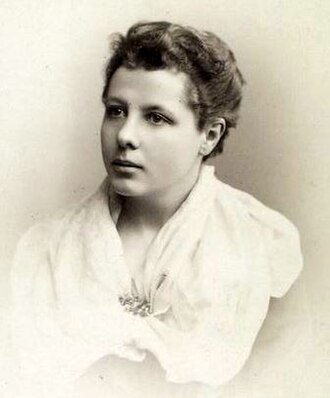
Annie Besant was born on 1 October 1847 in Clapham, south London, to William Burrows Wood, a physician of modest income, and Emily Morris, whose family were Irish. Her father died when Annie was five, leaving the family without financial security, and her mother took in lodgers to survive and sent Annie to be educated by an evangelical Englishwoman named Ellen Marryat, who had made it her project to educate girls of limited means. Marryat took Annie across Europe — France, Germany, and years spent in Ireland — and gave her a rigorous classical education that was unusual for girls of her era and class. The Irish years mattered: they gave Besant an early sympathy for a people governed against their will, and the parallels she later drew between Ireland's demand for home rule and India's were not accidental or rhetorical — they came from lived experience of what colonial governance felt like from below.
She returned to England as a young woman, conventionally educated and conventionally pious, and in 1867 married the Reverend Frank Besant, a Church of England clergyman. The marriage was a mistake from the start. Frank Besant was authoritarian, intellectually limited, and entirely unprepared for a wife who was reading theology, philosophy, and political economy with the concentrated urgency of someone who had begun to doubt everything. Annie's faith collapsed gradually, under the weight of reading and grief — she had nearly lost a child to illness and found that prayer offered nothing — and by the early 1870s she refused to take communion. In the Church of England, for a clergyman's wife, this was not a private matter. Frank Besant invoked his legal rights; in the 1870s those rights were comprehensive. She left. The legal separation in 1873 gave her almost nothing: no income, and no custody of her daughter Mabel. When she later published a pamphlet on birth control, Frank Besant used it in court to have even Mabel's limited visits removed.
Freethought, Fabianism, and the Match Girls: England's Radical Decade
The 1870s and 1880s were the years that made Besant one of the most recognisable radical voices in England. She joined the National Secular Society, came under the influence of Charles Bradlaugh — the atheist MP who fought for years to take his parliamentary seat without swearing a religious oath — and began lecturing and writing with a productivity that never left her. In 1877 she and Bradlaugh republished Charles Knowlton's Fruits of Philosophy, a pamphlet on contraception that had been in quiet circulation for decades. They published it deliberately, at their own address, to force a prosecution and a public debate about whether working-class women had the right to control their reproduction. They were prosecuted. The trial at the Old Bailey drew enormous press coverage. They were convicted, then acquitted on appeal on a technicality. But the pamphlet sold a hundred and twenty-five thousand copies during the case. The subject could never be put back in the box it had been kept in.
She joined the Fabian Society in the 1880s, wrote extensively on economic inequality and land reform, and in 1888 became a central figure in the Bryant and May Match Girls' Strike in London's East End — a dispute that is now recognised as a foundational event in the history of British trade unionism. The match girls worked twelve-hour days with phosphorus that rotted their jawbones, were docked wages for trivialities, and were paid starvation rates. Besant wrote a piece in her paper The Link that described their conditions in plain and scalding language. The girls were threatened with dismissal for speaking to her. They struck instead. Besant helped organise the strike, managed the press campaign around it, and negotiated with the company's management. After three weeks Bryant and May conceded. The match girls won. The episode is a demonstration of what Besant's particular combination of skills — writing, speaking, organising, absolute refusal to be intimidated — could produce when they were focused on a concrete injustice.
Theosophy and the Turn Toward India
In 1889 Besant reviewed Helena Blavatsky's The Secret Doctrine for a literary journal, was assigned it as a skeptic likely to demolish it, and instead found herself compelled. She sought out Blavatsky, joined the Theosophical Society, and within two years had become one of its leading figures. The move baffled and alienated many of her secular radical friends, who saw it as a retreat into mysticism. It was in fact a continuation of the same trajectory: Theosophy in Besant's hands was always entangled with anti-imperialism, with the elevation of non-Western civilisations against European condescension, and with an insistence that India's philosophical traditions were not primitive but ancient and sophisticated. When Blavatsky died in 1891, Besant became the movement's dominant intellectual figure. In 1907 she was elected President of the Theosophical Society, a position she held until her death.
She arrived in India for the first time in 1893 and knew almost immediately that she would not go back. Adyar, on the southern outskirts of Madras, was the Society's world headquarters, and it became her permanent base. She learned Sanskrit. She translated the Bhagavad Gita, producing a version that was widely read for decades. She lectured across India to audiences of thousands — on Hindu philosophy, on education, on the need for Indians to recover pride in their own civilisation rather than accepting the colonial hierarchy that placed European thought at the apex of all human achievement. This was not a neutral position in colonial India. It was a political stance dressed in philosophical language, and the audiences who came to hear her understood it as such.
The Central Hindu College and Building Indian Education
In 1898 Besant founded the Central Hindu College at Benares — a city of immense Hindu religious significance that she had specifically chosen because she wanted an institution that was explicitly rooted in Indian cultural identity rather than modelled on the anglicised education that the colonial government promoted. The college taught Sanskrit, Hindu philosophy, and Indian history alongside mathematics and sciences, and it was run on the conviction that an educated Indian should know what India was before India was colonised. The college grew. It eventually became the nucleus around which Madan Mohan Malaviya built Banaras Hindu University, which received its royal charter in 1916 and remains one of India's largest universities. Besant's role in its founding is not always credited as prominently as Malaviya's, but the institution's origins lie substantially in what she built in 1898.
Her newspaper New India, founded in 1914, became one of the most widely read English-language papers in India arguing for self-governance. She also founded The Commonweal and wrote incessantly — pamphlets, books, lectures, editorials — building a body of argument for Indian self-rule that drew explicitly on the same constitutional and liberal language that the British used to justify their own freedoms while denying those freedoms to the people they governed. The colonial authorities found this argument particularly difficult to dismiss because it was made in their own terms, by a woman who knew English political philosophy from the inside and could hold the colonisers to their own stated values with uncomfortable precision.
The Home Rule League: Forcing the Question of Self-Governance
By 1916 Besant had concluded that the Indian National Congress, dominated by moderates who believed that patiently demonstrating Indian political maturity would eventually persuade Britain to grant reform, had achieved nearly nothing in three decades of polite petitioning. In September 1916, she founded the All India Home Rule League, modelling it explicitly on the Irish Home Rule movement she had watched from childhood — a mass political organisation that would take the demand for self-governance out of Congress resolutions and into the streets, the newspapers, and the towns and villages where most Indians lived. The timing was acute: Britain was exhausted by the First World War, its claims to be fighting for the freedom of small nations nakedly contradicted by its refusal to extend that freedom to three hundred million Indians. Besant hammered that contradiction in every platform she had.
Bal Gangadhar Tilak, the Marathi nationalist who had spent years arguing that mass agitation rather than moderation was the only language the colonial state would hear, founded his own Home Rule League in April 1916 — five months before Besant's. The two organisations agreed not to compete in each other's territories and effectively operated as a coordinated national campaign. Together they enrolled tens of thousands of members across India within eighteen months, demonstrated that mass political organisation around a concrete constitutional demand was possible, and permanently altered the terms of the debate inside the Congress.
Internment, the Congress Presidency, and the Peak of Influence
The Madras government interned Besant in June 1917, along with two of her associates, B. P. Wadia and George Arundale. The colonial authorities almost certainly expected the internment to quiet the agitation. Instead it produced the opposite effect. Protest meetings erupted across India. Gandhi, Nehru, Sardar Patel, and Tilak all demanded her immediate release. The Government of India, embarrassed by the scale of the response, overruled the Madras government and ordered her freed in September 1917.
Three months later, in December 1917, the Indian National Congress met in Calcutta and elected Annie Besant its president — the first woman in the organisation's three-decade history to hold that position. She was seventy years old and had just been released from internment. It was the peak of her political influence in India. Her presidential address argued for constitutional home rule within the British Empire — a position that would soon be overtaken by Gandhi's Non-Cooperation Movement and its demand for complete swaraj, but that had been, until Gandhi arrived, the most advanced position the mainstream nationalist movement had been willing to publicly commit to.
The Gandhi Years: Divergence and a Complicated Legacy
Besant's relationship with Gandhi was respectful and strained. She admired him but disagreed with the Non-Cooperation Movement he launched in 1920, which called on Indians to boycott British courts, schools, and legislative councils and return British honours. Besant believed in working within institutions and reforming them, not in withdrawing from them, and she thought mass non-cooperation carried the risk of disorder and violence that would harm the Indian poor more than the colonial administration. She said so, publicly, at a moment when saying so made her deeply unpopular among the younger generation of nationalists who had made Gandhi their guide.
She remained active through the 1920s — writing, lecturing, running the Theosophical Society — but her political influence within the independence movement declined steadily as Gandhi's mass campaigns redrew the landscape of Indian politics around tactics and a style of leadership that were not hers. She had created something real: the Home Rule League, the language of constitutional self-governance, the demonstration that a mass organisation could be built and sustained, the educational institutions that trained the next generation. That the movement subsequently moved in directions she opposed does not diminish what she built in the years when it needed building.
Final Years and Death at Adyar
Annie Besant spent her last years at Adyar, increasingly frail, continuing to write and to preside over the Theosophical Society. She had pinned hopes in the 1920s on Jiddu Krishnamurti, a young Telugu boy she and Charles Leadbeater identified as the vehicle for a coming World Teacher, groomed him for that role for years, and then watched him dissolve the entire project in 1929 when he publicly renounced the identity that had been constructed around him. It was a late personal blow, though Besant accepted it with more grace than might have been expected.
She died on 20 September 1933 at Adyar, having outlived most of the generation she had fought alongside. She was eighty-five. Her body was cremated according to Hindu rites — a final statement of allegiance to the country she had chosen. The independence she had spent seventeen years arguing for came fourteen years after her death, in August 1947. The institutions she had founded, the political language she had introduced, the precedent of a woman leading the Congress — these were the bequests she left to an India that was still, in 1933, thirty years away from being free.