At a Glance
Ratnagiri and Pune: The Same Soil as Tilak, Different Roots
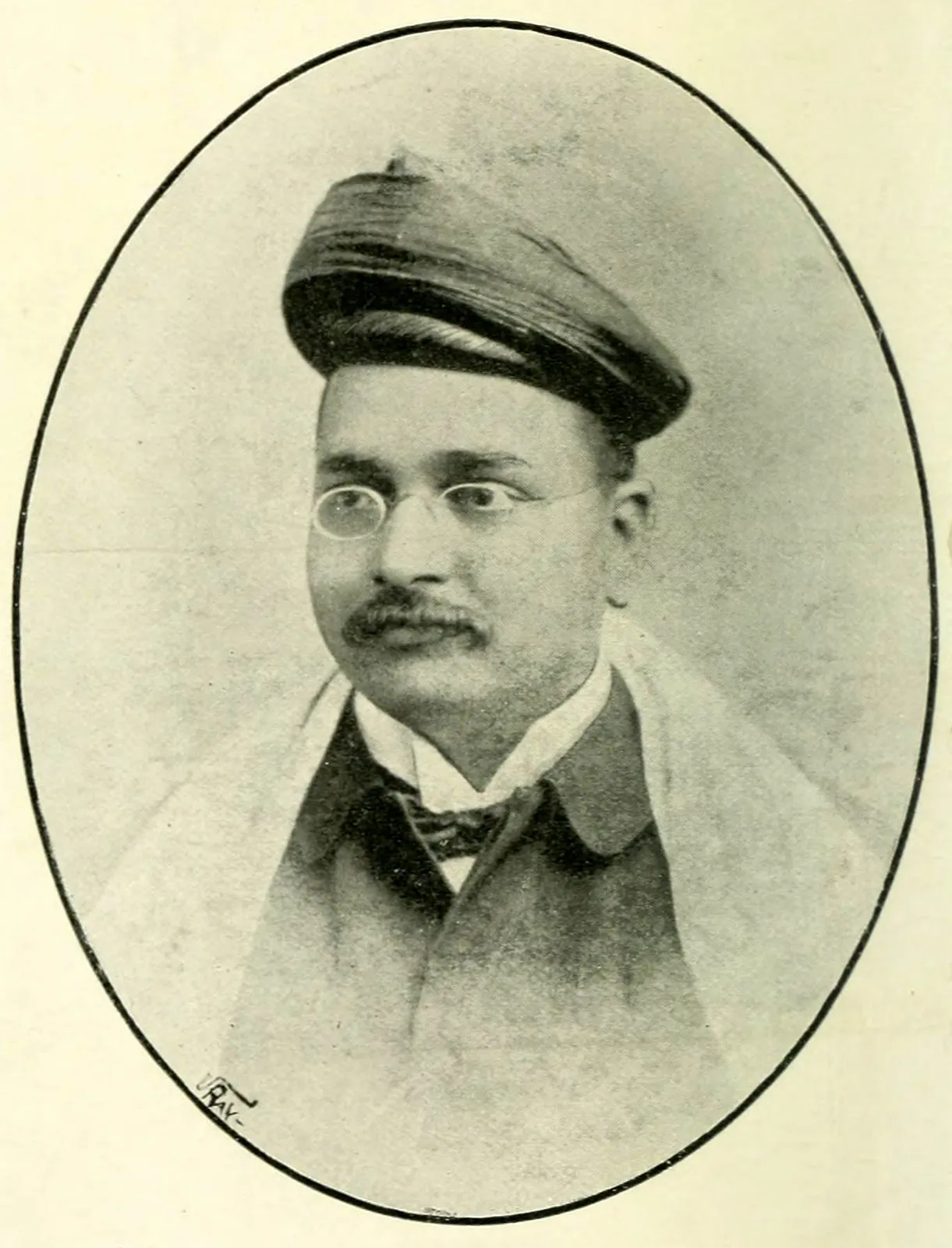
Gopal Krishna Gokhale was born on 9 May 1866 in Kothluk, a village in Ratnagiri District on the Konkan coast — the same district that had produced Bal Gangadhar Tilak ten years earlier, both men from Chitpavan Brahmin families in the same stretch of Maharashtra. The coincidence of origins makes the divergence of their political philosophies all the more striking. From the same caste, the same geographical tradition, the same educational system — Tilak at Deccan College a decade ahead of Gokhale, both eventually teaching at Fergusson College, the institution Tilak had helped found — the two men built political positions that were in fundamental tension throughout their public lives and that crystallised, in the Congress crisis of 1905–1907, into an open split that damaged the independence movement for years.
Gokhale's father was a minor government official, and the family had enough income to educate their son adequately but not lavishly. He entered Deccan College in Pune on a scholarship, studied English and mathematics, and graduated in 1884. He joined the Deccan Education Society — the organisation that Tilak and others had founded to provide an alternative to the purely anglicised colonial education system — and became a professor at Fergusson College, the institution the Society ran. He was a gifted teacher, particularly in mathematics and English, and he spent nearly two decades in academic life before his political career fully absorbed him. The teaching formed him: the Servants of India Society he later founded was explicitly modelled on an educational institution, with its members conceived as students of national service rather than as political operatives.
Ranade and the Intellectual Formation of a Moderate
The most important influence on Gokhale's political formation was Mahadev Govind Ranade — the Maharashtrian judge, economist, and social reformer who had spent decades arguing that India's path to freedom ran through social reform as well as political agitation, that the caste system and the treatment of women were not separate issues from colonial governance but deeply entangled with it, and that the educated Indian middle class had obligations to the millions below them that went beyond political advocacy. Gokhale became Ranade's protégé in the 1890s, absorbing the older man's approach to public life: careful, documented, patient, focused on the long-term transformation of institutions rather than the short-term satisfactions of confrontation.
Ranade's economics also shaped Gokhale's political work. Ranade had been developing a critique of colonial economic policy — the argument that the colonial government's free trade orthodoxy was systematically preventing India from industrialising, that protective tariffs for Indian industry were necessary, that the drain of wealth to Britain was a structural feature of the colonial relationship rather than an accidental consequence of policy. This economic critique, developed in parallel with Dadabhai Naoroji's drain theory, gave Gokhale the intellectual tools for the detailed budget analyses he would later deliver in the Imperial Legislative Council — the patient, documented, irrefutable demonstration that colonial policy was economically harmful to India.
The Imperial Legislative Council: Budget as Politics
Gokhale was elected to the Bombay Legislative Council in 1899 and to the Imperial Legislative Council — the central legislative body for all of British India — in 1902, where he served until his death in 1915. His presence in the Council was one of the most effective uses of the colonial constitutional system by any Indian politician of the era. He could not change policy through the Council — the colonial government had sufficient appointed and official members to outvote any combination of elected Indian members on any question it considered important. What he could do was document, in the public record of the Council's proceedings, the gap between what the colonial government claimed its policies achieved and what they actually produced.
His annual analysis of the Government of India budget became one of the most closely followed performances in Indian public life. He worked through the budget line by line, comparing expenditure on education in India with expenditure in comparable British colonies, demonstrating the proportion of Indian tax revenue that went to support the salaries of British civil servants who would retire to England, showing the cumulative cost of the military expenditure that Indian taxpayers were required to fund for the defence of an empire whose interests were not theirs. He did this year after year, with figures that could be checked and that held up to scrutiny, building a documentary record of colonial extraction that complemented Naoroji's drain theory with the specific annual data that the theory required.
He also used the Council to advocate for causes that his contemporaries largely ignored. Most prominently, he argued repeatedly and with evident passion for compulsory free primary education for all Indian children — a demand that the colonial government rejected on grounds of cost and that many of his Congress colleagues considered premature. Gokhale's position was that no programme of national regeneration made sense without a literate population, that the colonial government's failure to provide primary education was not merely an educational failure but a deliberate maintenance of the conditions of governability, and that an independent India would need to address it as its first priority. His Elementary Education Bill of 1911, defeated in the Imperial Legislative Council, was a precise articulation of what that programme would require. It took India until 2009 to enshrine the right to free and compulsory education in law.
The Congress Moderate Leadership and the Tilak Confrontation
Gokhale led the Congress Moderate faction through the most turbulent decade in the organisation's pre-Gandhi history, and his leadership was tested most severely by the confrontation with Tilak and the Extremists in the years between the partition of Bengal in 1905 and the Surat split of 1907. His position was clear and consistently maintained: the Moderates' strategy of petition, documentation, and constitutional pressure was the appropriate method for achieving reform, and the Extremists' agitation for mass non-cooperation and confrontation was premature and dangerous — it would provoke colonial repression before the nationalist movement was strong enough to sustain it, damage the relationship between the Congress and the British Liberals who were the movement's most useful allies in England, and risk communal violence that would set back the cause of Indian unity.
He was not wrong about the risks, which the Surat split and the subsequent wave of colonial repression demonstrated. He was wrong about the timeline: the constitutional pressure that he trusted to produce reform did not, in the decades that followed, produce reform sufficient to prevent the mass agitation that Gandhi subsequently launched. The British Liberals whose support Gokhale cultivated proved unable or unwilling to override the imperial establishment's resistance to meaningful constitutional change. The patience that Gokhale's strategy required was not rewarded with the progress it was supposed to generate.
His personal relationship with Tilak was one of the more complex in the independence movement. They were born in the same district, educated in the same institutions, working in the same organisation for the same ultimate goal. They disagreed about everything between the goal and the present. Tilak found Gokhale's deference to constitutional process naive and his social reform emphasis a distraction from the political work. Gokhale found Tilak's mass agitation irresponsible and his use of Hindu religious symbolism as a political tool communally divisive. Each was right about the other's weaknesses. Neither could fully see the movement's eventual shape, which drew on elements of both their approaches while transcending both.
The Servants of India Society: Training the Nation's Servants
In 1905, the year of the Bengal partition and the launch of the Swadeshi Movement, Gokhale founded the Servants of India Society — an organisation whose purpose and structure reflected his deepest convictions about what India needed. The Society's members took vows of poverty — accepting only a subsistence stipend from the Society itself — and committed to lifelong service to the Indian nation in whatever capacity the Society directed. They were trained public servants: educated men who had deliberately renounced the income their qualifications could have earned in the colonial or private professional world in order to work on the problems of public welfare that the colonial government was not addressing.
The Society's work spanned a wide range: education for the poor, campaigns against untouchability, public health initiatives, journalism of the educational rather than agitational kind. It was deliberately non-political in the party sense — members did not participate in Congress campaigns or political agitation, on the grounds that the work of building India's social capacity required the sustained, patient engagement that political activism disrupted. This separation of social reform from political agitation was controversial: the Extremists considered it a distraction from the primary task, and Gandhi, who admired the Society deeply, was refused membership because his political activities made him incompatible with its non-political vow.
The model the Society embodied — the professional public servant who has made a vocation of national service rather than a career of personal advancement — was influential on the thinking about what an independent India's civil service and public institutions should look like, even though the Society itself was always small and its direct impact limited by its scale.
Gandhi's Mentor: A Relationship That Shaped the Century
The relationship between Gokhale and Gandhi began in 1901 when Gandhi, then a lawyer based in South Africa, attended his first Indian National Congress session in Calcutta and was introduced to Gokhale, whose reputation as the Congress's most skilled and principled parliamentarian had reached South Africa through the Indian press. The relationship developed through subsequent meetings in 1902 and deepened substantially during Gandhi's extended visit to India in 1912, when Gokhale gave the younger man's political education a direction that proved permanent.
The specific instruction that Gandhi most often quoted was Gokhale's insistence that Gandhi spend a year travelling India in third class — in the railway carriages where ordinary Indians travelled, eating what they ate, experiencing the country as it was rather than as it appeared from the platform of a Congress session. Gandhi did it. The year of travel that Gokhale prescribed gave Gandhi the direct knowledge of Indian poverty, the comfort with Indian ordinary life, and the understanding of what mass politics would need to address that became the foundation of everything he subsequently built. He acknowledged the debt repeatedly and without qualification.
Gokhale died on 19 February 1915, while Gandhi was still in the year-long observation period that Gokhale had set as the condition for his entering Indian politics. Gandhi was with him in his final days. The death was felt across India as a major loss — Tilak, despite everything, wrote a generous tribute. Gandhi wrote that Gokhale had been his guide, his guardian, and his guru in the Indian political world, and that nothing Gandhi subsequently built would have been possible without Gokhale's teaching. The political world that Gokhale had spent thirty years constructing — the constitutional framework, the institutional habits, the idea of trained and honest public service — was not the world Gandhi's mass movements inhabit. But it was the world that made those mass movements possible, by demonstrating what disciplined Indian political organisation could achieve within the system before the decision was taken to operate outside it.