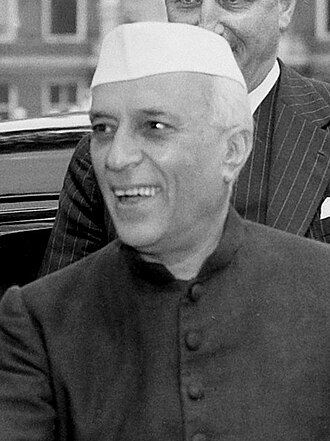
At a Glance
Allahabad and England: A Childhood Designed for Privilege
Jawaharlal Nehru was born on 14 November 1889 in Allahabad — the city at the confluence of the Ganges and the Yamuna that was one of the most significant administrative and legal centres in northern India — to Motilal Nehru and Swarup Rani. Motilal Nehru was not merely wealthy; he was conspicuously, assertively wealthy in the way that colonial India's most successful Indian professionals could be — a barrister who had built one of the most lucrative practices in the United Provinces, who lived in a mansion called Anand Bhavan staffed by European servants, who wore English suits and sent his laundry to Paris, and who had concluded that the future his son deserved required the most complete possible English education.
Jawaharlal was educated at home by private tutors until the age of fifteen, then sent to Harrow — one of England's most prestigious public schools — in 1905, and subsequently to Trinity College, Cambridge, where he read Natural Sciences and graduated in 1910. He then studied law at the Inner Temple and was called to the bar. The education was excellent and the formation was entirely English: by the time he returned to India in 1912, he was twenty-two years old, had spent seven years in England, spoke English as his primary language of thought and expression, and had the cosmopolitan culture and the political liberalism of an Edwardian English university man. He also had a growing anger about what that education had concealed from him about his own country — an anger that his encounter with Gandhi, in 1916, would give both direction and discipline.
Gandhi and the Transformation of a Barrister
Nehru met Gandhi at the Lucknow Congress session of 1916, and the encounter was one of the transformative moments of the independence movement — not because it produced an immediate conversion, but because it planted something that grew slowly and then quickly. Gandhi was then already developing the political methods — satyagraha, the championing of the rural poor, the insistence on personal austerity as a political statement — that would reshape Indian nationalism entirely. Nehru was a young lawyer of ambiguous commitment, not yet certain whether his future lay in law or in politics and not yet certain what Indian politics should be asking for.
The Non-Cooperation Movement of 1920–1922 settled those questions. Nehru threw himself into the movement, took on the peasant campaigns in Awadh that Gandhi had launched, was arrested for the first time in December 1921, and spent six months in jail. The experience was decisive in the way that first imprisonments were for the independence movement's cadre — not because it was particularly harsh, but because it converted an abstract commitment to nationalism into a physical fact of personal cost. He had been to jail. He could not now decide he had not meant it.
Through the 1920s and 1930s the relationship between Nehru and Gandhi was the most important political relationship in the independence movement — a partnership between two men who were deeply different in temperament, background, and political philosophy, held together by mutual respect, genuine affection, and the practical necessity of each for the other. Gandhi needed Nehru's appeal to the urban educated class, the younger generation, and the socialist left that found Gandhi's economics too traditionalist and his religious symbolism too exclusionary. Nehru needed Gandhi's mass reach, his moral authority, and the cover that association with Gandhi provided against accusations of elitism. The relationship was not without tension — Nehru thought Gandhi's economic ideas were reactionary, Gandhi thought Nehru's socialism was impatient — but it held, and holding it was one of the things that kept the Congress from fracturing in the years before independence.
The Nine Imprisonments: Writing Through Confinement
Jawaharlal Nehru was imprisoned nine times by British colonial authorities between 1921 and 1945, spending a total of approximately nine years and eleven months in custody. The imprisonments were spread across the Civil Disobedience Movement, the individual political protests of the 1930s, and the Quit India Movement of 1942–1945. The longest single period was the Quit India imprisonment from August 1942 to June 1945 — thirty-four months in Ahmadnagar Fort in Maharashtra, where he was held along with most of the Congress Working Committee.
What distinguishes Nehru's imprisonments from those of most of his contemporaries is the body of writing they produced. Glimpses of World History, written as a series of letters to his daughter Indira from prison between 1930 and 1933, is a history of the world from antiquity to the present addressed to a child but substantive enough for adults — one of the most unusual historical works produced by a political prisoner anywhere. An Autobiography, written during a later imprisonment, is a reflective account of his political development that is also a history of the independence movement from the inside. The Discovery of India, written in Ahmadnagar Fort in 1944 during the Quit India imprisonment, is an attempt to synthesise five thousand years of Indian history and civilisation into a single coherent narrative — a work of popular historical and philosophical synthesis that shaped how educated Indians thought about their own past for a generation.
The writing was not merely a use of enforced leisure. It was a political act: the demonstration that the men the colonial government was imprisoning to remove them from political influence were using that imprisonment to produce works of lasting intellectual seriousness. Each book arrived in the nationalist press and the reading public with the implicit argument that the colonial state's violence was producing something it had not intended.
The Lahore Resolution and the Path to Independence
Nehru's Congress presidential address at the Lahore session of December 1929 was the moment at which the Congress formally committed to complete independence — purna swaraj — rather than the dominion status that earlier resolutions had sought. The resolution was moved by Nehru, passed by the Congress, and gave the Civil Disobedience Movement launched by Gandhi in 1930 its explicit constitutional objective. The Salt March, the mass arrests, the three rounds of Round Table Conferences in London at which Congress negotiated with the British government — all of this took place against the background of the Lahore resolution's stated demand.
Through the late 1930s and the war years, Nehru was among the most prominent figures in the Congress's engagement with the question of India's relationship to the war. He opposed fascism on principle — unlike Subhas Chandra Bose, he saw no possibility of an anti-colonial alliance with the Axis powers — but he also refused to support the British war effort without a concrete commitment to Indian independence. The Congress's failure to reach agreement with the British government on independence terms in exchange for war cooperation led to the Quit India Movement of August 1942 and Nehru's final imprisonment.
'Tryst with Destiny': The Midnight Speech and the Weight of What Followed
The partition of India in August 1947 — the division of the subcontinent into India and Pakistan along religious lines — was the wound that accompanied the independence both nations celebrated. Nehru accepted partition as a practical necessity, convinced that without it independence would be blocked indefinitely by the political impasse between the Congress and the Muslim League. Gandhi opposed it to the end. Maulana Azad considered it a betrayal of everything the Congress's secular nationalism had stood for. The violence that accompanied partition — the killings, the forced migrations, the destruction — killed between two hundred thousand and two million people depending on the estimate, and displaced fifteen million more. Nehru, who had made the decision that made it happen, carried that weight for the rest of his life.
The Tryst with Destiny speech, delivered at midnight on 14–15 August 1947 as India's independence was declared, is the most celebrated piece of political oratory in Indian history. It was delivered in English — the language of the colonisers, the only language sufficiently common across India's linguistic diversity to serve as the voice of a national moment — and it balanced the joy of independence with an explicit acknowledgement of the unfinished work that remained. Nehru wrote it himself, without drafts from others, and it bears the marks of the man who wrote it: educated, literary, aware of history, genuinely moved by the moment's significance, and already thinking about what came next.
Seventeen Years as Prime Minister: What He Built and What He Did Not
Nehru governed India for seventeen years — from independence in August 1947 to his death in May 1964. The record of those seventeen years is substantial, contested, and irreducible to simple assessment. He oversaw the drafting and adoption of the Indian Constitution (1950), one of the longest and most comprehensive constitutional documents in the world, which established India as a secular, democratic republic with extensive fundamental rights and provisions for social justice. He established the Indian Institutes of Technology, beginning the investment in technical education that would eventually produce the engineering and scientific capacity that transformed India's economy in the decades after his death. He launched the Five Year Plans and the mixed-economy model of development — government-led industrialisation alongside a private sector — that made India a significant industrial power by the 1960s even if it also produced the inefficiencies that later economists criticised.
His foreign policy — the Non-Aligned Movement, the refusal to take sides in the Cold War, the insistence that newly independent nations had the right to chart their own course — was genuinely innovative in the context of 1950s bipolar world politics and gave India a prominence in international affairs disproportionate to its economic strength. The Bandung Conference of 1955, which Nehru co-organised with Sukarno, Zhou Enlai, and Nasser, established the non-aligned bloc as a political reality and gave a voice to the newly independent nations of Asia and Africa in international forums that had previously excluded them.
The shadows on the record are real. The 1962 war with China — in which the Indian Army was badly defeated across the Himalayan border — was a catastrophe for which Nehru bore direct responsibility, having pursued a forward policy that his military advisers warned was unsustainable and having allowed Defence Minister V. K. Krishna Menon to undermine the Army's preparedness for ideological reasons Nehru shared. The defeat broke him. He was never the same after October 1962, and the stroke that killed him in May 1964 came after eighteen months of visible physical and political decline.
The dynasty he inadvertently created — his daughter Indira Gandhi became Prime Minister in 1966, his grandson Rajiv Gandhi in 1984 — raises questions about the democratic culture he had tried to build, since the concentration of power in a single family is not what democratic republics are supposed to produce. Whether this was Nehru's failure or simply the consequence of the Congress party's structural dependence on the Nehru family's political capital is an argument Indian historians have not finished having.
The Discovery of India and the Question of What India Was
The Discovery of India, written in Ahmadnagar Fort in 1944 during the Quit India imprisonment, is the work by which Nehru is best known outside the context of his governance. It is an attempt to answer a question that his English education had kept from him for most of his youth: what is India, historically and culturally, and what does it mean to be Indian? The answer Nehru constructed was of a civilisation of extraordinary antiquity and continuity — not static but constantly changing, absorbing and transforming every invader and influence that had entered it, producing a culture that was simultaneously deeply diverse and somehow, across that diversity, recognisably itself. The synthesis he built was secular in its premise: India was not defined by Hinduism or by any single religion or culture but by the interaction of all of them across millennia.
The book was influential in shaping how independent India understood itself — the idea of India as a civilisational entity rather than a colonial administrative unit, as a place with a history of its own that predated and would outlast the colonial period, as a diversity that constituted a unity rather than a fragmentation. It was also a work of its moment: written by a man in prison, looking forward to an independence that was not yet certain, trying to articulate what that independence was for. The sense of purpose that runs through it — the conviction that India's freedom was not merely an end but a beginning, a return to a civilisational trajectory that colonialism had interrupted — shaped the tone of the independence movement's final years and the early years of the republic.
Nehru died on 27 May 1964, still Prime Minister, still governing a country that had not yet fully decided what kind of country it was. The question he had asked in the Ahmadnagar Fort in 1944 — what is India? — is still being answered. His own answer, contained in the Constitution he oversaw and the institutions he built, was one version. Others were always possible, and some of them have since emerged. That the question remains open is both the limitation and the achievement of everything he tried to build.