At a Glance
Dhudike and Lahore: Arya Samaj, Law, and the Making of a Provincial Radical
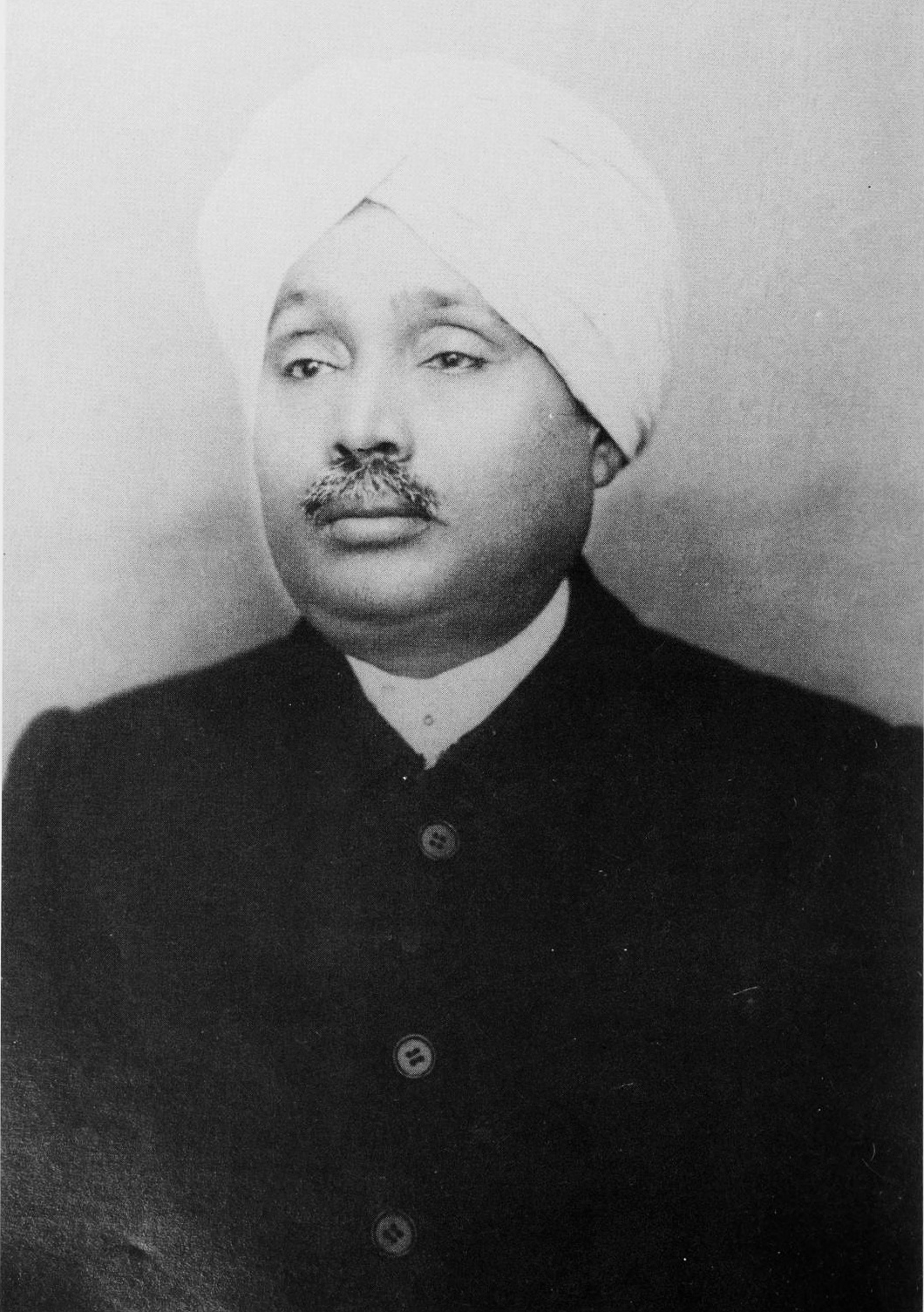
Lala Lajpat Rai was born on 28 January 1865 in Dhudike, a village in the Ferozepur District of the Punjab — a province whose particular social and political geography shaped him in ways that distinguished him from the Bengal and Maharashtra Extremists he would stand alongside. Punjab in the 1860s and 1870s was undergoing a social transformation driven partly by the Arya Samaj — the Hindu reform movement founded by Swami Dayananda Saraswati in 1875, which called for a return to Vedic principles, rejected idol worship and caste hierarchy, and argued that Indian civilisation could be modernised without abandoning its own roots in favour of Christian missionary culture. The Arya Samaj was simultaneously a religious reform movement, a social reform movement, and a nationalist political force: it built schools and colleges, promoted the education of women, organised famine relief, and developed a specifically Punjabi Hindu identity that was neither the traditionalism the colonial government preferred in India's population nor the Western liberalism that the Congress moderates had absorbed.
Lajpat Rai joined the Arya Samaj in his teens and remained its active member for life. He educated himself in law, was called to the bar, and established a practice in Lahore — the Punjab's capital, the city of the great Mughal monuments, of the colonial administration's Punjab secretariat, of the newspapers and colleges and political networks that made it the most politically active city in northwestern India. He was a founder of the Punjab National Bank in 1894 — a nationalist enterprise designed to provide capital to Indian businesses outside the British banking system that dominated commercial credit — and of the Dayanand Anglo-Vedic College in Lahore, which the Arya Samaj had established as an alternative to the colonial university system.
Famine Relief, the Extremist Politics, and the Lal-Bal-Pal Formation
Lajpat Rai's political reputation was built partly through his famine relief work in the Punjab and Rajasthan during the famines of 1897–1900. He organised relief camps, raised funds, and provided direct assistance to starving rural populations with a practical effectiveness that the colonial administration's own relief mechanisms consistently failed to match. The work was not apolitical — it was a direct demonstration that Indian organisations could address Indian suffering more effectively than colonial governance, and it built the local network and popular reputation that his subsequent nationalist politics drew on.
He joined the Congress Extremist faction through the 1900s and became part of the Lal-Bal-Pal triumvirate — the three leaders whose initials combined into a formulation that circulated as shorthand for the militant nationalist position: Lala Lajpat Rai (Lal) from Punjab, Bal Gangadhar Tilak (Bal) from Maharashtra, Bipin Chandra Pal (Pal) from Bengal. The three men argued that the Congress moderates' strategy of petition and constitutional pressure had achieved nothing in two decades and that mass agitation, boycott of British goods, and an explicit demand for swaraj were the only methods that would produce results. They were right about the diagnosis. Their prescription was carried into the Swadeshi Movement of 1905–1908, which demonstrated that Indian mass politics was possible.
Deportation to Burma: The First Political Martyrdom
In June 1907, at the height of the Punjab agitation against the colonial government's Colonisation Bill — legislation affecting the land tenure rights of Punjabi peasant farmers in the newly developed canal colonies — Lord Minto deported Lala Lajpat Rai to Mandalay, Burma, without trial or charge, under a provision of colonial law that allowed the government to remove individuals it considered dangerous without legal process. The deportation was intended to remove the most effective organiser of the Punjab agitation from the province at its most critical moment.
The deportation backfired. It converted Lajpat Rai from a prominent provincial agitator into a national martyr. Protests erupted across India. The Congress passed resolutions condemning the deportation. The colonial government, having made its point, released him in November 1907 without charge. The episode demonstrated both the colonial government's willingness to bypass legal process against political opponents and the political cost of doing so visibly — a lesson the independence movement absorbed and the colonial government kept relearning.
America, Young India, and the War Years
Lajpat Rai left India for the United States in 1914, partly for health reasons and partly because the political climate following the Surat Congress split and the subsequent colonial crackdown had made active nationalist work in India increasingly difficult for Extremist politicians. He spent approximately five years in America, using the platform that the United States offered — as the major Western power not party to Britain's imperial project — to advocate for Indian independence before American audiences, the American press, and the American Congress.
He founded the Indian Home Rule League of America, published a journal called Young India in New York, and wrote extensively for American audiences about colonial exploitation of India in the same tradition of documented economic argument that Dadabhai Naoroji's drain theory had established. His book Young India (1916) was widely read in American progressive circles and contributed to the building of American intellectual sympathy for Indian independence that would eventually influence US policy toward Britain in the Second World War. He was present in America during the Russian Revolution of 1917 and the entry of the United States into the war, and he observed both events with the keen attention of a man whose politics were being tested by the most turbulent years of the twentieth century's first decades.
The Jallianwala Bagh massacre in April 1919 — the British Army's killing of hundreds of unarmed civilians in Amritsar, in the Punjab that was his home province — brought him back to India. The massacre was an event of such magnitude that it could not be processed from the other side of the world, and Lajpat Rai returned to Punjab to participate in the response.
Non-Cooperation, the Congress Presidency, and the Final Decade
Lajpat Rai was elected President of the Indian National Congress at its Special Session in Calcutta in September 1920 — the session called to consider Gandhi's Non-Cooperation Motion, which proposed that the Congress adopt mass non-cooperation with the colonial government in response to the Jallianwala Bagh massacre and the colonial government's failure to hold those responsible accountable. Lajpat Rai presided over the session at which the most significant shift in Congress strategy since the organisation's founding was adopted.
He organised the Non-Cooperation Movement in Punjab — one of its most active provincial campaigns — and participated in the Civil Disobedience campaigns that followed. He was imprisoned again in the early 1920s. He continued writing and speaking through the mid-1920s, maintaining the political engagement that had defined his public life since the 1890s. By 1928 he was sixty-three years old, not in robust health, and had been in active nationalist politics for over thirty years. When the Simon Commission arrived in India in 1928, he was at the head of the Punjab's response to it.
30 October 1928: The Batons and the Declaration
The Simon Commission — seven British Members of Parliament sent to India to examine the constitutional reforms due under the 1919 Government of India Act, with no Indian members — arrived in Lahore on 30 October 1928. The all-British composition of a commission sent to examine Indian governance was insulting enough to unite the entire Congress, across the moderate-Extremist divide, in a boycott and protest campaign. Lala Lajpat Rai led a procession of approximately thirty thousand people in Lahore to demonstrate against the Commission's arrival.
Superintendent of Police James Scott ordered a baton charge against the procession. The police beat the marchers. Lajpat Rai was struck directly and repeatedly on the chest by police batons — whether this was Scott's specific instruction or the result of the charge's violence directed at the procession's most visible leader, the accounts vary, but the factual outcome is not disputed. He was beaten. He spoke at a public meeting shortly after the attack, declaring that each blow struck against him was a nail in the coffin of British imperialism in India — a statement that became one of the independence movement's most quoted declarations, gaining its full force only retroactively, when the nail metaphor proved prescient.
He died on 17 November 1928, eighteen days after the baton charge, of a heart attack. The medical connection between the chest blows and the cardiac event was disputed by the colonial government and has been discussed by medical historians since — the injuries were real, his health had been fragile, and the direct causal chain is not as clean as the nationalist narrative presented it. But in the political consciousness of the independence movement, the causal chain was clear: James Scott's batons had killed Lala Lajpat Rai, and the HSRA would not leave that unanswered.
The Consequence: Bhagat Singh and the Saunders Shooting
Bhagat Singh was twenty-one years old when Lala Lajpat Rai died. He had idolised Lajpat Rai as one of the giants of the Punjab nationalist tradition — the man who had built the Arya Samaj schools where a generation of Punjab nationalists had been educated, who had stood with Tilak and Pal, who had been deported without charge and returned without surrender, who had spent thirty years insisting that India had the right to govern itself. The death at sixty-three from police batons at a constitutional protest was, to Bhagat Singh, the clearest possible demonstration of what the colonial state ultimately was: a system that killed unarmed people who disagreed with it, and that would not be changed by the kind of politics that Lajpat Rai had spent his life practising.
The HSRA met and decided that James Scott would be killed in retaliation. On 17 December 1928 — one month after Lajpat Rai's death — Bhagat Singh, Azad, and Rajguru positioned themselves outside the District Police Office in Lahore to shoot Scott. John Saunders, a deputy superintendent who resembled Scott and left the building at the wrong moment, was shot instead. The HSRA distributed a statement the following day explaining the action as direct retaliation for Lajpat Rai's death. The chain from 30 October 1928 to 17 December 1928 to the Lahore gallows on 23 March 1931 was now complete. Lala Lajpat Rai's death had set it in motion.
He did not intend that consequence. He had spent thirty years practising the politics of mass organisation, constitutional argument, and civil disobedience — the politics that the Moderates found too confrontational and the revolutionaries found insufficiently radical. His death at a constitutional protest was the result of that middle position meeting colonial violence in its most direct form. What happened afterward was not his choice. But the independence movement's history would be impossible to tell without understanding that his death was where the final phase of the armed revolutionary tradition's last major campaign began.