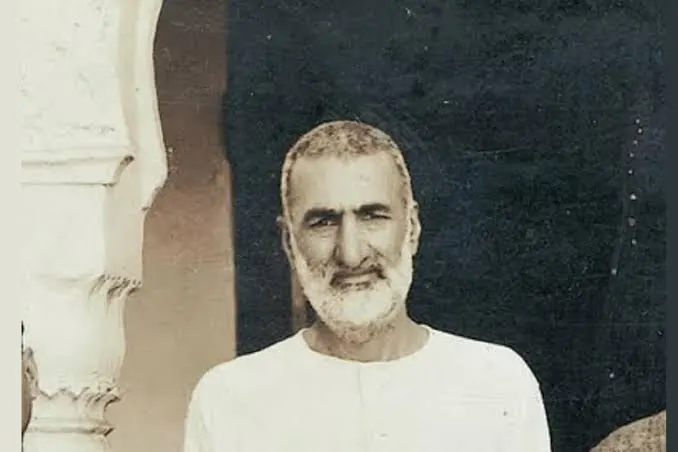
At a Glance
Utmanzai and Peshawar: A Pashtun Childhood on the Northwest Frontier
Khan Abdul Ghaffar Khan was born on 6 February 1890 in Utmanzai, a village in the Peshawar Valley of the North-West Frontier Province — the stretch of rugged terrain along the Afghan border that the British governed with a combination of military force, political agents, and the colonial theory of the martial race, which held that the Pashtun people were by nature warriors whose energies should be channelled into service in the Indian Army rather than directed toward political independence. His family were Mohmand Pashtuns of prosperous standing — his father owned land and the family had connections to the local power structure that the colonial administration worked through and alongside.
He was educated at the Mission High School in Peshawar — a Christian missionary school, which in the colonial educational system of the Northwest Frontier was one of the better options available for a family that wanted their son to acquire the English-language education that the colonial economy rewarded. He was offered a commission in the British Indian Army — the conventional path for young men of his background and ability in a province where military service was the primary route to prestige and income in the colonial system. He declined. He had already decided that the service he intended to give was to the Pashtun people's education and ultimately their liberation, and that the colonial army was not the vehicle for either.
The School Network and the Foundation of a Movement
From approximately 1910, Khan Abdul Ghaffar Khan began building a network of schools across the villages of the Peshawar Valley and the surrounding districts — an enterprise that the British colonial administration watched with suspicion from the start because it was explicitly nationalist in orientation. The schools taught in Pashto, the language of the Pashtun people, alongside Urdu and English; they taught Pashtun history and culture; and they were embedded in the political argument that the Pashtun people had the right to determine their own future rather than have it determined for them by the colonial administration in Peshawar and Delhi.
He was imprisoned for the first time in 1919, in the wave of arrests that followed the Jallianwala Bagh massacre and the Punjab unrest. The imprisonment did not stop the educational work — if anything, it sharpened his political direction. He came out of prison more committed than before, more connected to the broader Indian nationalist movement, and increasingly convinced that the political strategy required was one that matched the discipline and organisation of the Khudai Khidmatgar members he was building to something that the colonial government could not simply kill its way out of.
The Khudai Khidmatgar: Red Shirts and the Non-Violent Army
The Khudai Khidmatgar — which translates variously as Servants of God or Servants of the Almighty — was founded by Khan Abdul Ghaffar Khan in 1929 as a disciplined, uniformed, and explicitly non-violent organisation of Pashtun men and women committed to the liberation of their people and their country. The red shirts that gave the movement its popular name in British official reports were initially a practical choice — red dye was cheap and readily available — that became a symbol. Members took an oath to serve without expectation of payment or personal reward, to avoid violence, to treat women with respect, and to bear no arms. They drilled, maintained discipline, and built the organisational structure that the British found more threatening than any armed uprising: a mass movement too large to eliminate by shooting its leadership, too disciplined to be provoked into providing the justification for the larger massacre that would have been required to break it by force.
The Khudai Khidmatgar enrolled, at its peak, approximately one hundred thousand members — an extraordinary number in a province whose total population was a few million, and an extraordinary achievement in a culture that the British themselves had constructed elaborate justifications for why non-violent resistance was impossible. The British theory of the martial race had held that Pashtuns were by nature warriors incapable of the discipline required for non-violent political action. The Khudai Khidmatgar was a direct and sustained refutation of that theory, built and maintained by the people the theory purported to describe.
Qissa Khwani Bazaar: The Massacre That Did Not Break the Movement
On 23 April 1930 — in the same weeks that Gandhi's Salt March was generating mass civil disobedience across India — colonial troops opened fire on a crowd of Khudai Khidmatgar members and supporters who had gathered at the Qissa Khwani Bazaar in Peshawar. The firing continued for hours. The precise death toll has never been definitively established; estimates range from two hundred to four hundred killed. The survivors who were present, and the witnesses who observed the scene, reported the same thing: that the Khudai Khidmatgar members did not run, did not retaliate, and did not attempt to attack the soldiers. They stood in the face of sustained firing. As each rank fell, those behind them stepped forward. The soldiers continued to fire. The crowd continued to stand.
The Qissa Khwani Bazaar massacre became one of the most discussed events of the independence movement's non-violent resistance phase, cited by Gandhi as the clearest possible demonstration of what satyagraha demanded and what it could achieve: that disciplined non-violent resistance to military violence was not submission but the highest form of courage, that it placed a moral burden on the violent party that violence itself could not answer. The Khudai Khidmatgar's collective discipline at Qissa Khwani was not theoretical but practical — it required individual members to hold their ground while people beside them were shot. They held it. The colonial government got its massacre and did not get its broken movement.
The Congress Alliance and the Partition Opposition
Khan Abdul Ghaffar Khan's alliance with the Indian National Congress and with Gandhi personally was one of the most significant cross-cultural partnerships in the independence movement — a Pashtun Muslim leader from the Northwest Frontier working within a predominantly Hindu-led organisation on the basis of shared commitment to non-violence and Indian independence. He was elected to the Congress Working Committee, participated in national Congress sessions, and maintained the alliance through the 1930s and 1940s even as the Muslim League's demand for a separate Muslim state gathered force.
His opposition to partition was total and sustained. He argued that the Pashtun people had not been consulted about whether they wanted to be part of Pakistan, that the referendum held in the North-West Frontier Province in 1947 was flawed and conducted under conditions of intimidation, and that the partition of the subcontinent along religious lines was a betrayal of everything the independence movement had stood for. When partition happened and the NWFP became part of Pakistan, he said — in one of the most bitter statements any independence movement figure made about the outcome they had fought against — that the Congress had thrown the Pashtuns to the wolves.
Pakistan, Imprisonment, and the Long Marginalisation
The Pakistan that came into existence in August 1947 did not know what to do with Khan Abdul Ghaffar Khan. He was the most prominent political figure in the Northwest Frontier, he was a Congress ally who had opposed partition, he had a mass following among the Pashtun people, and he was on record as saying the new state had been built on a foundation he considered wrong. The Pakistani government's response was to imprison him, repeatedly and for extended periods, through the 1950s and 1960s. He spent more years in Pakistani prisons than he had spent in British ones — the total of his imprisonment across both colonial and Pakistani custody adds up to approximately twenty-seven years, more than any other figure of the independence movement served.
He spent significant periods in exile in Afghanistan, the country across the border that was the Pashtun homeland in a cultural and tribal sense even if it was not his political state. He never abandoned his advocacy for Pashtun rights and for a Pashtunistan — an autonomous Pashtun homeland that he argued the partition settlement had denied the Pashtun people. This advocacy made him permanently suspect in Pakistan and gave the Pakistani government its justification for the continued surveillance and periodic imprisonment that defined his later decades.
The Bharat Ratna and Death Under House Arrest
In 1987, the Government of India awarded Khan Abdul Ghaffar Khan the Bharat Ratna — India's highest civilian honour — making him the first non-Indian citizen ever to receive it. The award was an acknowledgement of what he had been to the shared independence movement and a statement that India's memory of the struggle was broad enough to include the man who had argued most passionately against the political outcome that made India and Pakistan separate countries. He received the award in Delhi. He returned to Peshawar. He died under house arrest on 20 January 1988, at ninety-seven years old.
His funeral and burial were themselves political events of considerable significance. His body was transported to Jalalabad in Afghanistan — the city he had chosen as his burial place, in the country that was the Pashtun homeland even though it was not the country of his birth or of his political struggle. Hundreds of thousands of people gathered to mourn him in Jalalabad. The procession crossed an international border and was attended by mourners from both Pakistan and Afghanistan in numbers that demonstrated the reach of his legacy in the Pashtun world across the political lines that post-colonial geography had drawn through it.
The question his life poses to the history of the independence movement is the one that partition poses generally: what was the independence struggle for, and for whom? Khan Abdul Ghaffar Khan's answer — that it was for all the peoples of the subcontinent, including the Pashtuns, and that their liberation required their unity rather than their division — was defeated in 1947. The defeat does not make the answer wrong. It makes it the answer that the movement's most principled advocate for non-violence among the Pashtun people gave, and that the political settlement overrode, and that he spent the remaining forty years of his life insisting had been the right one. He was not wrong. He was not heard. The difference between those two things is most of what makes his story worth knowing.