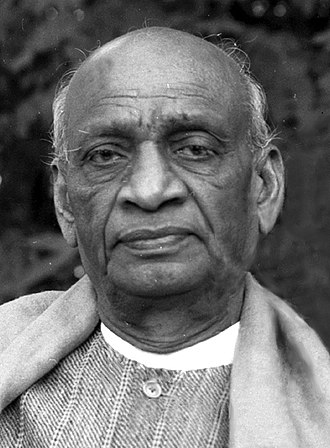
At a Glance
Nadiad and the Making of a Barrister
Vallabhbhai Patel was born on 31 October 1875 in Nadiad, a town in Kheda District in what is now Gujarat — the agricultural heartland of the Leva Patidar community, a farming caste with a strong tradition of land ownership, commercial enterprise, and social solidarity. His father, Jhaverbhai, had served in the army of the Rani of Jhansi during the 1857 Rebellion — a detail that locates the family within the tradition of active resistance to British authority — and had later settled in Karamsad, a nearby village, as a farmer. The family had no particular wealth or social prominence beyond the solid standing of landholding Patidars in the community.
Patel's education was local and he passed his district pleader's examination in 1900, working as a lawyer in Godhra and later in Borsad before deciding to go to England to qualify as a barrister. He was thirty-six years old when he left for London in 1910 — an unusual age to undertake legal studies in England, and a decision that required considerable savings and determination. He completed his studies at the Middle Temple in just over two years and returned to India in 1913, establishing a practice in Ahmedabad that quickly became one of the most successful in the city. He was known as a criminal lawyer of unusual ability — aggressive, forensically sharp, and willing to take on difficult cases — and his practice gave him financial security and professional standing from which to enter political life.
Gandhi and the Transformation of a Lawyer into a Revolutionary
Patel's encounter with Mahatma Gandhi in 1915 — Gandhi had just returned from South Africa and was beginning to engage with Indian politics — was the transformative event of his life. The two men were, in many respects, temperamentally opposite: Gandhi idealistic, ascetic, given to moral and spiritual reasoning; Patel pragmatic, worldly, impatient with abstraction and instinctively oriented toward the question of what could actually be done. Their friendship and political partnership, sustained across thirty-five years until Gandhi's assassination in January 1948, was one of the most consequential relationships in the history of the independence movement.
The first practical expression of their collaboration was the Kheda Satyagraha of 1918. Kheda District — Patel's home region — had experienced crop failure, and the colonial revenue administration demanded the full land tax assessment despite the failure. Gandhi had called for non-payment; Patel organised it, going village to village in Kheda, building the social solidarity among peasant farmers that non-payment required, managing the government's counter-measures, and sustaining the campaign for several months until the colonial administration agreed to suspend collection from the poorest farmers. The Kheda satyagraha established Patel as the foremost organiser of Gandhian civil disobedience in Gujarat, and gave him the practical experience in mass mobilisation that his subsequent career would draw on constantly.
The Bardoli Satyagraha: How He Became Sardar
The action that made Patel a national figure was the Bardoli Satyagraha of 1928. The colonial revenue administration in Bardoli taluka — a subdivision of Surat District in Gujarat — had enhanced the land revenue assessment by approximately thirty percent, a figure that Patel and the peasant farmers of the area considered both unjust and unsupported by any genuine reassessment of agricultural conditions. Patel organised approximately thirty thousand peasant families — Patidars, Kolis, and Anavils across eighty-seven villages — to refuse payment of the enhanced assessment in a campaign of collective civil disobedience that lasted from February to August 1928.
The campaign was a masterpiece of Gandhian organisation: disciplined, non-violent, and sustained against a colonial administration that deployed the full range of its legal powers — property attachment, cattle seizure, auctioning of land — to break the resistance. Patel managed each phase of the administration's pressure, maintained the solidarity of the peasant community, communicated the campaign's progress to the national Congress leadership and the nationalist press, and refused to settle on terms that did not substantially meet the farmers' demands. The government eventually agreed to suspend the enhanced assessment pending an independent inquiry; the inquiry vindicated the peasants' position; the original enhancement was substantially reduced. The farmers of Bardoli gave Patel the title "Sardar" — commander, chief — in recognition of his leadership. Gandhi endorsed the title. It followed Patel for the rest of his life.
Congress Organisation and the Independence Struggle
Through the 1930s and 1940s, Patel was the Indian National Congress's pre-eminent organisational figure — the man who built and maintained the party machine, who managed the internal politics of the Congress's provincial committees, who controlled the selection of Congress candidates for elections, and who understood, better than almost anyone else in the organisation, how the Congress's relationship with its mass base actually worked at the district and village level. He was elected Congress President in 1931, presiding over the Karachi session that passed the fundamental rights resolution. He was imprisoned multiple times during the Civil Disobedience Movements and the Quit India Movement of 1942. He supported Gandhi's political positions consistently, even when his own pragmatic instincts pulled in a different direction — the combination of his organisational abilities and Gandhi's moral authority was more powerful than either would have been alone, and both men understood this.
His relationship with Jawaharlal Nehru was more complicated than his relationship with Gandhi. Patel and Nehru were the two most powerful figures in the Congress after Gandhi, and they represented genuinely different visions of what independent India should be: Nehru's socialism and internationalism against Patel's more conservative nationalism; Nehru's suspicion of Hindu communalism against Patel's harder line on Pakistan and Muslim separatism; Nehru's idealism about Indian foreign policy against Patel's realpolitik. The tensions between them were managed throughout the independence struggle by Gandhi's authority and by the necessity of unity; after independence, with Gandhi dead and the challenges of governance immediate, the tensions became sharper. Patel died in December 1950, before they became irresolvable.
The Integration of the Princely States: India's Most Consequential Political Achievement
When the British transferred power on 15 August 1947, the Indian Independence Act lapsed the Crown's suzerainty over approximately 565 princely states — the independent principalities, varying enormously in size and significance from Hyderabad (larger than France) to tiny estates of a few square miles, that had existed under British paramountcy but had never been formally annexed into British India. These states were, in theory, free to accede to India, to Pakistan, or to seek independence. In practice, their geographic position, their populations, and the logic of the subcontinent's political geography meant that most of them had no realistic option other than accession to India or Pakistan. But "no realistic option" and "certain outcome" are not the same thing, and the task of converting the theoretical right of accession into the actual signatures of 562 rulers on instruments of accession fell to Patel and his adviser V. P. Menon.
Patel approached the integration of the princely states with the same combination of patient persuasion and firm ultimatum that he had deployed in Bardoli. Most of the smaller states acceded quickly — the Instrument of Accession that Menon's States Ministry had prepared was straightforward, the rulers were offered their privy purses and their personal property, and the alternative of resistance was made clearly unattractive. The more difficult cases were Junagadh — a Muslim ruler whose state was geographically surrounded by Indian territory but who announced accession to Pakistan, prompting a popular uprising and eventual Indian intervention; Kashmir — a Hindu ruler whose Muslim-majority state bordered both India and Pakistan, whose delayed accession triggered the first India-Pakistan war; and Hyderabad — the largest and most powerful princely state, ruled by the Nizam, who had designs on independence and who resisted accession to India for over a year.
The Hyderabad case was resolved by Operation Polo in September 1948 — a police action, as Patel officially called it, in which the Indian Army entered Hyderabad, defeated the Nizam's forces in five days, and compelled accession. Patel had been pressing for military action against the Nizam's continued resistance for months and had met resistance from Nehru and from the Governor-General Mountbatten, who preferred a negotiated settlement. Patel prevailed. The action was swift and decisive, and Hyderabad's accession to India was complete before the United Nations or any international body could intervene. The Kashmir question, by contrast, was referred to the UN by Nehru in January 1948 — a decision Patel disagreed with, believing that military action should have been allowed to complete the integration of the state before internationalisation made that impossible. The Line of Control that divides Kashmir between India and Pakistan today is, in Patel's view and in the view of many subsequent analysts, the consequence of that decision.
Home Minister, the Police, and the Administrative State
Patel's responsibilities as Home Minister extended far beyond the integration of princely states. He oversaw the Indian Police Service — the successor to the Indian Imperial Police — and the Indian Administrative Service, the successor to the Indian Civil Service, insisting over Nehru's objections that these services be maintained as a professional, cadre-based steel frame for the new state rather than being replaced with political appointees. His argument was characteristically pragmatic: India could not afford, in the immediate post-independence period, the instability that would result from dismantling its administrative infrastructure, and the professional civil services, whatever their colonial associations, were what the new government had to work with. The decision was consequential and remains contested — it preserved administrative capacity at the cost of institutionalising a colonial legacy — but it was also, in the chaos of 1947–48, probably right.
He managed the refugee crisis of Partition — the largest forced migration in human history, with approximately fifteen million people crossing the new India-Pakistan border in both directions — and the communal violence that accompanied it, deploying police and military forces to contain the killing and organising relief operations for refugees of both communities. His approach to communal violence was firm and unsentimental: he was willing to use force to stop killing regardless of which community was doing the killing, and his willingness to protect Muslim minorities in India while being equally firm about protecting Hindu and Sikh refugees from Pakistan gave his communal policies a consistency that his critics on both sides found unsatisfying and that his admirers considered one of his most important contributions to building a secular state in practice rather than merely in constitutional principle.
Death and the Continuing Argument About His Legacy
Sardar Vallabhbhai Patel died on 15 December 1950, aged seventy-five, at Birla House in Bombay — the same house in which Gandhi had been assassinated in January 1948. He had been in declining health since a severe heart attack in November 1950. Gandhi's death eighteen months earlier, which had removed the one figure who could mediate between Patel and Nehru, had left him increasingly isolated in the cabinet and increasingly aware that the direction of Indian policy on questions he cared deeply about — particularly Pakistan, Kashmir, and the treatment of the civil services — was going in a direction he could not support. He died before the conflicts resolved themselves.
The Bharat Ratna, India's highest civilian honour, was awarded to him posthumously in 1991. The Statue of Unity, inaugurated on 31 October 2018 — his birth anniversary — on the banks of the Narmada River in Gujarat, stands 182 metres tall and is the largest statue in the world, a monument to his role as the unifier of India that dwarfs, in scale, the commemorations of any other figure in Indian independence history. The argument about his legacy — about the relationship between his practical nationalism and Nehru's idealist socialism, about the Kashmir decision, about what the integration of the princely states cost as well as what it achieved — continues in Indian public life and in Indian historiography. The argument is itself a tribute to how consequential he was. The India that exists today — its map, its administrative structure, its professional civil services — bears his imprint as directly as it bears anyone's. He built it to last, and it has.