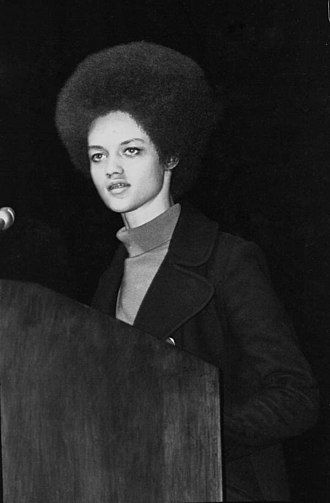
Dallas, the Diplomatic Circuit, and an Education in Contradiction
Kathleen Neal was born in Dallas, Texas, on 13 May 1945 — the year the Second World War ended and the year that American power was at the apex of its global confidence. Her father, Ernest Neal, was a US Army officer who would go on to a career as a sociologist and educator, and whose professional trajectory took the family out of the American South and onto a circuit of diplomatic and academic postings that would, by the time Kathleen reached adulthood, have given her a more internationally complex education than almost any of her contemporaries in the American political movements of the 1960s.
The family lived in India, Liberia, and the Philippines at various points during her childhood and adolescence, and the specific experience of watching her father represent the United States government in countries that were themselves newly independent from European colonialism — while the United States at home maintained the racial hierarchy of Jim Crow — gave her an understanding of American racial politics that was simultaneously more global in its frame and more precise in its analysis than what most of her generation brought to the civil rights movement. She saw, from the outside and from a very young age, the gap between what America claimed to be and what it was, and that gap became the political question she spent her career addressing.
SNCC and the Turn to Black Power
Kathleen Neal came to political activism through SNCC — the Student Nonviolent Coordinating Committee — which she joined as a staff member in 1966, working in Atlanta and New York during the organisation's transition from its early non-violent direct action focus toward the Black Power politics that Stokely Carmichael was articulating as chairman. SNCC in 1966 and 1967 was the most intellectually and politically dynamic organisation in America — simultaneously processing the victories and failures of the civil rights legislation, debating the question of white participation in Black liberation organisations, developing the analysis of structural racism that would underpin Black Power, and producing the generation of organisers who would carry that analysis forward into the next decade.
She met Eldridge Cleaver at a SNCC conference in Nashville in 1967 — a meeting that would define the subsequent decade of her life and produce both the Free Huey campaign that made her nationally known and the exile in Cuba and Algeria that interrupted her education and political career for years. She joined the Black Panther Party in 1967, and her combination of organisational experience from SNCC, her educational background, her capacity for strategic communication, and her understanding of how to reach audiences beyond the Party's immediate community made her immediately valuable to an organisation that was, in the months following Newton's arrest, facing its most consequential public relations challenge.
Communications Secretary and the First Woman on the Central Committee
The role of Communications Secretary that Kathleen Cleaver filled in the Black Panther Party was not, in the organisational structure the Party had inherited from its founding documents, a role that had previously existed — she and the role were created simultaneously, in response to the specific communication demands that Newton's arrest and trial had created. The Party needed someone who could speak to the press, organise the public campaign for Newton's release, build relationships with the sympathetic wing of white radical and liberal opinion, and do all of this while maintaining the Panthers' political integrity and not compromising the Party's message in the process of making it palatable to non-Panther audiences.
Kathleen Cleaver was better suited to that role than anyone else available. Her education, her understanding of how institutions worked, her experience in SNCC's organisational culture, and her capacity for the kind of articulate, analytically rigorous public communication that the Party's male leadership performed in their own idiom but that she could perform in the idiom that the mainstream press and the white liberal community could receive — all of these made her the Party's most effective bridge between its internal political world and the broader public it needed to reach. Her election to the Central Committee — the first woman ever to serve in that body — was recognition of her importance to the organisation that the Party's often-explicit patriarchy made remarkable.
"The Black Panther Party was not just a men's organisation that had women in it. Women were central to its functioning. The history that writes women out of it is wrong."
Kathleen CleaverThe Free Huey Campaign: A Strategic Achievement
The Free Huey Newton campaign — which Kathleen Cleaver developed with Eldridge Cleaver from the weeks following Newton's October 1967 arrest — was one of the most effective political communication campaigns of the 1960s, and it is important to understand it as a strategic achievement rather than merely a spontaneous expression of solidarity. The campaign's central problem was how to transform the arrest and charging of a local Oakland activist for the murder of a police officer — a situation in which the public narrative would normally be entirely controlled by law enforcement — into a global solidarity cause in which Newton was understood as a political prisoner rather than a murder suspect.
The tools Kathleen Cleaver deployed to accomplish that transformation were the tools she had learned in SNCC: the press conference, the rally, the communiqué, the sustained engagement with journalists who could be persuaded that the story was politically significant, the connection of Newton's case to the broader analysis of American racial politics that made it legible to audiences outside the Black community in Oakland. She organised rallies that drew thousands; she gave interviews that placed the Panthers' analysis in publications that reached the white liberal community; she coordinated with the international networks of solidarity organisations that connected the Free Huey campaign to the anti-war movement, to the European left, and to the liberation movements of the Third World.
The poster campaign — particularly the image of Newton seated in the wicker chair holding a rifle and a spear — was a communication decision, made under her direction, about how to present Newton visually to audiences that needed an image as well as a political argument. The image was chosen because it communicated, in a single frame, the combination of cultural authority, political seriousness, and armed commitment that the Party wanted the world to associate with Newton. It became one of the most reproduced political images of the decade. That was not an accident; it was strategy.
Marriage, Exile, and the Algiers Years
Kathleen and Eldridge Cleaver married in December 1967, a union that combined personal commitment with political partnership in ways that made it difficult to assess either dimension in isolation. She went into exile with him in 1968 — first to Cuba, then to Algeria — after his flight from the United States following the April shootout in which Bobby Hutton was killed and Eldridge was wounded and arrested. The exile years were years in which she was simultaneously a mother — their children Maceo and Joju were born in Algeria — a political figure in the Black Panther Party International Section, a correspondent connecting the exiled leadership with the Party's domestic operations, and a woman living in a country whose language she was learning in circumstances that offered almost no stability or predictability.
The Algiers section of the BPP — which the Algerian government recognised officially and housed in the diplomatic quarter — was, in the early 1970s, one of the most extraordinary political environments of the period: a Black American revolutionary organisation with international recognition, hosting solidarity delegations from liberation movements across Africa and Asia, operating simultaneously as a political organisation and as a refuge for people fleeing American law. Kathleen Cleaver's role in that environment was administrative and diplomatic as much as political — she managed relationships with Algerian officials, with solidarity organisations in Europe, with the journalists and academics who came to interview the exiled Panthers, and with the domestic BPP that she remained connected to through correspondence and occasional travel.
The Break, the Return, and Yale Law School
The split between Eldridge Cleaver and Huey Newton in 1971 — the radio confrontation that ended the Algiers section's official status within the BPP and aligned it instead with the Black Liberation Army's more militaristic politics — was a crisis for Kathleen Cleaver that was simultaneously organisational, personal, and political. She and Eldridge separated in the early 1970s; the marriage that had been the personal foundation of her political work in the exile years ended. She remained in Algeria and France for a period, raising the children in circumstances that were considerably more difficult without the organisational structure of the Party to support her, before returning to the United States in the mid-1970s.
The decision to go to Yale Law School — which she entered in the early 1980s and from which she graduated in 1988 — was a decision to engage with the institutions of American power from the inside rather than from the outside, to develop the legal expertise that would allow her to challenge those institutions in their own arena. The law degree was not a retreat from the political analysis she had developed in the Panthers; it was an extension of it, a recognition that the legal system was one of the primary mechanisms through which American racial hierarchy was maintained, and that challenging it effectively required the specific knowledge that legal education provided.
Legal Scholarship and the Recovery of History
Kathleen Cleaver's career as a law professor and legal scholar — at Emory, at Yale, and at other institutions — has been focused on the intersection of race, law, and political history that was the substance of her experience in the Black Panther Party. Her scholarship on the legal dimensions of COINTELPRO, on the criminalisation of Black political activism, on the specific ways that the American legal system was used to suppress the Panthers and the broader Black Power movement, draws on her direct experience in ways that purely academic scholarship cannot.
She co-edited Liberation, Imagination, and the Black Panther Party (2001), a collection of essays that brought together scholarship on the Party from multiple disciplinary perspectives and that is now one of the standard academic references on the subject. Her own essays on the Party's history — on the Free Huey campaign, on women in the BPP, on the international dimensions of the Panthers' politics — are primary sources in the scholarly literature, written by someone who was present for the events being analysed and who has spent the decades since developing the analytical tools to understand what she witnessed.
Women in the Panthers: The Historical Correction
One of the consistent arguments Kathleen Cleaver has made in her scholarship and public speaking is that the standard histories of the Black Panther Party systematically undercount and misrepresent the contributions of women to the organisation's functioning. The narrative that the Panthers produced — and that popular culture has largely reproduced — is one of masculine heroism, of armed men in berets confronting police: a narrative in which women appear primarily as companions and supporters rather than as organisers, strategists, and leaders in their own right.
The reality, as she has documented and as the Party's own archives confirm, was considerably more complex. Women constituted a substantial portion of the Party's membership — estimates range from forty to seventy percent in some chapters — and they did the majority of the community service work: the breakfast programmes, the health clinics, the legal aid, the political education. They also did organisational work at every level, including the Central Committee level that she herself occupied. The erasure of that contribution from the standard historical account is not an accident; it is a reflection of the same patriarchal assumptions that operated within the Party itself, reproduced in the historiography by scholars who were not critically attending to the gendered structure of their sources.