Chattanooga and the Civil Rights Education
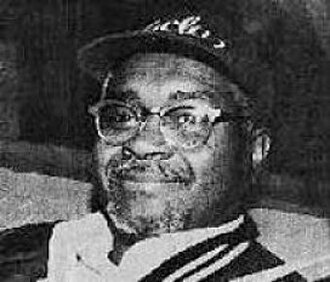
Lorenzo Ervin was born in 1947 in Chattanooga, Tennessee — a mid-sized industrial city in the southeastern corner of the state, where the Tennessee River cuts through the Cumberland Plateau and where the racial geography of the Jim Crow South was enforced with the thoroughness that distance from the major centres of civil rights activity often permitted. Chattanooga was not Birmingham or Selma or Jackson; it was a city where the civil rights struggle took local forms that the national press did not reliably cover, where the daily reality of segregation — in schools, in employment, in public accommodation, in the specific violence that enforced the colour line — was as complete as anywhere in the South while being less visible to the outside world.
Ervin came of age in that Chattanooga during the height of the civil rights movement, and the proximity to the struggle — the sit-ins, the marches, the organisations forming and dissolving and reforming in the specific conditions of a Southern city that was not quite large enough to attract sustained national attention — shaped his political formation in ways that the more celebrated centres of the movement did not always produce. He was a local organiser before he was anything else: someone who learned the mechanics of political work in the specific environment of his own community, developing the organisational skills and the political consciousness that would eventually connect him to the larger movement and to the Black Panther Party.
The Panther Connection and the Death Threats
Ervin's connection to the Black Panther Party came through the broader network of Black Power organisations that developed in the late 1960s across the American South, as the Panthers expanded from their Oakland base into cities where the specific conditions of Southern Black political life produced their own forms of the same analysis that Newton and Seale had articulated in California. In Chattanooga, as in other Southern cities, the combination of civil rights organising and Black Power politics created a political environment that was simultaneously more locally rooted and more connected to the national movement than the earlier phase of the civil rights struggle had been.
The Ku Klux Klan's response to that environment was what it had always been: violence, or the credible threat of violence. The death threats that Ervin received were not generic intimidation but specific warnings — the kind that people who have grown up in the South understand to carry an entirely different weight from abstract political threats, because the history of what the Klan had actually done to people who received such warnings was living community memory rather than distant history. He made the assessment that the threats were serious and that the options available to him for protection within the United States were inadequate to the level of danger he faced. His response was to hijack a plane.
The 1969 Hijacking: Context and Decision
The hijacking of a Delta Airlines flight to Cuba in 1969 took place in a specific historical context that is easy to lose when the act is considered only in its legal and political dimensions. The late 1960s was the peak period of aircraft hijackings to Cuba — dozens of flights were diverted to Havana between 1968 and 1972, by people whose motivations ranged from the purely personal to the explicitly political, and whose reception in Cuba varied from genuine asylum to detention to eventual return. Cuba had become, in the imagination of American Black radicals and leftists, a revolutionary refuge — a country that had actually made a revolution, that had expelled the American-backed dictatorship and nationalised the properties of American corporations, and that was willing to receive people the American state was pursuing.
For Ervin, Cuba represented the possibility of safety and of connection to a revolutionary government that might provide what American radical organisations could not: physical protection from people who had made credible threats against his life. The decision to hijack rather than to attempt to travel legally was the decision of someone who understood that the legal routes to safety were not available to him in his specific situation — that a Black Panther-affiliated civil rights organiser in Chattanooga in 1969, facing Klan death threats, could not rely on the same protective mechanisms that the American legal system offered to people it was not trying to suppress.
Cuba did not, in the event, provide what he had hoped for. The Cuban government's reception of American hijackers in this period was complicated by diplomatic considerations and by the specific politics of individual cases; Ervin was not granted the asylum he had sought, and he was eventually extradited back to the United States to face federal aircraft piracy charges. The failure of the Cuban option — the discovery that the revolutionary refuge was not, in practice, unconditionally available — was one of the experiences that pushed his political thinking away from the Marxist-Leninist framework that the Cuban revolution represented and toward the anarchist analysis that would eventually produce his major work.
"Black people do not need a vanguard party to lead them to freedom. They need to free themselves — through their own organisations, in their own communities, on their own terms."
Lorenzo Ervin, Anarchism and the Black RevolutionPrison and the Development of Black Anarchism
The federal prison years that followed Ervin's extradition and conviction were the crucible in which his political thinking underwent its most fundamental transformation. Like George Jackson in California's state prisons a decade earlier, Ervin used the enforced time of imprisonment to read — more systematically, more critically, and with more willingness to reach conclusions that challenged the frameworks he had brought into prison than his political education outside had encouraged. He read in the anarchist tradition — Bakunin, Kropotkin, Emma Goldman, the syndicalist and libertarian communist currents that had existed alongside Marxism in the history of the left without receiving comparable attention from the Black radical movement — and he read those thinkers against the specific conditions of his own experience and the experience of the Black communities he had organised in.
The core argument that emerged from that reading and reflection was a critique of the Marxist-Leninist vanguard party model that had organised the Black Panther Party and most of the Black radical left of the 1960s. The vanguard model, Ervin argued, reproduced within the liberation movement the same hierarchical structures that it was supposedly fighting against — concentrating authority in a party leadership that claimed to represent the people while actually substituting its own judgment for theirs, creating the conditions for exactly the kind of authoritarian politics that had characterised the Soviet Union and other Marxist-Leninist states, and failing to address the specific forms of oppression — patriarchy, white supremacy within the left itself, the authority structures of urban communities — that did not reduce to class analysis.
Anarchism and the Black Revolution: The Argument
Anarchism and the Black Revolution, first circulated as a pamphlet in the prison correspondence networks of the 1970s and subsequently published in multiple expanded editions, is the most systematic articulation of Black anarchism as a distinct political tendency — an attempt to synthesise the insights of the anarchist tradition with the specific analysis of Black oppression in America and to produce a framework for Black liberation that was more radically democratic and more attentive to the multiple dimensions of oppression than the Marxist-Leninist framework had been.
The book's central argument is that Black liberation requires the dismantling not only of capitalism and white supremacy but of the state itself — that any state, including a state run by Black revolutionaries, will reproduce the hierarchical structures of domination that make oppression possible, and that the only form of organisation adequate to genuine liberation is the self-organised, horizontally structured community whose authority derives from the direct participation of its members rather than from the delegation of authority to a leadership that claims to act on their behalf. This is, in its essentials, a classical anarchist argument; what makes Ervin's version distinctive is its grounding in the specific history of Black America — in the experience of a people for whom the state has been, without interruption, an instrument of oppression rather than protection, and for whom the proposition that liberation can come through state power is contradicted by every generation of lived experience.
The book also addresses the specific failures of the white anarchist movement to engage seriously with race — its tendency to treat racial oppression as a subdivision of class oppression rather than as a distinct and irreducible form of domination, its historical reproduction of the racial hierarchies of the broader society within its own organisations, and its failure to understand that a genuinely liberatory anarchism had to be built from the communities most directly subject to the state's violence rather than from the communities that, despite their political opposition to the state, still enjoyed its relative protection. This critique of white anarchism was as important to the book's reception as its critique of Marxism-Leninism — it established that Ervin was not simply applying anarchist theory to Black conditions but transforming anarchist theory through engagement with those conditions.
The Anarchist People of Color and Community Organising
After his release from federal prison, Ervin returned to Chattanooga — to the community where he had first organised, where the specific conditions of Southern Black urban life that had shaped his political formation remained largely unchanged in their essential character even as their specific forms had shifted. He did not return as a theorist who had finished his thinking and was ready to publish; he returned as an organiser who understood that theory and practice had to be developed together, that the political framework he had articulated in Anarchism and the Black Revolution had to be tested against the actual conditions of organising in an actual community, and that the testing would revise the framework as much as the framework guided the organising.
He co-founded the Anarchist People of Color network — an organisation designed to provide a political home for people of colour who were developing anarchist politics from within their own communities rather than adopting an existing white anarchist framework — and he continued the community organising work in Chattanooga that he had begun before the hijacking. The mutual aid networks, the anti-police brutality organising, the prison support work, the political education — all of it consistent with the framework Anarchism and the Black Revolution had articulated, all of it grounded in the specific conditions of Chattanooga rather than in an abstract political programme.
The Intellectual Legacy of a Marginalised Current
Lorenzo Ervin occupies an unusual position in the history of the Black radical tradition — recognised within the anarchist movement and within the prison abolition movement as a foundational thinker, but less known in the mainstream history of the Black Panther Party era than figures whose organisational positions gave them more institutional visibility. The reason for this relative obscurity is in part the nature of his politics: anarchism has always been a marginalised current within the American left, and Black anarchism more marginalised still, pushed to the edges of a political discourse that has been dominated alternately by integrationist liberalism and by the Marxist-Leninist framework of the Panthers and their successors.
But the obscurity is also a function of the specific trajectory of his life — the hijacking that removed him from the domestic political scene at the moment when the Panthers were at their peak, the years in federal prison that kept him from the organisational work that might have built his institutional profile, and the return to Chattanooga that placed him in a mid-sized Southern city rather than in the academic or journalistic environments where political reputations are built and maintained. He has spent his post-prison decades doing exactly the work that Anarchism and the Black Revolution prescribes — building from the bottom up, in the specific community where he lives, without the institutional infrastructure that would have made him more nationally visible — and the result is a body of work and a life of organising that is less famous than it is important.
The Continuing Relevance of the Critique
The specific arguments that Ervin made in Anarchism and the Black Revolution — against the vanguard party model, for horizontal organisation, for the inseparability of anti-racism and anti-authoritarianism, for a politics that begins from the communities most subject to state violence rather than from the parties that claim to represent them — have become considerably more mainstream in the decades since the book was written, even if Ervin himself has not become correspondingly more famous. The emergence of the Black Lives Matter movement, with its explicitly horizontal organisational structure and its scepticism of traditional leadership models; the growth of the prison abolition movement, which owes significant debts to the analysis Ervin developed in federal prison; the proliferation of mutual aid networks that operate outside the state and party structures — all of these represent the practical implementation of ideas that Anarchism and the Black Revolution articulated in the 1970s from a federal prison cell in Chattanooga.
The irony of that influence — substantial but unacknowledged, shaping movements that rarely trace their lineage back to Ervin specifically — is consistent with his broader position in the history of Black radical thought: someone whose ideas have travelled further than his name, whose framework has been adopted by people who may not know where it came from, and who has continued doing the work regardless of the recognition that work has or has not produced. That consistency — of analysis and of practice, sustained across decades without the institutional reward that might have justified less consistency — is the measure of what his political life has been.