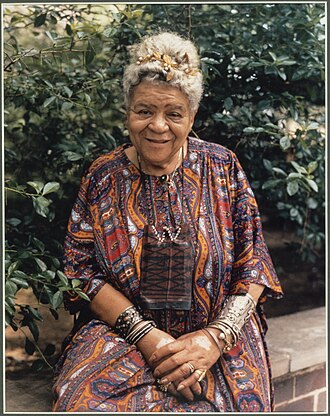
New Iberia, 1898: Born into the Aftermath of Betrayal
Audley Moore was born on 27 July 1898 in New Iberia, Louisiana — a small sugar country town in the Teche country of south Louisiana, in the year that the United States Supreme Court decided Plessy v. Ferguson and enshrined the doctrine of separate but equal that would govern the legal framework of American racial segregation for the next six decades. She was born into a country that had recently betrayed the promise of Reconstruction — that had permitted the systematic disenfranchisement of Black voters, the overthrow of Black elected governments, and the re-establishment of white supremacy across the former Confederacy through a combination of electoral fraud, paramilitary violence, and the Supreme Court's successive decisions gutting the civil rights legislation of the Reconstruction era.
The specific conditions of her childhood in south Louisiana were shaped by that betrayal in ways that were immediate and concrete. Her grandfather had been enslaved; her father died when she was young, leaving the family in the economic precariousness that was the standard condition of Black families in the Louisiana sugar country; the racial violence that had enforced the colour line during and after Reconstruction was not distant history but living community memory, maintained by the specific institutions — the convict leasing system, the crop lien system, the debt peonage that replaced formal slavery with economic bondage — that the post-Reconstruction order had erected. She grew up knowing exactly what had been taken from Black people and exactly who had taken it, and that knowledge — precise and personal and located in specific people and specific places — was the foundation of the political analysis she would spend the next nine decades elaborating.
New Orleans, Harlem, and the Garvey Movement
The family eventually moved to New Orleans, and Moore came to Harlem in the 1920s — arriving in the Black cultural and political capital of America during the Harlem Renaissance, when the concentration of Black intellectual, artistic, and political energy in Upper Manhattan was producing some of the most significant Black cultural and political work of the century. Marcus Garvey's Universal Negro Improvement Association was at the peak of its influence — the mass organisation that had built the largest Black membership organisation in American history on the platform of Pan-African solidarity, Black pride, economic self-sufficiency, and the eventual return of African-descended people to Africa as the precondition for genuine liberation.
Moore worked with the Garvey movement and the UNIA, and the Pan-African framework that Garveyism provided — the insistence on understanding the African diaspora as a global community with a common history of oppression and a common interest in liberation, and on the continent of Africa as the homeland to which that community had a legitimate claim — shaped her political orientation for the rest of her life. Even after Garvey's deportation and the decline of the UNIA as a mass organisation, even through her years in the Communist Party and her subsequent development of an independent Black nationalist politics, the Garveyite framework remained her starting point: Black people were an African people, their condition in America was the result of the specific history of the Atlantic slave trade and its aftermath, and their liberation required an analysis that began from that history rather than from the universal class analysis that the Marxist tradition offered.
The Communist Party: Joining and Leaving
Moore joined the Communist Party USA in the 1930s, during the period when the Party was most actively engaged in organising in Black communities — in the South, in Harlem, and in the industrial cities of the North. The CPUSA in the 1930s was, among the major American political organisations, the most consistently and explicitly anti-racist in its rhetoric and in some of its practice: it organised Black workers alongside white workers in the unions it controlled, it campaigned against lynching and for the legal equality of Black Americans, and its international solidarity framework connected the struggle for Black civil rights in America to the anti-colonial movements of Africa and Asia in ways that aligned with Moore's own political analysis.
She organised for the Party in Harlem and made trips to the South, doing the community organising and labour organising work that the Party's network enabled and that she had been doing, in various forms, since the Garvey years. But the relationship between Moore's Black nationalist analysis and the CPUSA's class-primary framework was always tense — the Party's insistence on subordinating race to class, its willingness to moderate its positions on Black liberation when the Soviet Union's international diplomatic interests required it, and its hierarchical organisational culture that placed Black cadres in service of a white-led leadership structure were all sources of friction that built over the years of her membership.
She left the Party in 1950, a departure that was consistent with the broader exodus of Black radicals from the CPUSA in the postwar period as the Cold War environment made the Party's compromises more rather than less visible. Her departure was not a renunciation of the communist analysis of capitalism and class — she retained throughout her life the understanding that economic exploitation was central to the conditions of Black people — but a conclusion that an organisation that subordinated Black liberation to the broader communist agenda could not deliver what Black people needed, and that the specific work of Black liberation required a specifically Black politics rather than a multiracial one that consistently placed Black interests behind other priorities.
"We are owed. We were never paid for the labour that built this country, and until we are paid, we will not be free."
Audley Moore (Queen Mother Moore)The Reparations Demand: Decades Before Its Time
The argument for reparations that Moore developed and pursued from the 1950s onward — that the United States government owed a specific debt to the descendants of enslaved people for the unrecompensed labour extracted under slavery and for the systematic economic exclusion of the post-Reconstruction period — was not new in its basic logic when she began making it. The argument had been made since Reconstruction itself, when the broken promise of forty acres and a mule had established the specific form that the debt took. But Moore was the person who most consistently, most persistently, and most institutionally embedded the demand in the American political landscape in the decades before it became mainstream.
She submitted a petition for reparations to the United Nations in the 1950s — a move that was consistent with the broader strategy of Black radicals in this period of using international institutions to apply pressure on the American government's civil rights record, and that was consistent with the emerging international legal framework around genocide and reparations that the Nuremberg trials and the Geneva Conventions had established. The petition did not produce a formal UN response, but it established the international legal and political framework for the reparations demand that subsequent advocates would build on. She founded the Reparations Committee of Descendants of United States Slaves in 1962 — an organisation specifically dedicated to the reparations demand, at a time when most of the civil rights movement was focused on the formal legal equality of voting and public accommodation rather than on the economic redress that Moore argued was the precondition for genuine equality.
Mentorship and the Black Power Generation
Moore's role in relation to the Black Power generation of the 1960s was that of the elder who had been doing the work before they were born and who represented the continuity of a Black radical tradition that the Black Power movement sometimes presented as if it had invented. She maintained relationships with leaders of the Black Panther Party, SNCC, and other organisations of the period, not as a peer doing the same organisational work but as a figure of historical continuity — someone who had been in the Garvey movement, had organised in the Communist Party, had spent decades pursuing the reparations demand, and who represented a living connection to the intellectual and organisational traditions that the Black Power generation was drawing on whether or not it fully acknowledged doing so.
The title Queen Mother — conferred by the Asantehene, the king of the Ashanti, during one of her visits to Ghana in the 1970s — captured something real about her position in the Black political community: she was a matriarchal figure in the most serious sense, not a figurehead but a person whose authority derived from decades of sustained political work and from the specific historical position that her longevity had given her. She had been organising since the 1920s; she had known figures that the Black Power generation knew only from history books; she had been making arguments in the 1950s that the Black Power movement was still developing in the 1960s. The respect she commanded was earned and specific.
Africa and Pan-Africanism: The Lifelong Commitment
Moore's engagement with the African continent was sustained and serious throughout the second half of her life. She travelled extensively in Africa, building relationships with the independence movements that were transforming the continent through the 1950s and 1960s, and maintaining those relationships as African governments consolidated and the specific politics of independence became more complicated than the initial euphoria of flag independence had suggested. Her connection to Ghana in particular — Kwame Nkrumah's Ghana, which was the centre of Pan-African politics in the 1950s and early 1960s and which became a gathering point for African-American intellectuals and activists who had concluded that the United States would not deliver the liberation they were seeking — was deep and lasting.
The Ashanti title she received was not merely honorary; it represented a recognition by an African traditional institution of her specific contribution to the project of African and diaspora solidarity that Pan-Africanism had been pursuing since Garvey. She brought to that recognition the same seriousness with which she had brought to every political work of her life: it was not a cultural tourist's engagement with Africa but a political organiser's engagement, rooted in the specific analysis of the relationship between the African diaspora and the African continent that Garveyism had given her and that decades of subsequent work had deepened.
Ninety-Eight Years: The Span of a Century
Audley Moore died on 2 May 1997, aged ninety-eight — having lived from Plessy v. Ferguson to the mainstream emergence of the reparations debate that she had pioneered for five decades. The span of her life is itself a political fact: she was born when her grandfather's enslavement was within living memory, when the systematic disenfranchisement of Black voters that had overthrown Reconstruction was ongoing and complete, when the violence that enforced white supremacy in Louisiana and across the South was a daily condition of Black life rather than a historical reference. She died in the year that saw the first reparations legislation introduced in Congress that had a serious hearing — H.R. 40, introduced by Congressman John Conyers, which called for a study of reparations proposals. She did not live to see H.R. 40 pass, but she lived to see reparations move from the fringe to the mainstream of the political debate, and she had spent fifty years making that movement happen.
The reparations debate of the twenty-first century — the Ta-Nehisi Coates essay, the Democratic primary debates of 2020, the local reparations initiatives in Evanston and other cities, the growing body of economic research on the specific mechanisms by which wealth extracted from enslaved labour was transmitted across generations — is built on the foundation that Moore laid. She is rarely cited in the mainstream reparations discourse, which tends to trace the argument's lineage to more recent and more credentialled advocates. The erasure is itself consistent with her biography: she was a Black woman without advanced degrees or institutional affiliations who spent her life doing work that the established political culture considered too radical to acknowledge, and whose recognition came from the communities she served and the African traditional authorities who conferred her title rather than from the American institutions that her work was addressed to changing.
The Argument That Would Not Go Away
The core of Moore's political argument — that the United States owes a specific, calculable, payable debt to the descendants of enslaved people, and that no form of racial equality is possible without addressing that debt — has proven more durable than any of the specific institutional forms through which she pursued it. The UNIA is gone; the CPUSA is a shadow of what it was; the specific reparations committees she organised have not survived in the form she gave them. But the argument itself — the proposition that you cannot have justice without repair, that repair requires acknowledging what was taken, and that acknowledging what was taken requires an institutional response that goes beyond symbolic recognition — is more widely discussed and more seriously debated in 2024 than it was in any year of her life.
She spent nearly a century making an argument that the dominant political culture consistently dismissed as impractical, divisive, and likely to produce more conflict than resolution. The dismissals were consistent; the argument persisted. That persistence — maintained through the Garvey years and the Depression and the Cold War and the civil rights movement and the Black Power movement and the Reagan years and into the 1990s — was not stubbornness but conviction: the conviction of someone who had experienced the specific historical injustice she was arguing about as a living condition rather than a theoretical proposition, and who understood that the argument's unpopularity was not evidence that it was wrong but evidence of the depth of the resistance it was up against.