Alabama, Georgia, and the Migration to Harlem
John Henry Clarke was born on 1 January 1915 in Union Springs, Alabama — a small town in Bullock County, in the Black Belt cotton country of the Deep South, where the sharecropping system that had replaced formal slavery continued to extract the labour of Black families on terms that left them permanently indebted and permanently vulnerable to the violence that enforced the racial hierarchy. His father was a sharecropper; the family eventually moved to Columbus, Georgia, where Clarke grew up in the specific conditions of Deep South Black life in the 1920s and 1930s — Jim Crow, agricultural poverty, and the churches and schools that were the primary institutions of Black community life in the absence of any others.
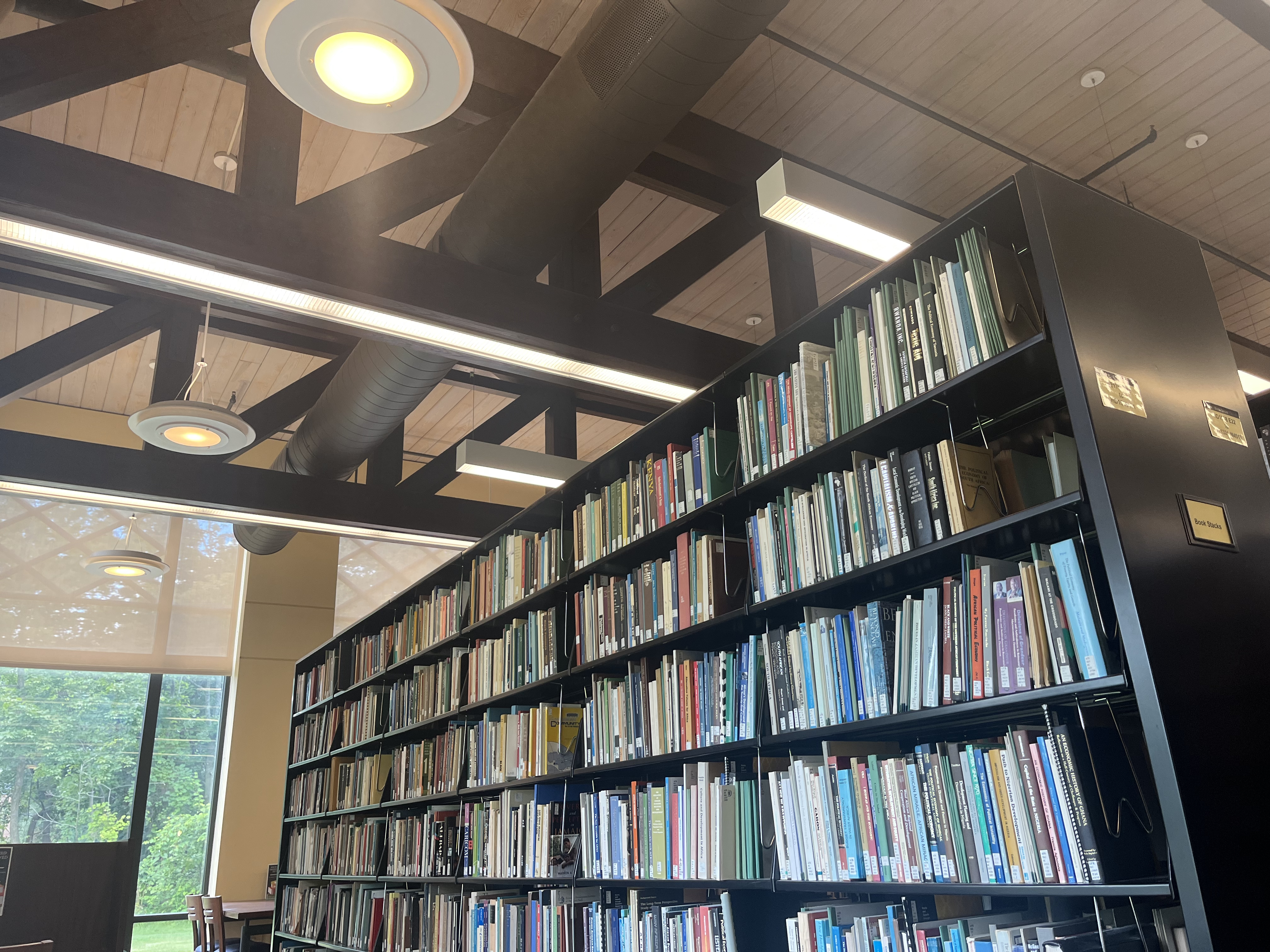
The migration that shaped his intellectual life was the one he made alone, as a young man, to New York City in 1933 — arriving in Harlem at the tail end of the Harlem Renaissance, a period of extraordinary Black literary, artistic, and intellectual production that was already giving way to the Depression's specific devastations. He came with no credentials and no money and an insatiable curiosity about history — specifically about African history, about the civilisations that had existed on the African continent before the slave trade had reorganised the world, and about what it meant for African-descended people to be who they were in the aftermath of that reorganisation. He found what he was looking for in the 135th Street branch of the New York Public Library, which housed the Schomburg Collection — the archive of African and African-American history that the Puerto Rican-born Black bibliophile Arturo Schomburg had spent his life assembling and that became, for Clarke, the university he had not been able to attend.
The Schomburg and the Self-Education
The Schomburg Collection — now the Schomburg Center for Research in Black Culture, one of the great research libraries in the world — was, in the 1930s and 1940s when Clarke was doing his most foundational reading there, a resource of unique importance for anyone trying to understand African history outside the framework that European scholarship had imposed on it. That framework — which presented Africa as a continent without history before European contact, whose peoples had made no significant contributions to human civilisation, and whose encounter with European colonialism and the Atlantic slave trade was, however unfortunate, a form of introduction to the higher culture that would ultimately benefit them — was not a fringe position in academic history in the 1930s. It was the mainstream, encoded in textbooks and encyclopaedias and taught in schools that trained the teachers who taught Black children to know nothing about the societies that had produced their ancestors.
Clarke's reading in the Schomburg systematically dismantled that framework. He worked through the primary sources and the scholarship — the work of W.E.B. Du Bois, Carter G. Woodson, Joel Augustus Rogers, and others who had spent their careers recovering and documenting African civilisational achievements that the dominant historiography had erased — and supplemented it with his own extensive reading in ancient history, archaeology, and the history of religion and philosophy. What he developed over years of that reading was not simply a store of knowledge about African history but an analytical framework for understanding why that history had been suppressed, what its suppression served politically and ideologically, and what its recovery meant for the political project of Black liberation.
Teaching Malcolm X
The intellectual relationship between Clarke and Malcolm X — which developed in the late 1950s and early 1960s, when Malcolm was the Nation of Islam's most prominent minister and Clarke was an established figure in Harlem's intellectual community — was one of the most consequential teacher-student relationships in the history of American radicalism. Malcolm came to Clarke already possessed of extraordinary rhetorical gifts and a searing analysis of racism as a systemic condition, developed through his own reading and through the Nation of Islam's theological framework; what he lacked, and what Clarke provided, was a grounded knowledge of African history — of the specific civilisations, the specific intellectual and artistic achievements, the specific record of African people's engagement with the world before the slave trade — that gave his Pan-Africanism a historical foundation rather than a theological one.
The influence ran in both directions: Clarke's engagement with Malcolm sharpened his own understanding of how historical knowledge could function as a tool of political liberation — of the specific mechanism by which knowing that your ancestors had built Timbuktu or Mali or the Kingdom of Kush changed your relationship to the present, to the system that was telling you that you were without history and without worth. Malcolm was the most visible demonstration of the political power of that knowledge, and watching him deploy it in front of audiences of thousands confirmed for Clarke what he had been arguing in classrooms and community centres for decades: that the recovery of African history was not an academic exercise but a political necessity, and that the scholar who refused to connect history to liberation had misunderstood the purpose of both.
"History is a clock that people use to tell their political and cultural time of day. It is a compass they use to find themselves on the map of human geography."
John Henrik ClarkeThe Harlem Writers Guild and the Literary Community
Clarke's intellectual life was not only scholarly; it was embedded in the specific literary and political community of postwar Harlem. He co-founded the Harlem Writers Guild in 1950 with John O. Killens and others — an organisation that brought together Black writers for mutual support, critique, and the development of a Black literary tradition that was not dependent on the approval of white publishers and critics. The Guild became one of the most important institutions in postwar Black literature, producing or supporting writers including Maya Angelou, Paule Marshall, Rosa Guy, and many others, and establishing the principle that Black writers had an obligation to their community that went beyond individual artistic achievement.
His work as associate editor of Freedomways magazine — which he held from 1962 to 1983 — placed him at the centre of the principal journal of Black radical thought in America during the period when that thought was most consequential: the civil rights years, the Black Power years, the period of the African independence movements. Freedomways published the work of Du Bois, Paul Robeson, Langston Hughes, Lorraine Hansberry, and the major figures of the Black radical tradition alongside scholarship, reportage, and political analysis that kept the journal's readers connected to the full range of Black political and intellectual life in the United States and across the African diaspora.
The Battle Over African Studies
The confrontation that produced the African Heritage Studies Association in 1969 was the most consequential institutional conflict of Clarke's career. The African Studies Association — the primary professional organisation for scholars of Africa in the United States — was, in the late 1960s, a body dominated by white American and European scholars who had spent their careers studying Africa from the outside and who were not prepared to accept, as colleagues with equal standing, the African-American scholars and African scholars who were bringing different methodologies and different political commitments to the same subject matter.
The specific confrontation at the 1969 Montreal conference of the ASA — in which Black scholars walked out after their proposals for greater representation and a more Africa-centred scholarly agenda were rejected — produced the alternative organisation that Clarke and others founded to provide what the ASA would not: a professional and scholarly home for Africa-centred African history that understood the recovery of that history as connected to the liberation of African-descended people worldwide. The AHSA was not simply a rival academic organisation; it was a political intervention in the academy, an assertion that the question of who got to tell Africa's history and from what perspective was not a methodological disagreement but a political one, with real consequences for the communities whose history was being told or suppressed.
Hunter College and the Institutionalisation of African Studies
Clarke's appointment to Hunter College in 1970 — as a professor of African World History, without a doctorate, at an institution that was part of the City University of New York — was the result of the same Black student movement pressure that produced African Studies and Black Studies programmes at universities across the United States in the late 1960s. Students at Hunter, like students at Columbia, Cornell, Howard, and dozens of other institutions, had demanded courses in African and African-American history taught by scholars who understood those histories from the inside, and the administration's response — hiring Clarke, who had more knowledge of African history than any conventionally credentialled candidate available — was an acknowledgement that the students' demand was legitimate and that the credentialling system was not the right instrument for evaluating it.
He taught at Hunter for sixteen years, establishing the Black and Puerto Rican Studies Department and developing a curriculum that placed African history at the centre of the human story rather than at its margins — a curriculum that treated the civilisations of ancient Egypt, Nubia, Mali, Songhai, Zimbabwe, and the Kongo Kingdom as achievements of the same order as those of Greece, Rome, and China, and that required students to understand African history as a precondition for understanding world history rather than as an optional supplement to it. He continued teaching until the late 1980s, when advancing blindness made it impossible to read, and continued lecturing and recording until near the end of his life in 1998.
The Controversy Over William Styron's Nat Turner
One of Clarke's most significant editorial interventions was the volume he produced in response to William Styron's 1967 novel The Confessions of Nat Turner — a Pulitzer Prize-winning novel that purported to be a fictional account of the 1831 Virginia slave rebellion led by Nat Turner, told in Turner's voice. Black historians and intellectuals, including Clarke, were furious at the novel's portrayal of Turner: Styron's Turner was psychologically conflicted, sexually obsessed with a white woman, and motivated by personal grievances rather than by the systematic injustice of slavery — a portrait that served, whatever Styron's intentions, to individualise and pathologise the rebellion rather than to understand it as a collective political response to the conditions of enslavement.
Clarke edited William Styron's Nat Turner: Ten Black Writers Respond, published in 1968, which assembled responses from Clarke himself and nine other Black scholars and intellectuals — including John Oliver Killens, Vincent Harding, and Lerone Bennett Jr. — who challenged Styron's historical methodology, his psychological portrait of Turner, and the broader question of who had the authority to tell the stories of enslaved Black people and Black resistance. The volume was a significant contribution to the developing discourse about representation, authority, and the politics of historical fiction, and it demonstrated Clarke's conviction that the scholar's obligation was not to produce detached analysis but to intervene when the historical record was being distorted in ways that served the ideological interests of the powerful at the expense of the historical truth of the powerless.
The Argument That History Is Liberation
The central argument of John Henrik Clarke's intellectual career — the argument he made in classrooms, in lectures, in essays, and in the hundreds of interviews he gave over six decades — was that a people cannot be liberated without first understanding who they are and who they were. The corollary of that argument was that the suppression of African history — its erasure from the textbooks, its marginalisation in the academy, its replacement by a history that began with slavery and presented African people as without civilisation before European contact — was not an academic oversight but a political project, designed to produce in African-descended people a specific psychological condition: the belief that they had no history worth knowing, no ancestors worth claiming, and no tradition of achievement that could serve as the foundation for present and future liberation.
Clarke's response to that project was to spend his entire professional life doing the opposite — recovering, teaching, and insisting on the centrality of African history to any honest account of human civilisation. He did this without the institutional resources that credentialled academics had access to, without the fellowships and grants and research budgets that supported academic historians, and without the professional security that tenure provides. He did it from libraries and community centres and, eventually, from a university position that he held not because he had a doctorate but because he knew more about African history than anyone who did. He died in 1998, having spent eighty-three years arguing that history is not what happened in the past but what we understand ourselves to be in the present — and that for African-descended people, the recovery of that understanding was the precondition for everything else.