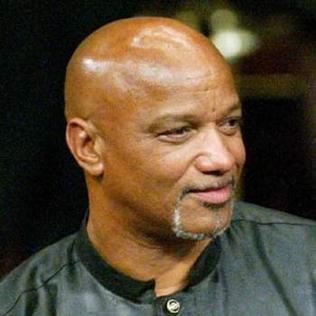
Louisiana, Vietnam, and the Making of a Soldier
Elmer Gerard Pratt was born on 13 September 1947 in Morgan City, Louisiana — a small Gulf Coast city in the Atchafalaya Basin whose economy was built on oil, fishing, and the specific racial hierarchy of the Louisiana Delta, where the formal structures of Jim Crow and the informal structures of racial violence combined to produce the conditions that sent so many Black Louisianans north and west during the Great Migration. Pratt grew up in that Morgan City, in a community that was deeply religious, tightly knit, and acutely conscious of the specific form that white supremacy took in a state that had been, within living memory, the site of some of the most extreme racial violence in America.
He enlisted in the United States Army in 1965 at seventeen, serving two tours in Vietnam with the 82nd Airborne and with Special Forces units — some of the most dangerous and demanding service available in the American military in the late 1960s. He was decorated for his service: two Purple Hearts for wounds received in combat, a Silver Star, and other commendations that testified to his effectiveness as a soldier and his willingness to take physical risks in the execution of military missions. He returned from Vietnam in 1968 having seen combat that most of his contemporaries had not, having been trained in military tactics and weapons handling at a level that was unusual even among veterans, and having concluded — as many Black veterans of Vietnam concluded in those years — that the country that had sent him to risk his life in Southeast Asia was not prepared to extend to him the citizenship rights that the Constitution promised and that the civil rights movement had been demanding.
From Veteran to Panther: The Logic of the Transition
The transition from decorated Vietnam veteran to Black Panther Party deputy minister was not, in the specific context of 1968, as abrupt as it might appear. The Black Power movement of the late 1960s drew heavily from the generation of Black veterans who had returned from Vietnam with military training, political consciousness sharpened by the experience of fighting for a country that treated them as second-class citizens, and a specific rejection of the non-violent approach to racial justice that the assassination of Martin Luther King Jr. had made seem, to many of them, irredeemably inadequate. Pratt was one of the most militarily skilled members of this generation — his Special Forces training made him a genuinely rare asset for an organisation that was, in 1968, engaged in armed confrontations with police departments in several cities.
He joined the Black Panther Party in Los Angeles in 1968, shortly after his return from Vietnam, and was quickly recognised by the Party's leadership as someone whose military knowledge and organisational discipline were valuable beyond his individual capabilities. As Deputy Minister of Defence for the Southern California chapter, he was responsible for the chapter's military training and self-defence preparations — for translating the Party's political commitment to armed self-defence into the practical knowledge that members needed to act on that commitment. He took the role seriously, and the discipline and structure he brought to the Southern California chapter made it, in the assessment of the FBI's Los Angeles field office, the most dangerous Panther chapter outside of Oakland.
The FBI's Assessment and the Decision to Frame
J. Edgar Hoover's COINTELPRO directive identified the Black Panther Party as the most dangerous Black organisation in America, and within that directive the Los Angeles field office identified Pratt as the most dangerous individual in the Southern California chapter. The assessment was based on his military training, his organisational effectiveness, and the specific threat that a combat-experienced, politically sophisticated military trainer posed to a police apparatus that was trying to contain an organisation committed to armed self-defence. The FBI's response to that assessment was not to investigate him for crimes he had committed but to neutralise him through whatever means were available — a decision that led, through the specific mechanisms of COINTELPRO, to one of the most thoroughly documented wrongful convictions in American legal history.
The FBI's Los Angeles field office had been conducting intensive surveillance of Pratt and the Southern California Panther chapter throughout 1968. The surveillance included wiretaps on the Party's telephones — including the telephone at the BPP's Oakland headquarters — that recorded a meeting on 18 December 1968 at which Pratt was present. That date was the date of the murder of Caroline Olsen on a Santa Monica tennis court. The FBI's own recordings placed Pratt in Oakland, approximately 400 miles from Santa Monica, at the time the murder was being committed. The FBI withheld those recordings from the defence when Pratt was tried for Olsen's murder in 1972.
The 1972 Trial: A Verdict on Concealed Evidence
The prosecution's case against Pratt at his 1972 murder trial rested primarily on the testimony of Julius Butler — a Black Panther Party member who testified that Pratt had confessed to the Santa Monica murder. What Butler did not disclose at trial, and what the prosecution knew and did not disclose, was that Butler was an FBI informant — that his relationship with the FBI predated his testimony and that his credibility as a witness was directly compromised by that relationship. The prosecution's obligation to disclose evidence material to the defence, including evidence that undermined the credibility of its own witnesses, was a constitutional requirement that was not met.
The additional withheld evidence — the FBI recordings placing Pratt in Oakland on the night of the murder — would, if produced at trial, have provided an alibi that the prosecution could not have overcome. Kenneth Olsen, the survivor of the attack and the other key prosecution witness, had identified Pratt from a photo lineup; that identification, powerful as it was as courtroom testimony, would have been considerably less persuasive to a jury that had heard FBI recordings of a meeting Pratt attended in Oakland on the night in question. The jury that convicted him in 1972 did not hear those recordings, because the FBI and the prosecution had decided they would not.
"I never thought they would be able to keep me in prison forever. But twenty-seven years is a long time to wait for justice."
Geronimo Pratt, after his release, 1997Twenty-Seven Years: Nineteen Denials of Parole
Geronimo Pratt spent twenty-seven years in California's prison system — eight of them in solitary confinement — fighting his conviction through legal appeals while the evidence needed to overturn it remained in the FBI's files. The parole board denied him parole nineteen times. The denials were based, in part, on his refusal to express remorse for a crime he had not committed — a catch-22 built into the California parole system that required prisoners to acknowledge guilt as a condition of demonstrating rehabilitation, and that meant an innocent person who refused to confess to a crime they did not commit was systematically disadvantaged in the parole process compared to a guilty person who was willing to perform remorse.
His lead attorney for the last years of the case was Johnnie Cochran — who would later become nationally famous as a member of O.J. Simpson's defence team, but who had been Pratt's lawyer long before that and who had been arguing since the early 1970s that the conviction was based on suppressed evidence and perjured testimony. Cochran's sustained work on the case, combined with the investigative efforts of journalists and researchers who were gradually piecing together the documentary record of the FBI's conduct, produced the legal arguments that eventually forced the disclosure of the withheld evidence. The disclosure confirmed what Cochran had been arguing for years: that the FBI had known Pratt could not have committed the Olsen murder, had concealed that knowledge, and had used an informant whose status was itself concealed to obtain his conviction.
The 1997 Exoneration and Its Meaning
On 29 May 1997, Orange County Superior Court Judge Everett Dickey vacated Geronimo Pratt's conviction — ruling that the prosecution's failure to disclose Julius Butler's status as an FBI informant had denied him a fair trial, and that the concealment of the wiretap evidence recording him in Oakland on the night of the murder was a violation of his constitutional rights that made the conviction impossible to sustain. Pratt walked out of San Quentin — the same prison where George Jackson had been killed twenty-six years earlier — as a free man, having spent twenty-seven years imprisoned for a crime the FBI's own files proved he had not committed.
The exoneration was not, in the legal sense, an acquittal — the vacating of the conviction left open the theoretical possibility of a retrial — but the prosecution declined to retry the case, a decision that reflected the impossibility of convicting him on the available evidence with the withheld evidence now public. Kenneth Olsen, the surviving victim whose identification testimony had been central to the original conviction, subsequently stated that he was no longer certain that Pratt was the man who had attacked him and killed his wife. The case against Pratt had collapsed entirely, and in 2000 the City of Los Angeles and the FBI settled a civil lawsuit brought by Pratt and his legal team for $4.5 million — an acknowledgement of legal liability for twenty-seven years of wrongful imprisonment.
After Prison: Tanzania and the Final Years
Geronimo Pratt spent his years after release travelling, speaking, and working — in Africa, in the Caribbean, and eventually settling in Tanzania, where he died on 2 June 2011 at the age of sixty-three. His death was attributed to natural causes, though the twenty-seven years in California's prison system, including eight in solitary confinement, had taken a physical toll that his supporters argued shortened his life significantly. He had spent his post-release years involved in African development projects, maintaining connections with the pan-African political tradition that had been one of the intellectual currents of the Black Power movement, and continuing to speak about the conditions that had produced his imprisonment and the conditions that continued to produce the mass incarceration of Black men in the United States.
His choice to spend his final years in Africa rather than in the United States was itself a political statement — consistent with the pan-African orientation that many veterans of the Black Power movement had maintained since the 1970s, and also an expression of a judgment about the country that had imprisoned him for twenty-seven years that he had no reason to revise. He had served his country in Vietnam, had earned its decorations for valour, and had been rewarded with a frame-up, a wrongful conviction, and twenty-seven years in prison. His decision to make his home elsewhere was the most legible statement he could make about the terms on which that country had treated him.
Pratt and the Architecture of COINTELPRO
Geronimo Pratt's case is important not only as an individual injustice but as a detailed illustration of how COINTELPRO operated at the level of the criminal justice system. The programme's use of informants whose status was concealed from courts and defence attorneys, its routine suppression of evidence that would have been favourable to defendants in politically motivated prosecutions, its coordination with local prosecutors and police departments to achieve through criminal conviction what direct political suppression could not accomplish openly — all of these mechanisms are documented in the Pratt case with a specificity that makes abstract claims about COINTELPRO concrete and undeniable.
What the case demonstrates, with the precision of a single clear example, is the distance between the formal legal framework — the constitutional protections for defendants, the prosecutorial duty to disclose, the right to confront one's accusers — and the actual practice of those protections when the federal government had decided that a specific individual needed to be removed from political activity by any means available. The framework existed; the protections were written into law and into the Constitution; and the FBI and the Los Angeles prosecution simply ignored them, confident that their concealment would not be discovered in time to matter, and nearly correct in that confidence. It took twenty-seven years and one of the most sustained legal campaigns in American history to prove what the FBI's files had contained all along.