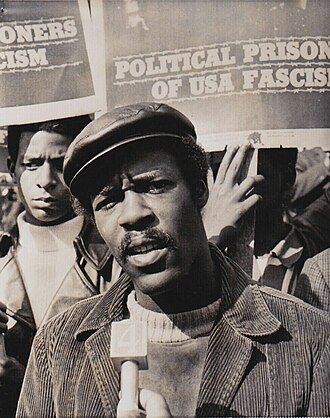
From Alabama to the West Oakland Projects
David Hilliard was born on 15 May 1942 in Rockville, Alabama — deep in the Black Belt, in the kind of rural Southern poverty that the Great Migration was built to escape. His family moved to West Oakland in the mid-1940s, joining the stream of Black Southern migrants who came to the Bay Area during and after the Second World War following the promise of industrial work and the rumour of a more bearable racial order. They settled in the housing projects of West Oakland, which were in the postwar years densely populated, economically precarious, and beginning the long decline that would characterise them through the 1950s and 1960s as federal housing policy, discriminatory lending, and deliberate municipal disinvestment combined to concentrate poverty and deprivation in Black communities while the surrounding city developed.
It was in those West Oakland projects that Hilliard grew up alongside Huey Newton — not as a political comrade initially, but as a neighbourhood friend, one of the kids from the same streets and the same schools and the same daily experience of what Black life in West Oakland actually felt like. The friendship that would eventually become a political partnership was rooted in that shared geography and that shared experience before it was rooted in any shared ideology; when Newton began developing the analysis that would produce the Black Panther Party, Hilliard was one of the people he was in conversation with, one of the people whose life experience confirmed the argument Newton was assembling from his reading of Fanon and Mao and the practical reality of the Oakland streets they had both grown up on.
Joining the Party and Learning the Work
Hilliard joined the Black Panther Party in 1966 or early 1967 — in the founding months, when the organisation was still small enough that every member was personally known to every other member and when the work of building it was a daily act of improvisation rather than the execution of a developed strategy. He came to the Party not as an intellectual — Newton was the intellectual, Seale was the theorist of organisation — but as someone who understood how communities actually functioned, how people were recruited and retained and motivated, how the practical mechanics of running an organisation related to the political vision the organisation was supposed to serve.
His role in those early months was not glamorous: driving people to meetings, handling logistics, maintaining the internal communications that held the Party together as it began to expand beyond its West Oakland origins. He was present at the Sacramento march in May 1967, one of the thirty who walked armed into the California State Legislature. He was present when Newton was arrested in October 1967, and was among the first to understand what Newton's imprisonment would mean for the organisation: that the figure who had given the Party its theoretical coherence and its public charisma was now in prison, and that someone was going to have to keep the machine running in his absence. That someone turned out to be Hilliard.
Chief of Staff: The Years of Maximum Pressure
The period between Newton's arrest in October 1967 and his release from prison in August 1970 was the most consequential in the Black Panther Party's history, and it was largely Hilliard who administered it. As Chief of Staff — a title that understated what was actually required of him, which was to serve as the functioning head of an organisation whose formal leaders were either in prison, facing trial, or in exile — he oversaw the Party's expansion from a local Oakland operation into a national organisation with chapters in sixty-eight cities. He managed the free breakfast programme as it grew from a single location to a national operation feeding thousands of children every morning. He coordinated the legal defence committees, the political education programmes, the newspaper production, the relationships with allied organisations, and the hundred other practical operations that constituted the Panthers' daily existence.
He did all of this while the FBI's COINTELPRO programme was actively working to destroy the organisation through a combination of infiltration, disinformation, and the provocation of internal conflict. J. Edgar Hoover's directive to neutralise the BPP was not an abstraction; it was a daily operational reality that Hilliard had to navigate without always knowing which of the people around him were informants, which of the conflicts appearing within the organisation had been manufactured by federal agents, and which of the crises arriving on his desk were genuine organisational problems and which were COINTELPRO operations designed to look like organisational problems. Operating in that environment required a level of vigilance and resilience that is difficult to sustain over years, and Hilliard sustained it.
"We were not a gang. We were a political organisation trying to address the conditions that created gangs."
David HilliardThe Nixon Speech and the Prosecution
In November 1969, at a San Francisco rally held on the occasion of the Moratorium to End the War in Vietnam, David Hilliard delivered a speech that included language threatening the life of President Richard Nixon. The speech was an expression of political rage — at the assassination of Fred Hampton and Mark Clark by Chicago police just weeks before, at the government's sustained campaign against the Panthers, at the war in Vietnam, at the entire structure of American state violence as Hilliard experienced it from inside an organisation that was being methodically destroyed by that violence. The specific language was intemperate and he was aware, even as he said it, of the legal risk it created.
The federal government charged him with threatening the president's life. The charge was a serious federal felony, and the prosecution — like so many prosecutions of Black Panther Party members during this period — had as much to do with political suppression as with the specific legal facts. Hilliard was convicted in 1972 and served time. The prosecution removed him from the Party's operational leadership at a moment when that leadership was already severely degraded by Newton's imprisonment, Seale's trials, Hampton's murder, and the ongoing COINTELPRO disruption. It was exactly the kind of compounding attack the FBI had designed COINTELPRO to produce: each individual prosecution or disruption might not destroy the organisation, but the accumulation of them, arriving faster than the organisation could respond and recover, was designed to overwhelm it.
The Internal Conflicts and Newton's Return
When Huey Newton was released from prison in August 1970 — his conviction overturned on appeal — the Party he returned to was a different organisation from the one he had left. It was larger, more institutionally complex, more nationally distributed, and also more internally stressed: the FBI's disinformation operations had planted seeds of suspicion within the leadership, the rapid expansion had brought in members whose political education was uneven, and the specific tensions between the Oakland base and the chapters elsewhere in the country had been building for years. Newton's return, which should have been a stabilising event, instead accelerated some of those tensions: his reassertion of personal authority over an organisation that had been running without him for three years created conflicts with people who had developed their own authority and approaches in his absence.
Hilliard was among those whose relationship with Newton became strained in the post-prison period. The man who had kept the Party operational through its most difficult years found himself navigating a leadership dynamic in which the returning founder's authority was both legitimate and disruptive — legitimate because Newton had built the organisation and remained its most important theoretical voice, disruptive because the organisation had necessarily evolved in ways that Newton had not experienced and did not always understand. The conflicts that produced Newton's 1974 departure to Cuba, and that had driven Eldridge Cleaver into effective opposition from Algeria, also eventually produced Hilliard's own expulsion from the Party — a painful end to the longest continuous service any senior leader had given to the organisation.
After the Panthers: Addiction, Recovery, and Return
The years after Hilliard left the Black Panther Party were not easy. He struggled with drug addiction — a problem that was, in the specific context of Oakland in the 1970s and 1980s, embedded in the same social conditions that the Panthers had been built to address, the same poverty and disinvestment and lack of opportunity that made the crack epidemic so devastating in precisely the communities the Party had organised. He has written and spoken with considerable honesty about those years, about the relationship between the intensity of the Panther years and the difficulty of finding a life that had equivalent meaning and purpose after them, about the specific way that addiction took hold in the space that the organisation had vacated.
His recovery was real and durable. He became an addiction counsellor, working in the Oakland community where he had grown up and where the Panthers had built their base, applying to the problem of addiction the same community service orientation that the Panthers had applied to police brutality and hunger and political education. He reconnected with Newton before Newton's death in 1989, and after Newton died he became one of the primary custodians of the Party's history — co-founding the Dr. Huey P. Newton Foundation, which has worked to document and preserve the Panthers' archive and to make that history accessible to the generations that came after.
This Side of Glory: The Autobiography as Historical Record
Hilliard's 1993 autobiography, This Side of Glory: The Autobiography of David Hilliard and the Story of the Black Panther Party, written with Lewis Cole, is one of the essential primary sources for the internal history of the Black Panther Party — particularly for the years of his Chief of Staff tenure, which are better documented in his account than in any other available source. The book is notable for its honesty about the Party's internal contradictions — the tensions between the vision and the reality, the moments of genuine political achievement and the moments of organisational dysfunction, the specific way that COINTELPRO worked to create conflicts that were then blamed on the organisation's own failures rather than on the federal programme that had manufactured them.
It is also honest about Hilliard himself — about his limitations as well as his strengths, about the decisions he made under pressure that he might have made differently with more information or more time, about the personal costs of years of organisational leadership under conditions of sustained government assault. The honesty of the self-portrait makes the book more useful as a historical source than a hagiographic account would be, because it conveys something of the specific texture of what it was actually like to run a radical organisation in America in the late 1960s — not the mythology of it, which tends toward drama and heroism, but the daily reality of it, which was considerably more complicated and more exhausting and more human than the mythology suggests.
The Unglamorous Work That History Needs
David Hilliard occupies an unusual position in the history of the Black Panther Party — a position that the way history is typically written tends to obscure. The people who become historical figures are usually the people who make the speeches and write the books and get arrested in the ways that produce the iconic photographs; the people who keep the organisation running while the speech-makers are in court are harder to render in terms that capture their importance. But organisations do not run themselves, and the Black Panther Party during its most consequential years was kept alive largely by Hilliard's administrative work — by his ability to manage the practical mechanics of a national organisation while simultaneously navigating the FBI's disruption campaign, supporting the legal defence of imprisoned leaders, maintaining the community programmes that served as the Party's political foundation, and keeping enough internal cohesion in an increasingly stressed organisation to prevent its total collapse.
That work is not less important than the speeches and the arrests and the theoretical writings; it is the condition that made the speeches and the arrests and the theoretical writings possible. Without someone managing the organisation, the organisation would have collapsed, and with it the breakfast programme, the health clinics, the legal aid, the political education — everything that made the Panthers, at their best, something more than a political tendency or a symbolic gesture. Hilliard made those things possible by doing work that history rarely celebrates and that he has spent his subsequent life trying, with considerable success, to make visible and understood.