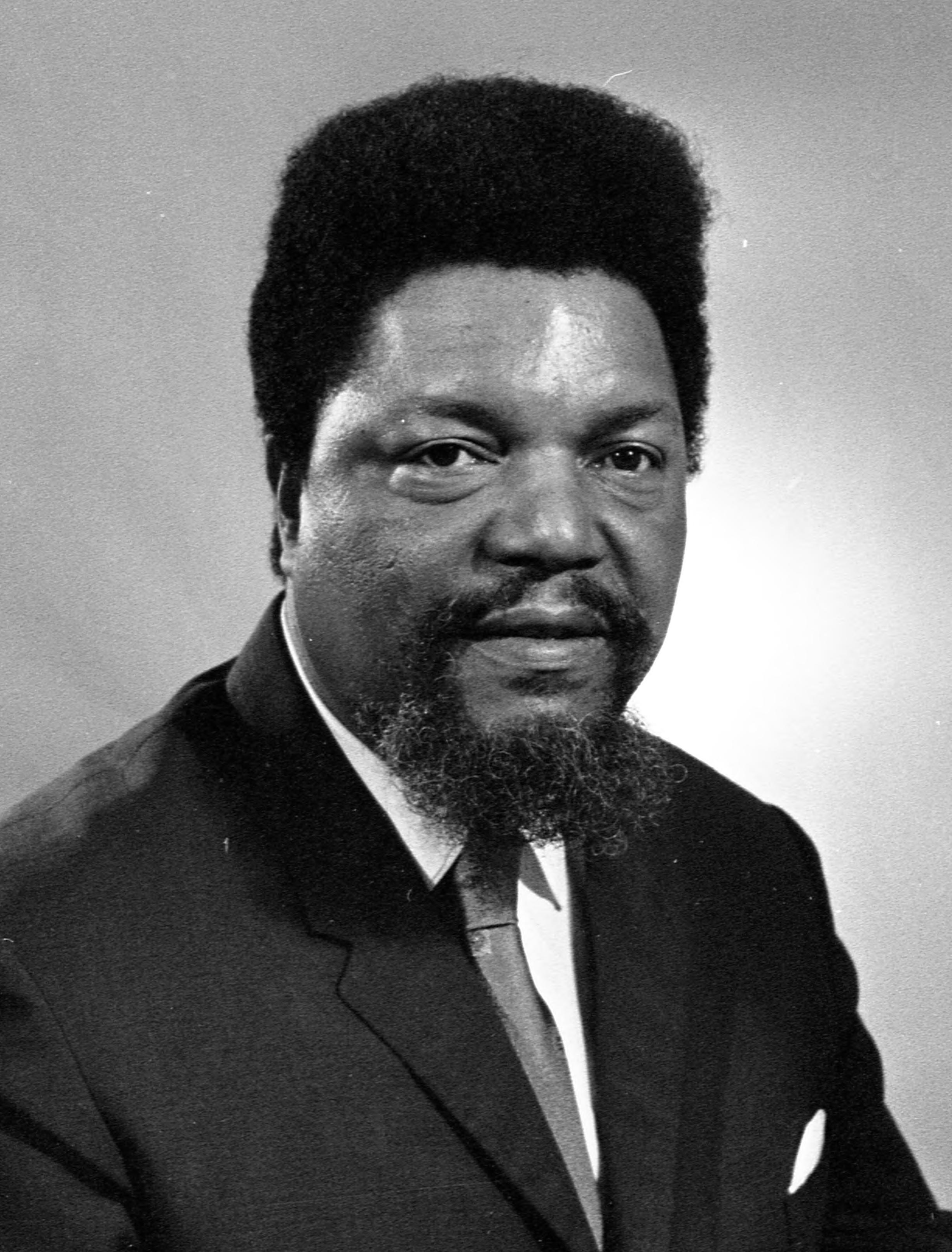
Monroe, North Carolina: The Ground of the Argument
Robert F. Williams was born on 26 February 1925 in Monroe, North Carolina — a small industrial city in the Piedmont foothills that was, in the 1920s and 1930s, a fully functioning apartheid society. The colour line in Monroe was as complete as anywhere in the Jim Crow South: Black residents were excluded from the political process, from the better-paying jobs in the textile mills that dominated the local economy, from the parks and public facilities that their tax dollars supported, and from the protection of the legal system that was supposed to serve all citizens. They were also regularly subject to the violence that the Ku Klux Klan used to enforce the racial hierarchy — the night rides, the beatings, the killings that the Monroe police department declined to investigate or prosecute.
Williams grew up in that Monroe, served in the United States Marine Corps during the Second World War, and returned to find that service in the American military had not changed his position in Monroe's racial order by a single degree. He had been trained to use weapons, to organise men under pressure, and to fight — skills that the Marine Corps had given him to defend American interests abroad and that he was about to deploy to defend the interests of his community at home. The specific combination of military training, local knowledge, and political consciousness that he brought to Monroe in the years after the war made him something that Monroe's white power structure had not previously encountered and did not know how to manage: a Black man who was prepared to fight back.
The Monroe NAACP: Revitalisation and Armed Organisation
Williams became president of the Monroe NAACP chapter in 1956 — taking over an organisation that had been reduced to a handful of elderly members and rebuilding it into a functioning community force by recruiting veterans, young workers, and the Black professional class that had been too intimidated by Klan violence to participate in civil rights organising. The armed self-defence he organised was not a departure from the NAACP's mission as he understood it but an expression of it: you could not organise, march, register voters, or demand civil rights if the Klan could drive through your neighbourhood at night firing into houses, and the local police would do nothing. The rifle club he organised — which won a charter from the National Rifle Association, using the NRA's own rules and the legal framework for armed civic organisations — was the practical precondition for the other civil rights work the chapter was doing.
The effectiveness of the armed self-defence was documented and specific. When the Klan organised a drive-by attack on Monroe's Black community in 1957, Williams's rifle club met the convoy with organised armed resistance — the Klan cars turning back under fire, the attack failing. The incident was not widely reported in the national press, which was not prepared to celebrate Black armed resistance to racial violence in 1957, but it was understood within the Monroe Black community as proof of the argument Williams was making: that armed self-defence worked, that it deterred violence more effectively than non-violent petition to authorities who had demonstrated their unwillingness to provide protection, and that it was consistent with the legal right of American citizens to defend themselves and their communities.
"I still believe that the American Negro must defend himself, that we as a people must have a right to use armed force to defend ourselves. The law will not protect us. We must protect ourselves."
Robert F. Williams, 1959The 1959 Statement and the NAACP Suspension
The specific statement that produced Williams's suspension from the NAACP — and that made him nationally notorious as the most controversial civil rights figure of the period — came in the aftermath of two acquittals in Monroe in 1959. Two white men had been charged with attacking Black women; both were acquitted by all-white juries in proceedings that Williams and other observers characterised as not even pro forma in their observation of due process. His response was public and direct: in a statement that was widely reported in both the Black and white press, he declared that Black people must defend themselves against such violence, that the courts would not protect them, and that it was time to meet violence with violence.
Roy Wilkins, the national NAACP executive director, suspended him immediately. The suspension was framed as a defence of the NAACP's commitment to non-violent methods and its strategy of legal reform — Wilkins argued, not without logic, that Williams's statement would undermine the NAACP's relationships with white liberal allies and with the federal government that it was trying to move toward civil rights legislation. Williams's counter-argument was equally logical: that non-violent methods required a legal system that enforced the law against the people whose violence the non-violent demonstrators were opposing, and that Monroe had demonstrated, again and again, that no such system existed. The disagreement was not merely strategic but analytical — it was a disagreement about what kind of country America was and what kind of force would produce the changes the civil rights movement was seeking.
Cuba and Radio Free Dixie
In 1961, following an episode in Monroe in which Williams was charged with the kidnapping of a white couple who had, by some accounts, sought protection in his home from an angry crowd — charges he denied and that his supporters argued were fabricated by local authorities who wanted him out of Monroe — Williams and his family fled to Cuba. The Fidel Castro government, which was in the process of establishing itself as a refuge for Black American radicals and as a symbol of anti-imperialist solidarity, welcomed them. Williams lived in Cuba for five years, becoming one of the most prominent American exiles in Havana and one of the most direct voices connecting the Cuban revolution to the struggle for Black liberation in the United States.
Radio Free Dixie — the weekly programme he produced and broadcast from Havana — was an extraordinary piece of political communication. Combining his own political commentary with rhythm and blues music that was simultaneously entertainment and a cultural assertion of Black American identity, the programme was directed at the American South and was heard by Black listeners across the region who were receiving, through shortwave radio signals from Havana, the argument for armed Black liberation that no American radio station would broadcast. The programme ran from 1961 to 1966 and produced a body of political radio journalism that was, in its combination of analytical rigour and cultural accessibility, as significant as anything being produced in the civil rights movement's more visible communication channels.
Negroes With Guns: The Text That Built the Panthers
Negroes With Guns, published in 1962 while Williams was in Cuba, is the text that most directly connects his politics to the founding of the Black Panther Party. The book is simultaneously a memoir of the Monroe years, an argument for armed self-defence as a legitimate and necessary strategy for Black liberation, and an account of the specific conditions in Monroe that had produced his political positions. Huey Newton and Bobby Seale both cited the book as a direct influence on their thinking about the Panthers' founding politics — the armed patrols, the assertion of the right to armed self-defence, the Ten-Point Program's demand for exemption from military service — and Williams's name appears in the histories of the Party's founding as a figure whose work made the Panthers' specific politics possible.
The book's argument is direct and grounded in specific experience: that Black people in America live in conditions of ongoing violence — police violence, Klan violence, vigilante violence — that the legal system is not willing to prevent or punish; that in those conditions, armed self-defence is not a departure from the principles of liberal democracy but an expression of them; and that the non-violent approach to civil rights, however morally admirable, is incomplete as a strategy because it leaves the community defenceless against violence that it has no institutional mechanism for preventing. This is not an argument for offensive violence or for revolution in the sense of armed insurrection; it is an argument for the right to defend one's home, family, and community against violence that the state refuses to prevent. The Panthers took that argument and built from it.
China and the Return
Williams moved from Cuba to China in 1966, as the Cultural Revolution was beginning to transform Chinese society in ways that he observed closely and engaged with seriously — he wrote extensively about his experiences in China and his analysis of Mao's political project, producing work that was influential in the Black Power community's engagement with Maoism in the late 1960s. He was received by Mao Zedong personally and was treated as a significant figure of the international anti-imperialist movement, a status that reflected both his prominence and the Chinese government's interest in connecting with Black American radical politics as part of its broader international positioning.
He returned to the United States in 1969, after the kidnapping charges against him had been dropped as part of the broader legal resolution of the Monroe crisis. He settled in Michigan and continued writing and speaking — about armed self-defence, about the history of Black radical politics, about the international dimensions of Black liberation, and about the specific lessons of his Monroe years that he believed the younger generation of Black activists needed to understand. He was respected and consulted by the Black Power organisations of the period, including the Panthers, but was never a formal member of any of the post-Cuba organisations. He died of Hodgkin's lymphoma in 1996 at seventy-one, having lived long enough to see many of the arguments he had made in Monroe in 1959 become mainstream positions in the Black radical movement.
The Forerunner: What Williams Made Possible
The specific contribution of Robert F. Williams to the history of Black radical politics in America is the contribution of the person who said the thing that had to be said before anyone else was prepared to say it institutionally. The argument for armed Black self-defence was not new when Williams articulated it in Monroe in 1959 — it had been present in various forms throughout the history of Black American resistance to racial violence, from the armed freedpeople of Reconstruction to the defence of Black communities during the race riots of the early twentieth century. What Williams did was say it publicly, in the language of the mainstream civil rights movement's own institutions, at a moment when the non-violent consensus was strongest and most politically consequential, and in terms specific enough that the NAACP could not ignore or absorb the challenge he was making to its strategic framework.
The suspension the NAACP imposed on him was, in retrospect, less significant than the attention it drew to his argument — attention that brought Negroes With Guns to the young men in Oakland who were developing the Ten-Point Program, that brought Radio Free Dixie to the ears of Black Southerners who had been waiting for someone to say what they were thinking, and that established the intellectual and political framework within which the Black Panther Party built its founding politics. Newton and Seale were specific about the debt: Williams is in the lineage from which the Panthers emerged, and understanding his work is a precondition for understanding theirs. The forerunner is not a lesser figure than the movement that follows; he is the person without whom the movement would have taken a different form, or arrived more slowly, or not arrived at all.