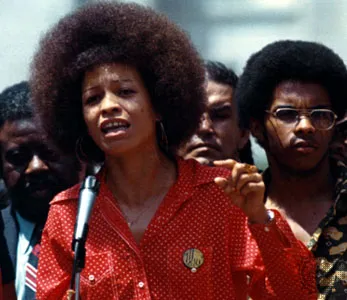
Dynamite Hill and the Education of a Revolutionary
Angela Davis was born in Birmingham, Alabama, on 26 January 1944, in a neighbourhood her family called Dynamite Hill — so named because the Ku Klux Klan had bombed so many homes of Black families who had moved into the area that the name became a sardonic piece of community geography. Her parents were educated professionals — her father owned a service station, her mother was a teacher active in the NAACP — and their home was a meeting place for intellectuals and activists at a time when being a Black intellectual in Birmingham required a specific kind of courage. The four young girls killed in the 1963 bombing of the 16th Street Baptist Church were known to Davis; their deaths were not distant political events but the murder of people she had seen.
That biographical specificity matters because it grounds Davis's intellectual trajectory in lived experience rather than abstract commitment. She did not come to radical politics through books alone; she came to it through the specific, local, intimate experience of what racial violence meant in Birmingham in the 1940s and 1950s — through the sound of explosions on the street where she lived, through the daily arithmetic of segregation, through the particular quality of life in a community that was under sustained assault by the state and by private terror that the state declined to interrupt. The books came later and they were serious books — she studied in Frankfurt under Theodor Adorno, one of the leading critical theorists of the twentieth century, and in San Diego under Herbert Marcuse, whose influence on the American New Left was at its peak in the late 1960s — but the intellectual framework they provided was in service of a political understanding that predated the philosophy.
Frankfurt, Marcuse, and the Formation of a Thinker
Davis's intellectual formation was unusually rigorous by any standard. She completed her undergraduate work at Brandeis University, where she studied philosophy with a focus on French literature and language, and spent two years at the Goethe University Frankfurt studying with members of the Frankfurt School — the tradition of critical theory associated with Adorno, Max Horkheimer, and Walter Benjamin that had developed a sophisticated Marxist analysis of culture, ideology, and the authoritarian personality. The Frankfurt School's central question — how did fascism become possible in a highly educated, culturally sophisticated society — was not an abstract one for Davis, whose entire childhood had been a demonstration that sophisticated racism did not require cultural primitivism.
She returned to the United States in 1967 to complete her doctorate under Marcuse at UC San Diego. Marcuse's influence on her was intellectual but also strategic: he was the figure who most consistently insisted that radical philosophy had to be connected to radical practice, that critical theory without political engagement was a kind of bad faith. Davis arrived in San Diego at the moment when that argument was most pressingly relevant — when the civil rights movement was fracturing, when Black Power was asserting itself as a political tendency, when the Vietnam War was producing a generation of radicalised students, and when the Black Panther Party was establishing itself as the most serious organisational expression of the new politics. She joined the Communist Party USA in 1968 and became an active supporter of the Panthers, particularly of the Soledad Brothers — George Jackson and his co-defendants — whose case she took up as the leading issue of her political work in 1969 and 1970.
Ronald Reagan and the Fight for UCLA
In 1969, Angela Davis was appointed to a position in the philosophy department at UCLA — a hire that immediately attracted the attention of the California governor's office, then occupied by Ronald Reagan, who had made anti-communist politics a central plank of his gubernatorial platform. Reagan wrote to the UC Board of Regents demanding her dismissal on the grounds of her Communist Party membership. The Regents complied, voting to deny her the position. Davis sued, won reinstatement through the courts, and returned to her teaching position at UCLA — whereupon the Regents fired her a second time, citing not her political affiliations but inflammatory language in several speeches she had given.
The second firing was challenged and eventually overturned as well, but the episode established the pattern of the relationship between Davis and the California state apparatus that would continue into the 1970 events: a state that was willing to use its institutional power to silence, exclude, and ultimately imprison a Black woman whose politics it found threatening, operating within a legal framework that nominally protected the rights it was violating in practice. Reagan's campaign against Davis at UCLA was not a fringe intervention but a deliberate use of gubernatorial power to suppress academic freedom in the service of anti-communist politics — a preview, in a smaller key, of the same state violence that would become more explicit in the events of August 1970.
"Jails and prisons are designed to break human beings, to convert the population into specimens in a zoo — obedient to our keepers, but dangerous to each other."
Angela DavisThe Marin County Courthouse and the Guns
On 7 August 1970, Jonathan Jackson — the seventeen-year-old brother of George Jackson, the Soledad Brother whose case Davis had been campaigning around — entered the Marin County Courthouse armed with weapons that were registered in Angela Davis's name. Jackson freed three Black prisoners who were appearing in court, took the judge, the district attorney, and several jurors hostage, and attempted to drive out of the courthouse. The escape failed: in a confrontation with San Quentin prison guards in the courthouse parking lot, Jackson, two of the prisoners, and Judge Harold Haley were killed. The district attorney was shot through the spine and permanently paralysed.
The connection between Davis and Jackson through the registered guns was enough for California prosecutors to charge her with murder, kidnapping, and criminal conspiracy. The theory of the prosecution was that she had provided the weapons knowing what Jackson planned to do with them — that she was a co-conspirator in a scheme to take hostages to force the release of the Soledad Brothers. Davis denied the charge and denied advance knowledge of Jackson's plan. Whether she was telling the truth about her knowledge was the central question of the subsequent legal proceedings; the jury ultimately concluded, by acquitting her on all counts, that the prosecution had not proven it beyond reasonable doubt.
The two months between the courthouse events and her arrest in October 1970 Davis spent as a fugitive — moving through a network of supporters, avoiding the FBI agents who were looking for her, while the bureau placed her on its Most Wanted list and Richard Nixon publicly described her as a dangerous terrorist. She was arrested in a New York City motel on 13 October 1970. She was twenty-six years old.
The Trial and the Global 'Free Angela' Campaign
Davis spent sixteen months in jail before her trial began. The conditions of her imprisonment — she was initially held in maximum security and subjected to restrictions that her lawyers challenged as punitive rather than security-justified — became the subject of international protest. The 'Free Angela Davis' campaign was among the largest prisoner solidarity movements in American history, drawing support from major figures across the political spectrum of the international left. In the Soviet Union, whose Communist Party was a sister organisation to the CPUSA, her case became a cause célèbre; the phrase "Free Angela Davis" appeared on protest banners in Europe, Africa, Asia, and Latin America. John Lennon and Yoko Ono recorded a song in her support. Mick Jagger referenced her in a Rolling Stones song released during her imprisonment.
The trial began in February 1972, and the jury — all white, in a county that was then overwhelmingly white — began deliberations on 2 June. They returned a verdict of not guilty on all counts on 4 June 1972, after deliberating for less than thirteen hours. Davis walked out of the courtroom a free woman, the charges against her having been found unproven by the very demographic — white Americans — that the prosecution had counted on to convict her. The acquittal was a significant legal and political event, demonstrating both that the prosecution had overreached and that the sustained international pressure of the solidarity campaign had created conditions in which jurors could not simply do what the state expected.
Women, Race, and Class: A Framework
Angela Davis's 1981 book Women, Race and Class is among the most important works of American feminist theory and one of the most systematic attempts to articulate the intersection of race, gender, and class as mutually constitutive rather than separately competing forms of oppression. The book's argument begins with the history of the women's suffrage movement — specifically with the moment when leading white suffragists, after the Civil War, chose to oppose the Fifteenth Amendment granting Black men the vote because it did not simultaneously grant women the vote, and in doing so aligned themselves with the Democratic Party's explicitly racist wing. That decision, Davis argues, was not merely a tactical error but a reflection of a deeper failure to understand that the liberation of white women from patriarchal restriction was a different problem — with different allies and different enemies — from the liberation of Black people from racial terror and economic exploitation.
The book proceeds through the history of Black women's labour — as enslaved workers whose reproductive capacity was itself a form of productive labour for slave owners, as domestic workers in the post-Reconstruction period, as industrial workers in the twentieth century — to argue that the specific oppression of Black women cannot be understood through either a feminist lens that ignores race or a race-focused lens that ignores gender. Both approaches are partial; neither can account for the specific experience of women who are simultaneously subject to the violence of patriarchy and the violence of white supremacy, and who cannot choose which form of oppression to resist first because both operate simultaneously on their bodies and their lives.
Are Prisons Obsolete? and the Abolition Project
Davis's 2003 book Are Prisons Obsolete? is the text most responsible for bringing the concept of prison abolition into mainstream academic and eventually mainstream political discourse in the United States. The book's argument is deceptively simple in its central claim: that the massive expansion of the American prison system in the last decades of the twentieth century — from approximately 300,000 incarcerated people in 1972 to over two million by 2000 — was not a rational response to increasing crime but a political choice, driven by the interests of a prison-industrial complex analogous to the military-industrial complex that Eisenhower had warned about in 1961.
The book draws the explicit historical connection between the post-Civil War convict leasing system — under which Black men were arrested on trivial charges and leased to private companies as effectively free labour — and the modern prison system, in which Black and Latino men are massively overrepresented in a population that performs prison labour at wages that constitute a form of coerced economic exploitation. The incarceration of Black men, Davis argues, is not a criminal justice response to Black criminality but a mechanism for the continued management and exploitation of a population that white America cannot integrate into full economic and political citizenship and refuses to leave free. Prisons do not solve the problem of crime; they manage the problem of a racially and economically excluded population by removing its most visible members from public view.
The prescription the book offers — abolition rather than reform — is the argument that has been most debated and most misunderstood. Davis is explicit that abolition does not mean opening prison doors tomorrow; it means building the social institutions — health care, education, employment, housing, mental health services — that address the conditions that produce the behaviours currently managed through incarceration, so that prisons become unnecessary rather than merely improved. The abolitionist argument is an argument about what kind of society you want to build, not a proposal for how to manage the one you have. It asks the question that the prison reform tradition never asks: why do we need this at all?
A Life's Work Still in Progress
Angela Davis remains, at eighty, one of the most consistently engaged public intellectuals in American political life. She co-founded Critical Resistance in 1998, an organisation dedicated to building the prison abolition movement across the United States, and has continued to write, lecture, and organise on the intersecting questions of race, gender, incarceration, and imperialism that have defined her intellectual project for more than fifty years. The Black Lives Matter movement, which emerged in 2013 following the acquittal of George Zimmerman and expanded into a national political force in 2020 following the killing of George Floyd, drew extensively on the theoretical framework that Davis had developed over decades — the analysis of policing as a form of racial control, the demand for abolition rather than reform, the insistence on understanding carceral violence as continuous with slavery rather than as a departure from American ideals.
Her Birmingham childhood — the bombed houses, the murdered girls, the daily facts of life under racial terror — was not background to her political life; it was the political life, the first and most formative political education she received, the lived demonstration of every theoretical proposition she would spend the next sixty years elaborating and defending. The distance between Dynamite Hill in 1950 and the prison abolition movement in 2023 is vast in time and form, but it is not a departure from the original question. The original question was: why does the state permit this? The answer she has been working on ever since is that the state does not merely permit it — the state organises it, profits from it, and calls it justice.