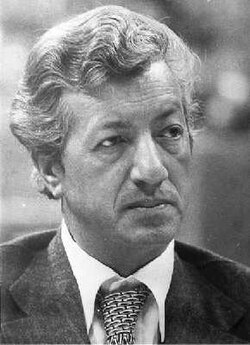
At a Glance
Ain Turck Origins and the Path Through the Underground
Rabah Bitat was born in 1925 in Ain Turck, a coastal town in the Oran Province of western Algeria. He received a French colonial education and became involved in nationalist politics through the MTLD in the period after the Second World War, joining the Organisation Spéciale — the MTLD's paramilitary wing — and building the clandestine experience and personal networks that the OS's training was designed to develop. When the inner circle of the MTLD's most committed activists began meeting in 1954 to plan the armed insurrection, Bitat was among them.
He was assigned responsibility for the Algiers region — the colonial capital and its surrounding area, a zone whose importance was obvious (controlling Algiers meant controlling the symbolic and administrative heart of French Algeria) and whose challenges were equally obvious (the highest concentration of French military and security forces in the country, the most extensive intelligence networks, and the least naturally defensible terrain). The Algiers zone was always going to be the most difficult to sustain, and the speed of Bitat's arrest after the revolution's launch demonstrated exactly how difficult it would be.
Arrested Within Weeks: The Revolution Loses Its Algiers Commander
Bitat was arrested in late November 1954 — just weeks after the revolution launched on 1 November. The speed of his arrest was a product of the French security services' intensive intelligence activity in Algiers in the immediate aftermath of the uprising: the coordinated attacks of 1 November had shocked the colonial administration, and the response in the capital was immediate and extensive. Bitat was caught in the net that French intelligence cast across the Algiers region as it sought to identify the network behind the attacks.
His arrest removed him from the active direction of the Algiers revolutionary organisation at the worst possible moment — just as it was being built, before it had developed the cell structure and the operational discipline that would later make Yacef Saadi's network so difficult for the French to break. The Algiers organisation that eventually became the basis of the Battle of Algiers was built by Saadi and his successors rather than by Bitat, who spent the years from late 1954 to 1962 in French prisons while the most dramatic events of the revolution unfolded without him.
Six Years in French Prisons: The War Seen From Confinement
Bitat spent six of the eight years of the Algerian War in French custody — a longer period of imprisonment than any other member of the founding generation except Ben Bella and the other founders intercepted on the Air Maroc flight in 1956. His prison years were not politically silent: he maintained contact with other imprisoned FLN members, followed the war's development through the prison networks that allowed information to circulate within the French penal system, and formed the political judgements about the revolution's direction that would inform his subsequent activity in independent Algeria.
The experience of six years in prison — watching from confinement as the revolution he had helped found fought and eventually won the war — was formative in ways that distinguished Bitat from the founders who had been active throughout. He had the founding generation's unimpeachable legitimacy: he had been there in the summer of 1954, had taken the decision, had suffered the consequences when the French arrested him within weeks. But he had not accumulated the specific military experience, the factional relationships, and the personal authority that came from commanding wilaya operations across years of armed struggle. This combination — founding-generation legitimacy without the wartime command experience — shaped the position he occupied in post-independence Algeria.
Post-Independence: Navigating the Factional Settlement
Bitat emerged from French custody in 1962 into an Algeria that was simultaneously celebrating independence and tearing itself apart over who would govern it. He aligned himself with Ben Bella's faction — the alliance between the external political leadership and Boumédiène's army that defeated the internal wilaya commanders in the summer of 1962 power struggle — and held ministerial positions in the Ben Bella government. When Boumédiène staged his coup in June 1965 and arrested Ben Bella, Bitat navigated the transition with the pragmatism that would characterise his entire post-independence career: he did not stake his political future on loyalty to the deposed president, and he held positions under Boumédiène's government as he had under Ben Bella's.
The assessment of this pragmatism depends on the values against which it is measured. Against the standard of democratic principle and loyalty to the revolution's stated commitments, it looks like the accommodation of a man who had placed survival and institutional position above political principle. Against the standard of realistic assessment of what was possible in Algeria's actual political conditions, it looks like the rational behaviour of a man who understood that refusing to accommodate the military's political dominance meant exile or prison rather than democratic transformation. Bitat chose neither exile nor martyrdom; he chose the institutional path, and he held to it for the rest of his political life.
The National Assembly Presidency and the Acting Presidency
Bitat's most prominent institutional role was his long tenure as President of Algeria's National Assembly — the parliament that the single-party system kept as a formal institution while real power resided in the FLN apparatus and the military command. He served in this role from 1977 to 1990, a period that included the death of Boumédiène in December 1978 and the transition to Chadli Bendjedid's presidency. Under Algeria's constitution, the president of the National Assembly serves as acting head of state pending a presidential election when the incumbent dies or is incapacitated; Bitat therefore served as acting President of Algeria from Boumédiène's death on 27 December 1978 until Chadli's election in February 1979.
The acting presidency was brief and its substance was minimal — Bitat's role during the transition was caretaker rather than executive, and the real decisions about the succession were made by the military and the FLN apparatus rather than by the constitutional mechanisms he formally embodied. But it gave him the distinction of having held, even briefly, the highest office in the Algerian state — a distinction that sits oddly alongside the fact that his most important contribution to Algeria's history was made in the summer of 1954, when he was one of nine young men who decided to launch a revolution.
Legacy: The Institutional Path Through the Revolution
Rabah Bitat represents, in the history of the Algerian Revolution, the path of the founding-generation figure who survived both the war and the post-independence power struggles and who spent the second half of his political life in the institutions of the state rather than in opposition to them. He is less celebrated than the martyrs who died for the revolution and less controversial than the figures whose political choices created lasting damage. He occupies the middle space of the revolution's memory — genuinely important as one of nine people who made the decision that changed North African history, and genuinely secondary in the subsequent story of what that decision produced.
He died in Paris in April 2000, one of the last connections to the founding moment of 1954. The Algeria he left behind was not the Algeria any of the nine founders had imagined in the summer of 1954, but it was independent, which was what they had all committed to creating. By that measure alone, the revolution succeeded. By the measures of democratic governance, social equality, and the other commitments the Soummam Platform had articulated, it did not. Bitat lived long enough to see both the success and the failure. What he thought about the balance between them in his final years is not recorded.