At a Glance
A Law Student in Colonial Algiers
Zohra Drif's presence at the University of Algiers in the mid-1950s placed her in an environment of acute contradiction. She was studying French law — the body of legal thought that proclaimed the equal dignity of all persons, the rule of law, the protection of individual rights against arbitrary authority — in an institution that served primarily the European settler population of a colony that denied the Algerian Muslim majority the most basic political rights. The distance between the liberal legal philosophy she was absorbing in her courses and the colonial reality she observed and experienced outside the lecture theatre was not merely an intellectual puzzle; it was a daily provocation that demanded either accommodation or rejection.
She chose rejection, but her rejection was shaped by her legal formation in specific ways that distinguished her approach to the revolution from that of figures whose political consciousness had developed outside the French educational system. Her engagement with the moral questions raised by political violence — the question of whether placing a bomb in a public space that would kill civilians was justifiable in the circumstances of colonial Algeria, the question of how to think about the rights and the suffering of the people who would be harmed — was the engagement of someone trained to think carefully about the relationship between principles and their application in specific circumstances. This careful engagement is what makes her memoir, written fifty years after the events it describes, such an important document.
The colonial university was also the site of her recruitment into the FLN network. The small number of Algerian Muslim students at the university were politically conscious almost by necessity — their presence in an institution that regarded their existence as exceptional made the political dimensions of colonial life impossible to ignore — and the networks of discussion and commitment that linked politically aware students formed one of the channels through which FLN recruitment operated. Her recruitment into Yacef Saadi's Zone Autonome d'Alger network was the product of this environment.
Women in the Battle of Algiers: The Operational Logic
The use of women operatives in the Zone Autonome d'Alger's bombing campaign was not an accident or an afterthought — it was a deliberate operational decision that reflected the specific conditions of the Battle of Algiers and the opportunities they created. The French military's counter-insurgency strategy relied heavily on checkpoints and identity checks at the boundaries between the Casbah and the European city, designed to prevent young Algerian men — the obvious demographic profile for FLN operatives — from carrying weapons or explosives into the settler quarter. Women, and specifically young women who could dress in European clothing and whose appearance at a European café would not arouse immediate suspicion, could penetrate these checkpoints in ways that male operatives generally could not.
This operational logic — the use of the colonial system's assumptions about women (that they were less likely to be politically militant, that their femininity was a marker of non-threat) as a weapon against it — was the context in which Zohra Drif, Hassiba Ben Bouali, Samia Lakhdari, and other women operatives were recruited and deployed. The ability to cross the checkpoint between the Casbah and the European city, to enter settler spaces, and to leave behind a device that would detonate after the carrier had withdrawn was their specific operational contribution, and it made them the most effective instruments the network had for carrying the war into the heart of the settler city.
This operational role placed these women at the intersection of multiple forms of political complexity. They were operating in contradiction of colonial assumptions about both their gender and their political agency — the colonial system that denied them political rights was simultaneously unable to recognise them as political actors capable of the violence they were carrying out. They were performing a form of gendered passing — using European dress and settler space in ways that temporarily occupied the colonial identity that was denied to them — in the service of the movement to destroy the system that had produced that denial. And they were accepting a moral responsibility — the knowledge that the devices they were carrying would kill and injure people — that required them to engage with questions about the justification of political violence that their training as a law student had specifically prepared Drif to address.
30 September 1956: The Milk-Bar and Its Consequences
The coordinated bombings of 30 September 1956 — the Milk-Bar, the Cafétéria, and the Air France office — were among the most significant single operations of the entire Battle of Algiers. They demonstrated that the FLN could carry the war into the heart of the European city; they generated international media attention that placed the Algerian struggle on front pages across the world; and they produced precisely the psychological effect that Yacef Saadi and the FLN leadership had intended — a demonstration to the settler community that their presumed safety in their own city was an illusion, that the colony's internal contradictions could not be contained in the Casbah and the poor Algerian quarters but would reach them wherever they gathered.
The Milk-Bar bomb that Zohra Drif placed killed three people and injured fifty more — many of the injured, as she was fully aware at the time and has acknowledged in her memoir, were young women of approximately her own age. The human cost of the operation was not an abstraction for her; it was a specific reality that she had accepted and for which she bore moral responsibility. Her subsequent reflection on this — in the memoir she published fifty years later — is among the most honest accounts of the moral reality of revolutionary violence that any participant in the Algerian War produced. She does not claim that the suffering of the Milk-Bar's victims did not matter; she claims that the political situation in which she acted — the systematic violence of the colonial system against the Algerian majority — made the operation both morally complex and morally necessary, and she makes this argument with the precision and the humility of someone who has been living with its weight for half a century.
Capture, Trial, and the Legitimacy Question
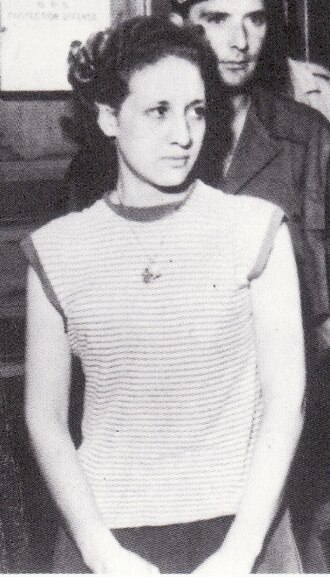
Zohra Drif was captured in September 1957 — in the same general period that the Battle of Algiers was being definitively suppressed by the systematic application of torture-extracted intelligence that dismantled Saadi's network cell by cell. Her trial before a French military tribunal was conducted in the framework that the French government maintained throughout the war: that the FLN's operatives were criminals and terrorists, that their actions were acts of murder and sabotage rather than acts of war, and that the French legal system had jurisdiction over Algerian subjects who had violated its laws.
Her defence, and the defence that the FLN's political analysis provided for all its captured operatives, rejected this framework entirely: the tribunal had no jurisdiction because the Algerian people were not French subjects but a colonised people fighting for their liberation, and the laws under which she was being tried were the laws of the occupying power whose legitimacy the revolution was precisely contesting. This argument did not prevail in the courtroom — she was sentenced to twenty years' imprisonment — but it prevailed in the court of international political opinion, where the French government's characterisation of the war as a domestic security matter was increasingly contested and eventually rejected.
Her years in French prisons were years of continued political engagement — reading, corresponding with other prisoners and with supporters outside, maintaining the intellectual and political commitments that had brought her to the FLN in the first place. The Évian Accords process that produced the framework for Algerian independence made her continued imprisonment politically unsustainable, and she was released in 1962 when independent Algeria became a reality.
After Independence: Legal Career, Senate, and the Memoir
Zohra Drif's post-independence career was one of the most distinguished among the women who had participated in the Battle of Algiers. She built a legal career that drew on the training that colonial Algiers had provided but was now exercised in a fully independent Algerian legal system. She married Rabah Bitat — one of the nine historic founders of the FLN, later President of the National Assembly — connecting her own revolutionary career to the founding generation of the Algerian state through family as well as political association. She served in the Algerian Senate and eventually as Vice-President of the Senate — one of the most senior positions in the Algerian parliamentary system, a recognition of both her historical standing and her continued political engagement.
But the most significant thing she did in her later years was write her memoir. Inside the Battle of Algiers: Memoir of an Algerian Woman Freedom Fighter, published in French in 2013 and translated into English in 2017, is a document of extraordinary historical and moral importance. It tells the story of a young woman's decision to join the FLN, to participate in the bomb-carrying operations that were among the most morally contested acts of the war, and to accept the consequences of that decision — imprisonment, the knowledge of the harm her operations had caused, and the lifelong responsibility of having been a participant in events that shaped the history of her country.
What makes the memoir remarkable is its honesty. Drif does not glorify what she did; she explains it, contextualises it, and maintains the conviction that it was necessary — but she does all of this with a precision and a willingness to sit with difficulty that prevents the book from becoming propaganda. She describes the Milk-Bar and its victims with the knowledge of someone who has been thinking about them for fifty years. She describes the internal struggle that preceded her decision to carry out the operation — the awareness of what she was about to do, the moral reasoning she applied, the conviction she reached — with the rigour of a lawyer who has spent her career thinking about the relationship between principles and their applications.
The Significance of Survival and Testimony
Zohra Drif's survival — through the Battle of Algiers, through French imprisonment, through independence, through the long decades of post-independence Algerian political life with all its complications and disappointments — gave her a perspective on the revolution that most of her closest associates could not share. Hassiba Ben Bouali died in October 1957 in the hiding place she refused to leave; Ali La Pointe died with her. Yacef Saadi survived and lived to ninety-three, but did not write the kind of introspective account that Drif provided. The memoir she published in her late seventies is therefore one of the closest things the history of the Battle of Algiers has to a first-person account written by someone who was there, who survived, and who has had decades to think about what happened and why.
The account she provides is neither triumphalist nor apologetic — it is the account of a woman who made a consequential choice in specific circumstances, who has lived with the consequences of that choice, and who believes that the choice was the right one for the reasons she has always believed it was, while acknowledging the full weight of what it cost. That combination — the sustained moral engagement with a difficult past — is what makes her one of the most significant living witnesses to the Algerian revolution and her memoir one of its most important written records.