At a Glance
M'Sila and the Making of a Revolutionary
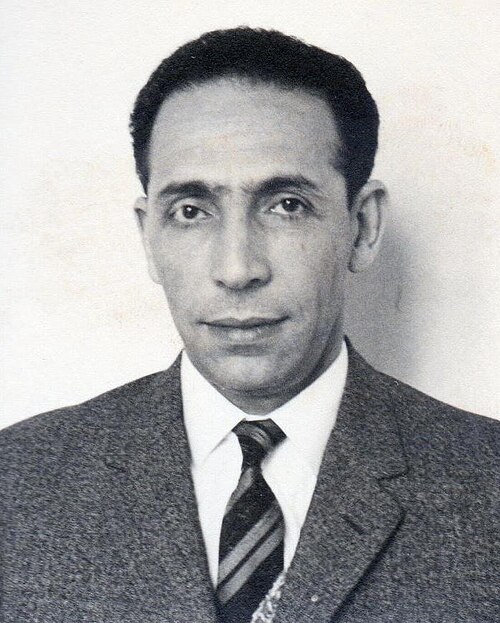
Mohamed Boudiaf was born in 1919 in M'Sila, a town in the Hodna region of central Algeria, into the world that French colonialism had made for the Algerian Muslim majority — a world of legal discrimination, economic dispossession, and cultural subordination that was so total and so systematic that it shaped every dimension of daily life. The Algerian Muslim population of the inter-war years had been stripped of most of their agricultural land through a century of colonial settlement, excluded from the political system except in the most degraded forms, subjected to a legal code — the Code de l'Indigénat — that treated them as subjects rather than citizens, and confronted daily with the evidence that the colonial system regarded their existence as a problem to be managed rather than a life to be respected.
The specific texture of this experience in M'Sila and the Hodna region — an interior plateau community far from the cosmopolitan worlds of Algiers and Oran, closer to the experience of the rural and small-town Algerian majority than to the educated urban professional class that dominated the earlier nationalist movements — shaped Boudiaf's political formation in ways that distinguished him from some of his colleagues. He did not come to nationalism through the French educational system or through exposure to metropolitan political ideas; he came to it through the daily experience of colonial inequality and through the early nationalist networks that were building their organisational infrastructure in the interior regions as well as in the cities.
His entry into nationalist politics through the MTLD — the Movement for the Triumph of Democratic Liberties, the party of Messali Hadj that was the dominant vehicle of Algerian nationalism in the late 1940s — placed him in the mainstream of the organised independence movement. But Boudiaf was among those within the MTLD who became increasingly convinced that the constitutional and electoral approaches that Messali Hadj favoured were insufficient to the scale of the task. French colonialism in Algeria was not a policy that could be reversed through parliamentary pressure or electoral competition; it was a structural system of settlement and dispossession that had been building for 120 years and that had no intention of dismantling itself in response to peaceful petition. Only armed struggle, he concluded, could force the change that the Algerian people needed.
The Organisation Spéciale and the Road to November
The Organisation Spéciale — the OS, the MTLD's secret paramilitary wing — was the organisational environment in which Boudiaf developed the clandestine skills that the FLN would require. Building a secret armed organisation within the structures of a colonial state whose security apparatus was alert to exactly this kind of activity required the capacity to compartmentalise information, to build trust across cells that could not know each other's membership, to maintain discipline under pressure, and to make operational decisions quickly and accurately when circumstances changed. Boudiaf demonstrated all of these qualities in his OS work, and his arrest and subsequent escape from French custody further demonstrated the personal courage and operational flexibility that revolutionary work required.
The internal crisis of the MTLD in the early 1950s — the conflict between Messali Hadj's centralist authority and the more democratically organised Centraliste faction — pushed Boudiaf and others who had been developing the paramilitary capacity of the movement toward the conclusion that the existing party structures were inadequate vehicles for the armed struggle they believed was necessary. The group that coalesced around this conclusion — which would become the nine historic founders — spent 1953 and early 1954 building the network and developing the plan that would become the FLN's 1 November 1954 uprising.
Boudiaf's specific role in the creation of the FLN was organisational: he was the coordinator of the internal network, the man who held the connections between the different cells and regional leaders who would need to act simultaneously on the night of 1 November. This required not only the logistical competence to manage a complex clandestine network but the political intelligence to build and maintain the trust of figures whose temperaments, regional loyalties, and specific political emphases were significantly different from each other. The nine historic founders were not ideological clones; they had different backgrounds, different regional bases, and different ideas about the direction the revolution should take. The fact that they held together through the preparation period and acted together on 1 November was itself an organisational achievement, and Boudiaf deserves substantial credit for it.
1 November 1954: The Night That Changed Algeria
The coordinated attacks of 1 November 1954 — the Toussaint Rouge, the Red All Saints' Night — were launched simultaneously across multiple points in Algeria: in the Aurès mountains, in Kabylie, in the Oran region, in Constantine, and in several other locations. The attacks were not militarily decisive — the French security forces' response was rapid and the initial FLN cells were small and lightly armed — but they were politically transformative. They announced that a new phase of Algerian resistance had begun, that the demand for independence was now being pursued through armed force rather than constitutional petition, and that the colonial power would have to choose between negotiated independence and a war it might not be able to win at acceptable cost.
France chose war. The subsequent seven and a half years — the longest and most brutal colonial war in post-war European experience — cost hundreds of thousands of Algerian lives, involved the systematic use of torture by the French military, generated a political crisis in France itself that ended the Fourth Republic, and ultimately produced the independence that the FLN's nine founders had committed to pursuing. Boudiaf's role in making that outcome possible — in the organisational work that made the 1 November uprising viable, in the subsequent development of the FLN's internal and external structures — was real and significant, even if the nature of clandestine work meant that it was less visible than the battlefield commanders' contributions.
He was captured by the French in October 1956 in one of the most consequential episodes of the war's diplomatic dimension: the French military's interception of the aircraft carrying him and four other senior FLN leaders — Ahmed Ben Bella, Mohamed Khider, Hocine Aït Ahmed, and Rabah Bitat — as they flew from Morocco to Tunis for peace negotiations. The interception, ordered without the knowledge of the French civilian government, was a violation of international aviation law and a major diplomatic embarrassment for France; it hardened Algerian and international opinion against the French military's conduct and made a negotiated settlement simultaneously more necessary and more difficult. Boudiaf spent the remainder of the war in French detention.
Independence, Betrayal, and the Long Exile
Released from French detention in 1962 as the Évian Accords ending the war were being implemented, Boudiaf returned to an Algeria whose independence he had helped to create but whose political direction was already being determined by forces that had different ideas about what that independence was for. The competition between the provisional government (GPRA) and the army units that Houari Boumédiène commanded — the forces that had spent the war on the Tunisian and Moroccan borders rather than fighting inside Algeria — was being resolved in the army's favour, and Ahmed Ben Bella's alliance with Boumédiène was producing a political consolidation that had no room for the independence of mind that Boudiaf represented.
His opposition to Ben Bella's personal power, and then to Boumédiène's 1965 coup against Ben Bella, was principled and costly. The Algeria he had fought for was not supposed to be a military dictatorship dressed in the language of socialist revolution; it was supposed to be a country in which the people who had made the revolution — and the broader Algerian population in whose name it had been made — had genuine political power. His founding of the Party of the Socialist Revolution from exile was the organisational expression of this conviction, but from Morocco he could not build the movement that the Algeria he imagined required.
The years in Kenitra — the brick factory, the modest life, the maintenance of political principle at personal cost — were years that Boudiaf lived as a deliberate statement. He refused the offers of accommodation that would have been available to a man of his historical standing; he refused to accept silence as a condition of return; he maintained his criticism of the military establishment from afar, knowing that it meant indefinite exile. This stubbornness — this refusal to trade the Algeria he had imagined for a comfortable existence in the Algeria that existed — was the quality that made him, at seventy-two, the right person to call back when the Algeria that existed had reached its worst crisis.
The Return: Six Months That Mattered
The cancellation of Algeria's legislative elections in January 1992 — when the Islamic Salvation Front was on course to win a decisive majority in the second round — produced a constitutional crisis of the first order. The military's intervention to cancel the elections and establish a High State Council to govern the country was simultaneously a necessary response to the threat of an Islamist government that showed no commitment to democratic values and a catastrophic demonstration that the Algerian state had never been genuinely democratic in the first place. It needed a figure of unimpeachable nationalist credentials — someone whose authority derived from the revolution itself rather than from the military establishment — to give the emergency government legitimacy.
Boudiaf was the obvious choice. He returned in January 1992, and what followed was one of the most remarkable six months in Algerian political history. He moved quickly: establishing himself as a genuinely independent president rather than a figurehead, launching an anti-corruption drive that targeted the networks of state patronage and private enrichment that the ruling establishment had built across decades of single-party rule, and beginning to rebuild a connection with ordinary Algerians that the political class had long since lost. He travelled across the country, spoke directly to people, acknowledged the failures of the post-independence period with a candour that no Algerian leader had previously displayed, and began to articulate a vision of what Algeria could become if it managed its current crisis without reproducing the authoritarianism that had generated it.
The anti-corruption work was what made him dangerous. The networks he was beginning to investigate connected the military establishment, the ruling party apparatus, and the business interests that had been built on state contracts and oil revenues across the Boumédiène and post-Boumédiène years. The people who had enriched themselves through these networks had every reason to fear a president who was genuinely independent of them and genuinely determined to challenge the corruption that sustained them. Whether it was these people, or the Islamist movement that regarded him as the face of the secular state they were fighting, or some combination of both, who ordered his assassination is the question that Algerian political culture has debated for three decades without conclusive answer.
The Assassination and Its Unresolved Mystery
On 29 June 1992, Boudiaf was giving a speech at the Maison de la Culture in Annaba — a public cultural event of the kind he had been using to rebuild direct connection with Algerian citizens. A gunman — Lieutenant Lembarek Boumaaraf, a member of his own security detail — opened fire from behind him, shooting him in the back of the head. He died immediately. The assassin was arrested, tried, and convicted; he claimed Islamist motivations. But the question of whether he acted alone, and whether his Islamist justification was genuine or a cover for other interests, was never satisfactorily answered.
The assassination's timing — just as Boudiaf was beginning to gain momentum, just as his anti-corruption investigations were reaching into the most sensitive areas of the Algerian establishment — made the "lone Islamist" explanation seem insufficient to many observers. The subsequent decade of civil war, in which tens of thousands of Algerians died in a conflict between the military establishment and various Islamist armed groups, did nothing to clarify the political logic of his killing; it buried the question under the accumulated horror of what followed.
Mohamed Boudiaf's life described a complete arc of the Algerian political tragedy: the revolutionary idealism of 1954, the betrayal of that idealism by the post-independence military establishment, the long years of exile maintained on principle, the return that offered a last chance at redemption, and the assassination that ended it. He remains, in Algerian national memory, one of the purest figures of the independence generation — the man who refused every compromise, who chose the brick factory over the palace, and who was killed precisely because, at seventy-two, he had not stopped being dangerous to those who had stolen the revolution he had made.