At a Glance
Ain M'lila Origins and the Formation of a Revolutionary
Larbi Ben Mhidi was born on 23 February 1923 in Ain M'lila, a small town in the eastern Algerian province of Oum El Bouaghi — a date that acquires a particular irony from the fact that he was captured by French paratroopers exactly thirty-four years later, on his thirty-fourth birthday. He came from a modest family in the eastern Tell, received a French colonial education, and became involved in nationalist politics in the years when the MTLD — Messali Hadj's party — was building the clandestine organisational infrastructure that would eventually produce the FLN. He was a founding member of the Organisation Spéciale in 1947 — the paramilitary wing established to prepare for eventual armed struggle — and was arrested and imprisoned by French authorities before the revolution launched, serving time that, as with many of the founding generation, deepened his political commitment rather than diminishing it.
What distinguished Ben Mhidi from most of the FLN's founding generation was not primarily his tactical skill, his organisational ability, or his political theory — though he possessed all three — but his character. The testimonies of people who knew him, from comrades in the independence movement to French officers who interrogated or guarded him after his capture, converge with unusual consistency on the same portrait: a man of absolute personal integrity, deeply committed to his principles, entirely without the vanity and factional positioning that characterised so many of his contemporaries, and possessed of a courage that was not the absence of fear but the capacity to act correctly in spite of it. Abane Ramdane, who was not given to easy praise of his colleagues, described him as "the greatest among us."
The Founding Moment and Wilaya V
Ben Mhidi was among the nine founders who met across the summer of 1954 to plan and execute the November insurrection, and he took command of Wilaya V — the Oranie, the western region of Algeria centred on Oran — for the war's opening phase. The Oranie presented specific challenges: it was a region with a substantial French settler population, well-garrisoned French military presence, and terrain less naturally suited to guerrilla operations than the mountains of Kabylie or the Aurès. Ben Mhidi built the wilaya's structures with the same methodical seriousness he brought to everything, but the western region was always among the more difficult zones in which to sustain armed resistance, and the FLN's operations there were never as extensive as in the mountain wilayas.
The Soummam Congress of August 1956 brought Ben Mhidi into the CCE — the Comité de Coordination et d'Exécution that Abane Ramdane had created as the FLN's collective executive. Ben Mhidi supported the Soummam Platform's democratic principles and its institutional framework, and his relationship with Abane was one of genuine political partnership rather than factional calculation. When the CCE decided that the urban campaign in Algiers required the presence of a senior political figure alongside Yacef Saadi's operational network, Ben Mhidi was the figure assigned — a measure of the trust his colleagues placed in his political judgement and his personal courage.
The Battle of Algiers: Senior Commander in the City
Ben Mhidi's presence in Algiers during the Battle of Algiers made him the most senior FLN political figure in the city during the critical months of late 1956 and early 1957. He was not running the operational network — that was Yacef Saadi's domain — but he provided the political authority and the strategic direction that the network's operations required. He was the link between the urban campaign and the CCE's collective decision-making, and his presence in the city was itself a political statement: the revolution's senior leadership had not abandoned Algiers to the French military's assault but remained inside it, taking the same risks as the fighters in the network.
The decision to bring the war into the civilian spaces of the European city — to place bombs in the cafes, cinemas, and dancehalls of the European quarter, killing civilians — was a collective FLN decision that Ben Mhidi endorsed. He has been quoted as saying, in response to a question about whether it was honourable to place bombs in shopping baskets carried by women: "Give us your bombers' planes and we'll give you our baskets." The retort captures the argument that the FLN leadership made — that the violence of the colonial system was of a qualitatively different kind and scale from the violence of the resistance, and that those who objected to the resistance's methods while accepting the system's violence were making a morally incoherent choice. The argument does not resolve the moral questions about civilian bombing; it illuminates the political context in which those questions were being posed.
Capture: The Most Dignified Arrest of the Algerian War
Ben Mhidi was captured on 23 February 1957 — his birthday — in an apartment in Algiers. French intelligence had tracked his location through the systematic intelligence work that Massu's paratroopers were building from information extracted under torture from the FLN operatives they were arresting across the city. He was taken without resistance. From the moment of his capture, his behaviour was everything that his reputation had suggested it would be: calm, dignified, intellectually engaged with his situation, and entirely without the pleading or deception that fear might have produced in a lesser person.
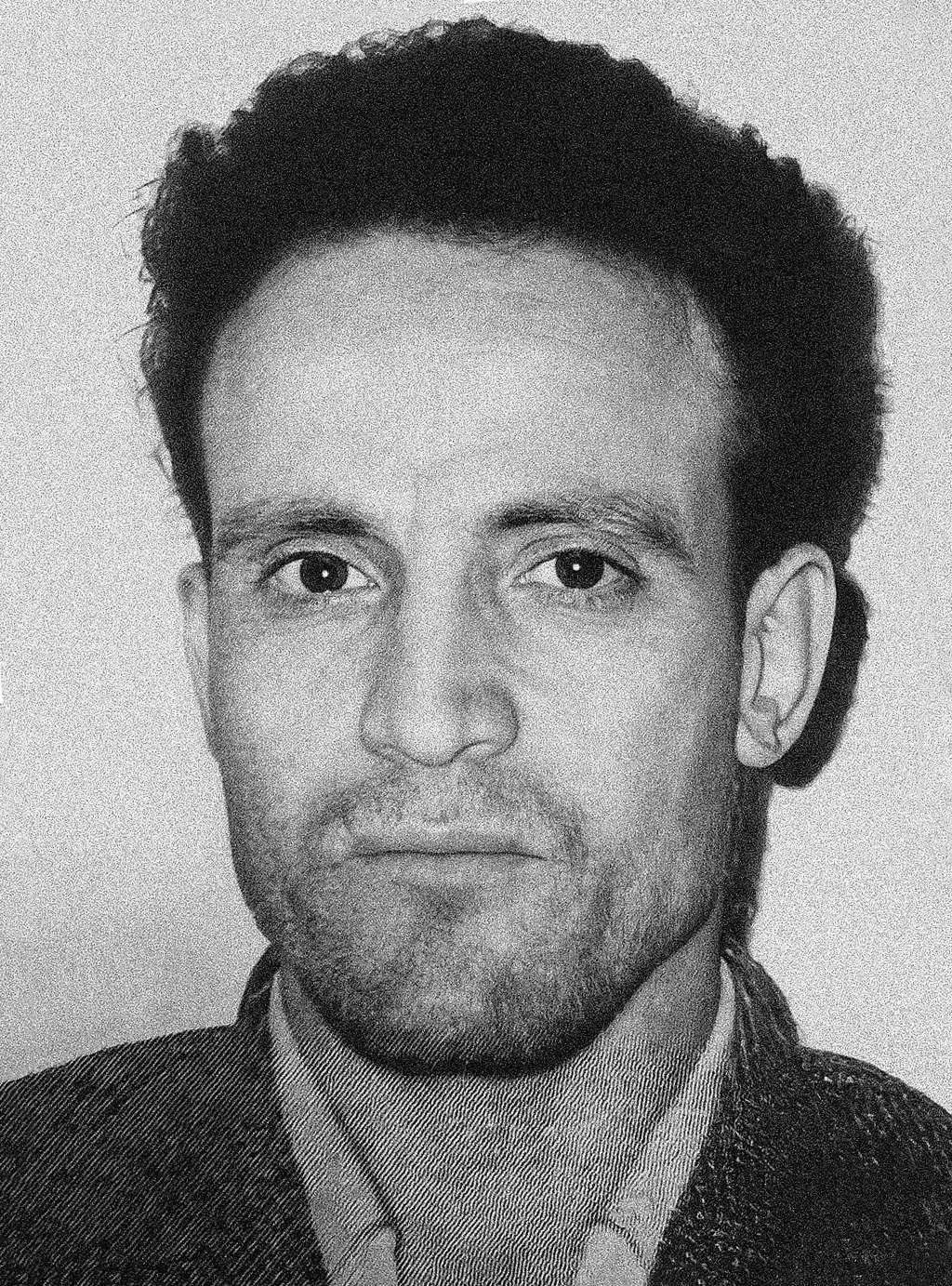
General Massu made the decision to display Ben Mhidi to the press in the days after his capture — a decision intended to demonstrate that the FLN's leadership was being broken and that the Battle of Algiers was being won. The photographs taken at those press conferences became iconic for reasons that Massu had not anticipated: Ben Mhidi, surrounded by French officers in his FLN uniform, looked like the most composed and the most confident man in the room. The officers surrounding him looked like men who were uncomfortable, who understood at some level that they were in the presence of someone whose moral authority exceeded their own. The photographs were intended as images of French victory; they became images of Algerian dignity.
He engaged his captors in conversation about politics, about the revolution, about the Algerian people's right to independence. The French officers and intelligence agents who spoke with him found him impossible to dismiss as a fanatic or a criminal; he argued his position with the reasoned calm of a man who had thought carefully about what he believed and who was not going to pretend otherwise even in circumstances where pretence might have served his survival. General Massu later described Ben Mhidi as the adversary he most respected, a judgement that tells us something about both men.
The Murder: Aussaresses's Admission and Its Consequences
On the night of 3-4 March 1957, Larbi Ben Mhidi was transferred from French military detention to the Villa des Tourelles in the Algiers hills. He was strangled by French paratroopers acting on the orders of General Paul Aussaresses, the intelligence officer who coordinated the French military's interrogation and elimination operations during the Battle of Algiers. His death was announced by French military authorities as a suicide by hanging with his own shirt. No one who knew Ben Mhidi believed this account. His composure in custody, his evident political commitment, and the utter implausibility of suicide from a man who had conducted himself as he had in his final days made the French version unacceptable to everyone who understood what kind of man he was.
The truth remained officially denied for forty-four years. In 2001, Paul Aussaresses published his memoir Services Spéciaux: Algérie 1955-1957, in which he described in detail the interrogation and elimination operations he had conducted during the Battle of Algiers, including Ben Mhidi's murder. He expressed no remorse. He described the killings as rational operational decisions made in wartime conditions. The memoir caused an immediate scandal in France: Aussaresses was prosecuted for justifying war crimes (he was not prosecuted for the crimes themselves, the statute of limitations having expired), stripped of the Légion d'Honneur, and subjected to sustained public criticism. The French state's official acknowledgement of systematic torture during the Algerian war, which had been building gradually through the preceding decade, was accelerated by the publication of his memoir.
For Algeria, Aussaresses's admission provided definitive documentary confirmation of what Algerian history had always maintained: that Ben Mhidi was murdered by French military authorities, that the suicide account was a lie, and that the French military's conduct in the Battle of Algiers included the deliberate extrajudicial killing of political prisoners. The confirmation came too late for Ben Mhidi, forty-four years too late for justice, but it mattered for the historical record and for the moral clarity that honest historical accounting requires.
What His Death Meant
Larbi Ben Mhidi's death in French custody on 3 March 1957 removed from the Algerian Revolution the figure who best embodied the principles that the Soummam Platform had committed it to pursuing. He was personally courageous, politically serious, committed to democratic governance, and capable of treating the political struggle as a moral as well as a military enterprise. His death, coming within weeks of Abane Ramdane's return to political activity after the congress, left the CCE poorer in the precise qualities it most needed: the combination of personal integrity and political commitment that could sustain the revolution's democratic aspirations against the factional pressures that were already working to displace them.
The independent Algeria that emerged from the revolution he helped found was not the Algeria he would have built. His commitment to collective leadership, to political accountability, and to the democratic principles of the Soummam Platform was not reflected in the state that Boumédiène's military governance constructed after 1965. Whether his survival would have changed the outcome is a question history cannot answer; what history can say is that his death, along with Abane's murder, removed from the revolution's leadership exactly the people whose principles most clearly pointed toward a different kind of independent Algeria from the one that was built.
Legacy: The One the Revolution Most Needed
Larbi Ben Mhidi is commemorated across Algeria with the intensity of feeling that attaches to a martyr who was also genuinely admirable — not merely brave but right, not merely committed but wise. His name is on streets, schools, and stadiums. His face appears in the iconography of the independence struggle with a frequency that reflects genuine popular affection rather than merely official designation. He is the revolution's conscience made visible, the measure against which the political choices of the survivors are judged and found wanting. He was thirty-three years old when the French military murdered him. He had been a professional revolutionary since his mid-twenties. He was at the centre of the most important armed independence movement in North African history. And he conducted himself throughout, in victory and in captivity, with a consistency between his principles and his practice that made him, as Abane said, the greatest among them.