At a Glance
Tlemcen to Paris: The Making of a Revolutionary in Immigration
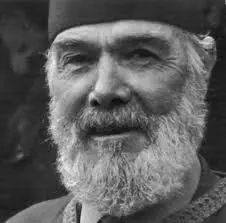
Messali Hadj was born in 1898 in Tlemcen — an ancient city in western Algeria with a long history as a centre of Islamic scholarship and culture, a city that had its own memories of resistance to French conquest dating back to Emir Abdelkader's era and whose educated families maintained a tradition of Islamic learning that coexisted uneasily with French colonial authority. He grew up in a world shaped by the contradictions of the colonial system: a French education that taught republican values while denying the political rights those values entailed, an Islamic tradition that preserved a counter-narrative of dignity and resistance, and the daily experience of racial hierarchy that colonial Algeria imposed on its non-European population.
He migrated to France in the early 1920s, joining the large community of Algerian workers who had been drawn to the metropole by the industrial labour that the First World War and post-war reconstruction had created. The experience of immigration was radicalising for reasons that were both political and personal: in France, Algerians encountered the French Communist Party and its international network, the anti-colonial politics of the interwar European left, and the community of colonial subjects from across the French empire who were developing, in Paris, the intellectual and political frameworks of anti-colonial nationalism. Messali became involved in the PCF's colonial section, married a French communist woman named Emilie Busquant who remained his lifelong companion, and in 1926 participated in the founding of the Étoile Nord-Africaine — the North African Star — the first mass organisation of Algerian workers in France to demand political rights and independence.
The Étoile Nord-Africaine and the Birth of Mass Algerian Nationalism
The Étoile Nord-Africaine was founded in Paris in 1926 with support from the Comintern and initially operated within the orbit of the French Communist Party's colonial politics. But Messali was not primarily a communist — he was a nationalist whose Islam and whose specific commitment to Algerian independence made him a more difficult figure to manage than the PCF had anticipated. He demanded independence, not the qualified autonomy or federation with France that the communist line of the period permitted; he invoked Islamic tradition as well as class solidarity; and he built, through his extraordinary oratorical gifts, a personal following among the Algerian immigrant workers in France that was devoted to him rather than to any party or programme.
The French government banned the Étoile Nord-Africaine in 1929; it was reconstituted as a new organisation, banned again, and reconstituted again — the pattern that would define Messali's political career across the following three decades. Each ban produced a new organisation; each new organisation built on the political culture and the personal networks of its predecessor; and throughout this process, Messali's personal authority as the movement's leader grew more central rather than less, a development that would eventually prove to be both the movement's greatest strength and its most significant structural problem.
The PPA, the MTLD, and the Mass Movement Inside Algeria
The Parti du Peuple Algérien, founded in 1937, was the first mass nationalist party to operate inside Algeria itself rather than primarily among the immigrant community in France, and it drew on the political culture and personal networks that Messali had been building since the 1920s. The PPA's programme was explicit: Algerian independence, not autonomy within a French framework, not federation, not assimilation. The clarity of the demand was itself an achievement — at a moment when Ferhat Abbas was still arguing for assimilation and the Association of Algerian Muslim Ulama was focused on cultural rather than political independence, Messali's unequivocal demand for sovereignty was the most radical position in Algerian politics.
The PPA was banned in 1939; Messali was arrested and imprisoned; the party was reconstituted as the MTLD in 1946 after the Second World War. The MTLD became the largest mass nationalist organisation in Algeria's history up to that point, drawing support from working-class Algerians in the cities and towns, from the rural population that the colonial economy had dispossessed, and from the generation of young political activists who had come of age after the Sétif and Guelma massacres of 1945 and who understood that France's promises of reform were meaningless. The MTLD was the organisation in which the men who would found the FLN were politically formed: Ben Mhidi, Ben Bella, Boudiaf, Bitat, Belkacem Krim — all of them were MTLD members before they became FLN founders. Messali was their political father, and they broke from him with the mixture of love, frustration, and the need for self-determination that the break from a founding father always involves.
The Organisation Spéciale and the Seeds of Armed Struggle
Within the MTLD, Messali had authorised the creation of the Organisation Spéciale — the paramilitary wing established in 1947 to prepare for eventual armed struggle. This decision was significant: it meant that the move toward armed resistance had Messali's explicit sanction, and that the cadres who would found the FLN in 1954 were using the organisational and military training that Messali's movement had provided. The paradox of his exclusion from the revolution is therefore particularly sharp: the revolution that excluded him had been built in significant part on the foundations that he had laid.
The MTLD was consumed by a crisis in the early 1950s between the "Centralists" — who wanted to reduce Messali's personal authority and build a more genuinely collective leadership — and the "Messalists" who defended his charismatic authority. The crisis paralysed the organisation at the moment when the decision about armed struggle needed to be made. The nine founders of the FLN broke from both factions in 1954, regarding the entire MTLD debate as a distraction from the fundamental question of how to launch the revolution. They launched it without Messali's blessing and, crucially, without his organisational infrastructure.
The MNA-FLN Conflict: Algerian Blood on Algerian Hands
Messali's response to the FLN's creation and the revolution's launch was to found the Mouvement National Algérien in December 1954 — a competing organisation that he presented as the true heir of the Algerian nationalist tradition, in contrast to what he characterised as the FLN's conspiratorial and violent deviation from genuine nationalism. The FLN regarded the MNA as a direct threat to the unity of the independence movement and as a tool of French intelligence designed to divide and weaken the revolution.
What followed — the MNA-FLN conflict of 1955-1962 — was one of the darkest episodes in the history of Algerian nationalism. The two organisations fought each other, primarily among the Algerian immigrant community in France but also inside Algeria itself, with a violence that killed between 6,000 and 10,000 people in seven years. The FLN's military effectiveness, its international support, and its claim to represent the entire Algerian nation eventually made the outcome clear: by the late 1950s, the MNA had been effectively destroyed. Messali's supporters were killed, intimidated, or absorbed into the FLN; his organisation ceased to function as a meaningful political force. He himself remained under French house arrest for most of this period, prevented from active political leadership by the French government that found his continued existence useful as a foil against the FLN even while it detained him.
Exile, Death, and the Delayed Recognition
Messali Hadj spent the years between Algerian independence in 1962 and his death in 1974 in France — not imprisoned, but effectively exiled by the hostility of the Algerian government, which regarded him as a traitor for the MNA-FLN conflict and refused to allow him to return. The man who had spent fifty years organising for Algerian independence was not welcome in the Algeria that his organising had helped make possible. He died in Pontoise in June 1974 at the age of seventy-six, having never returned.
His remains were repatriated to Algeria in 1984, ten years after his death, and buried in Tlemcen — his home city and the city of Emir Abdelkader, the two great figures of Algerian resistance brought together in death by the same soil. His rehabilitation in Algerian public memory has been gradual and is still incomplete: he is officially recognised as the "historic leader" of Algerian nationalism, his contribution to the independence movement acknowledged, but the MNA-FLN conflict and its thousands of dead remain subjects of official sensitivity, and the full complexity of his relationship with the revolution is not always confronted in official commemoration.
Legacy: The Father the Revolution Disowned and Then Had to Claim
Messali Hadj's legacy is that of a pioneer who was punished for his priority. He built the mass Algerian nationalist movement when no one else was doing so; he demanded independence when the more cautious were arguing for assimilation; he spent seventeen years in French prisons for his politics when less committed figures were accommodating themselves to the colonial system; and the revolution that his lifetime of work had made possible broke from him, fought him, and excluded him from the independent Algeria he had spent his life trying to create. The exclusion was partly his fault — his insistence on personal authority, his refusal to accept collective leadership, and the MNA-FLN conflict for which he bore significant responsibility had alienated the FLN's founders in ways that made reconciliation impossible. But it was also partly the FLN's fault: the revolutionary movement's unwillingness to find a role for the man who had pioneered the cause they were completing was a failure of generosity and historical acknowledgement that independent Algeria eventually had to correct.
He is, in the fullest sense, the father of Algerian nationalism — not the father of the revolution that achieved it, which was the FLN's creation, but the father of the political consciousness and the organisational culture that made the revolution possible. Without his decades of organising, the nine founders of the FLN would have had no political tradition to inherit and transform. That inheritance was not acknowledged in his lifetime. History has been slower than it should have been to acknowledge it since.