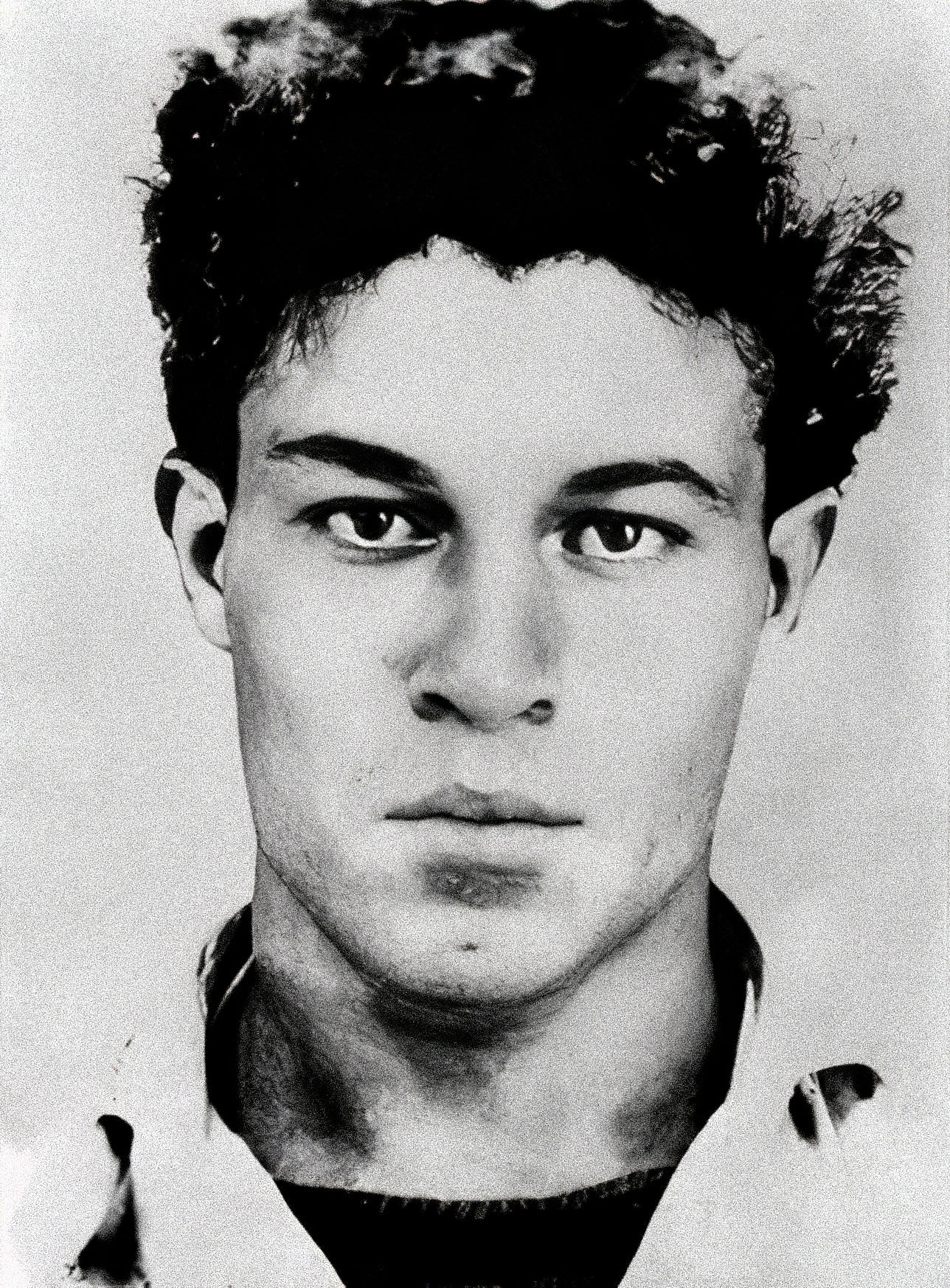
At a Glance
The Casbah and the World That Made Ali La Pointe
To understand Ali La Pointe, it is necessary to understand the Casbah — the neighbourhood that made him, that he knew with the total intimacy of a man who had never really left it, and in whose streets and hidden passages he fought and died. The Casbah of Algiers was the old Ottoman city that had existed before the French conquest of 1830, a dense, organic urban fabric of whitewashed houses built on steep terraces above the harbour, connected by narrow alleyways that the French colonial administration had always found difficult to control and impossible to redesign in the manner of Haussmann's Paris. The French city — the ville européenne — had been built alongside it on the lower slopes and around the port, its wide boulevards, administrative buildings, and settler-owned businesses separated from the Casbah by the boundary of class, race, and political power that structured colonial Algerian life in everything from employment to residence to law.
The Casbah was poor, overcrowded, and overwhelmingly Algerian. The unemployment rate among its young men was chronic; the colonial economy offered them domestic service, day labour on the docks, and petty trade as their primary options. The French educational system had penetrated the Casbah less thoroughly than it had the more prosperous Algerian communities in the lower city, and the combination of poverty, colonial subordination, and relative isolation from the assimilationist pressures that shaped the educated nationalist generation produced a different kind of political consciousness — less ideological, more visceral, rooted in the direct daily experience of what French colonialism meant for the people at the bottom of its social hierarchy.
Ali Ammar — Ali La Pointe — grew up in this world. His family had come to Algiers from Miliana, a town in the interior about a hundred kilometres southwest of the capital, and he spent his childhood and adolescence in the Casbah's streets, learning their geography with the total precision that only childhood in a dense urban environment produces. He drifted into petty crime — theft, involvement in street gambling, the various marginal activities that occupied young men with no viable economic alternative — and into boxing, at which he was genuinely skilled. He was arrested multiple times, served sentences in colonial prisons, and entered the cycle of criminalisation and reimprisonment that the colonial system used to contain the social problems it had itself created.
Prison, Radicalisation, and the Meeting with the FLN
Ali La Pointe's transformation from petty criminal to committed revolutionary happened in prison — specifically during one of his sentences in Barberousse Prison in Algiers, where he encountered FLN political prisoners who offered him something no previous experience had: a framework that made sense of his life and the conditions in which he had lived it. The FLN prisoners who operated clandestinely within Barberousse were deliberately looking for men with Ali's profile — physically capable, intelligent, fearless, unintimidated by violence and its consequences, and with deep roots in the Casbah community that the FLN needed to mobilise. They found in him exactly what they were looking for.
The political education he received in prison was not primarily theoretical. He was not introduced to Marx or Fanon or the texts of anti-colonial thought that shaped the educated nationalist generation. He was offered something more immediate: an explanation of why his life had taken the shape it had, who was responsible for the conditions in which the Casbah's population lived, and what could be done about it. The FLN's analysis — that French colonialism was the root cause of Algerian poverty and humiliation, that the only solution was armed resistance, and that the revolution needed men who were not afraid to act — reached him with the force of personal revelation. He left prison already recruited.
Yacef Saadi, who ran the FLN's Autonomous Zone of Algiers with the authority and method of a seasoned intelligence operative, personally oversaw Ali La Pointe's integration into the network. Saadi was a baker's son from the Casbah who had built a clandestine organisation of extraordinary effectiveness, divided into cells whose members knew as little as possible about each other, capable of carrying out bombings and assassinations while simultaneously maintaining the mass mobilisation — the strikes, the demonstrations, the networks of community support — that gave the urban movement its political substance. He understood immediately that Ali La Pointe was an exceptional resource: a man who knew every alley, every family, every informer and every sympathiser in the Casbah, who moved through it as naturally as breathing, and who would act without hesitation when action was required.
The Battle of Algiers: Operations and the Tightening Net
The Battle of Algiers — the phase of the Algerian war in which the FLN's urban network in Algiers fought the French military and security services for control of the city from late 1956 through to the destruction of the FLN's Algiers organisation in late 1957 — was one of the most intensely documented episodes of anti-colonial struggle in the twentieth century, partly because of Gillo Pontecorvo's extraordinary film and partly because the methods France used to win it — systematic torture, disappearances, extrajudicial killing — became an international cause célèbre that did more to delegitimise the French position than any number of FLN military victories.
Ali La Pointe was one of the network's primary operational agents through this period. His assignments ranged from the execution of police informers who had penetrated the FLN's networks to the protection of senior operatives to participation in operations against the French military and settler population. He carried out these assignments with a directness and a lack of the intellectual's ambivalence about violence that made him both exceptionally effective and a figure of considerable moral complexity — a man who killed people, including people who may not have deserved killing, and who did so without apparent regret, because he understood the killing as a necessary part of a war that France had made inevitable.
The French military's response to the FLN's urban campaign was General Massu's 10th Parachute Division, deployed in the city from January 1957 with explicit authorisation to use whatever methods were necessary to break the network. Massu's paratroopers arrested, tortured, and in many cases disappeared thousands of Algerians across 1957, working systematically through the FLN's cell structure — extracting names under torture, raiding safe houses, dismantling the organisation cell by cell. Larbi Ben Mhidi, one of the FLN's historic founders and the senior commander of the Algiers network, was captured in February 1957 and murdered in custody — strangled by paratroopers on orders from General Aussaresses, who admitted the killing decades later. The Casbah network was losing its leadership and its operational capacity month by month.
The Last Hideout: Rue des Abderames
By October 1957, the French had broken the last significant structure of the FLN's Algiers organisation. Yacef Saadi himself had been captured in September — taken alive, a decision the paratroopers took because French intelligence believed he could lead them to the remaining cells. Hassiba Ben Bouali — the young woman who had been one of the network's most effective operatives and who had become one of Ali La Pointe's closest companions in the final months — was hiding with him at 5 rue des Abderames in the heart of the Casbah, in a concealed compartment behind a wall of a house whose dimensions and location French intelligence had obtained through captured documents and Saadi's interrogation.
French paratroopers surrounded the building on the evening of 7 October 1957. They called for surrender. Ali La Pointe refused. The hiding place was too small to hold substantial weapons; the options were surrender or death. He chose death. The paratroopers detonated explosives against the wall on the morning of 8 October. The explosion killed Ali La Pointe, Hassiba Ben Bouali, Mahmoud Bouhamidi — a seventeen-year-old who had joined the network — and an eleven-year-old child named Omar who was with them. The explosion also damaged surrounding buildings and killed or injured civilians in adjacent houses. Ali La Pointe was twenty-seven years old.
The Film and the Immortality of a Name
Gillo Pontecorvo's 1966 film La battaglia di Algeri — The Battle of Algiers — made with the cooperation of Yacef Saadi, who wrote the original screenplay and played himself in the film — gave Ali La Pointe a cinematic immortality that his actual historical documentation, which is relatively sparse, would not by itself have produced. The film, shot in black and white in the Casbah itself with mostly non-professional actors, opens with a scene in which the French have just discovered Ali La Pointe's hiding place, and his story is then told in extended flashback — from his early life of petty crime through his radicalisation in Barberousse Prison, his recruitment by Saadi, and his career as an FLN operative, to the final confrontation on rue des Abderames.
The film, which was banned in France for five years, became a canonical text of anti-colonial politics internationally — screened for the Black Panther Party in Oakland, studied by the PLO, watched by the Provisional IRA, used as a training resource by guerrilla organisations on multiple continents. Its portrait of Ali La Pointe made him, in the imagination of global left politics, the archetype of the urban revolutionary — the man from the colonised slum whose life of criminalised poverty was transformed by political consciousness into a life of revolutionary commitment. Whether that portrait fully captures the complexity of the historical Ali La Pointe — a man about whom relatively little is known beyond what Saadi recorded and what the colonial archives document — is a question the archive cannot definitively answer. What it captures is something true about the social conditions of the Casbah and about what the FLN's urban movement meant to the people it mobilised.
Legacy: The Casbah's Revolutionary
Ali La Pointe is commemorated in the Casbah today — the street where he died bears his name, and the site at rue des Abderames is a place of unofficial pilgrimage for Algerians for whom his story represents something about their own history that the educated leadership's narrative sometimes obscures. His story is the story of the revolution from below — not of the lawyers, the politicians, and the theorists who debated the Soummam Platform, but of the young men and women of the Casbah's poorest quarters who fought and died for an independence whose political and economic benefits they would wait decades to see, and which they are still, in many respects, waiting for.
The contrast between Ali La Pointe's end — sealed in a wall, refusing surrender, blown apart — and the ends of the politicians who survived the revolution to govern it, many of whom became wealthy and comfortable in ways that the Casbah's population never did, is one of the defining ironies of the Algerian independence story. He died at twenty-seven in a hidden room in the Casbah, taking children with him into death rather than surrender to the force that had made his life what it was. Whatever one's view of the choices he made, the consistency between his life and his death is not in question. The revolution asked everything of him, and he gave it everything he had.