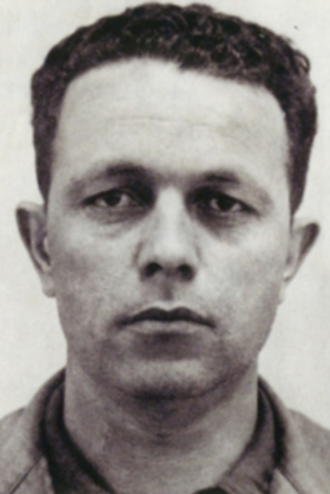
At a Glance
Kabylie Origins and the Colonial System's Contradictions
Abane Ramdane was born in 1920 in Azouza, a village in the Tizi Ouzou district of Kabylie — the Berber-speaking mountainous region of northern Algeria whose people had a centuries-long tradition of resistance to external authority and whose particular relationship with French colonialism, shaped by early and intensive missionary and educational activity, had produced both the largest proportion of French-educated Algerians and the deepest reservoir of nationalist resentment. The Kabyle people had been among the first to resist French conquest in the 1830s and among the last to be subjugated; the insurrection of 1871, led by Krim Belkacem's ancestors and the religious leader Mokrani, had been crushed with a severity — collective punishment, land confiscation, mass deportation — that remained in Kabyle memory across generations.
Abane received a French colonial education — the only education available to an Algerian of his class and era — and worked for a period as a commis administratif, a low-level colonial clerk, the kind of minor administrative role that the French system offered to educated Algerians while keeping them permanently below the level at which real authority was exercised. The experience of working inside the colonial apparatus — seeing its mechanisms from within, understanding exactly how it maintained Algerian subordination through bureaucratic as much as military means — was a common radicalising experience for the generation of nationalists who came of age in the 1940s. Abane joined Messali Hadj's MTLD, the most radical of the pre-war nationalist parties, sometime in the late 1940s and was arrested by French authorities in 1950, receiving a five-year prison sentence for nationalist activities.
Prison and the Education of a Revolutionary
Abane served his full sentence in French prisons — years that, as with so many figures in this archive, functioned as an accelerated political education. He read extensively, thought systematically about the problems of the nationalist movement, and emerged in January 1955 with a more fully developed political framework than he had possessed at the time of his arrest. He was released into a changed situation: the FLN had launched its War of Independence on 1 November 1954 — the famous Toussaint Rouge, All Saints' Night, when coordinated attacks across Algeria announced the beginning of armed struggle — and the movement he had left was now a different one.
What he found on his release was an insurrection that was militarily active but politically inchoate — six regional commanders controlling six wilayas, or military districts, with no unified command, no political programme beyond independence, and no institutional framework for collective decision-making. The historic leaders who had launched the revolution — Mostefa Ben Boulaïd, Mourad Didouche, Larbi Ben Mhidi, Rabah Bitat, Krim Belkacem, and Mohamed Boudiaf — had launched the insurrection without having fully resolved the question of what political structures would govern it. Ben Boulaïd was already dead, killed by a booby-trapped radio in March 1956. Didouche had been killed in January 1955. The movement was bleeding its founders faster than it could replace them, and the political vacuum at its centre was being filled by improvisation and personal authority rather than institutional structures.
Abane threw himself into the work of building those structures with the energy of a man who understood exactly what was missing and had a clear vision of what needed to be built. Within months of his release he was the dominant political figure in Algiers — coordinating between the wilaya commanders, building the FLN's urban network, establishing the clandestine structures that made the movement functional as a political organisation rather than merely as an armed insurrection. He was not a military commander and made no pretence of being one. He was a political organiser and strategist of exceptional talent, and he understood that the revolution needed political foundations if it was to survive both French repression and its own internal contradictions.
The Soummam Congress: Building the Revolution's Architecture
The Soummam Congress of 20 August 1956 was Abane's masterwork and the most important event in the political history of the Algerian independence movement. He organised it in conditions of extraordinary difficulty — convening delegates from across the country in the Iffri gorge in the Kabylie mountains while French military operations were intensifying, managing the logistics of clandestine travel across a country at war, and preparing the political documents that would give the congress its substance. The date — 20 August — was chosen deliberately: it was the second anniversary of the deposition of Morocco's Sultan Mohammed V by France, and its choice as the congress date signalled the FLN's connection to the broader North African liberation movement.
The Soummam Platform that the congress adopted was primarily Abane's work, and it remains one of the most remarkable political documents produced by any African liberation movement. It established a collective leadership structure — the Conseil National de la Révolution Algérienne (CNRA) as the movement's parliament and the Comité de Coordination et d'Exécution (CCE) as its executive — that replaced the previous arrangement of personal authority and informal coordination with institutional structures capable of surviving the loss of any individual. It committed the FLN to building a democratic, secular Algerian state after independence — a commitment that Abane regarded as non-negotiable and that would be contested from the moment he was dead. And it established the two principles that Abane considered the revolution's political foundations: the primacy of the political over the military, and the primacy of the internal leadership over the external delegation.
Both principles were immediately contentious. The external delegation — the political figures who had been operating from Cairo, Tunis, and European capitals since before the revolution, including Ahmed Ben Bella, Ferhat Abbas, and others — resented being formally subordinated to the internal leadership. The military commanders resented the assertion that political authority superseded military command. Abane's principles were correct — a liberation movement that subordinated politics to guns was likely to produce, after independence, a state governed by guns rather than by political accountability, which is precisely what Algeria became — but correctness in political analysis does not guarantee political survival, and Abane had made powerful enemies.
The Battle of Algiers and the Gathering Enemies
Through 1956 and into 1957, as French military pressure intensified and the Battle of Algiers was fought out in the Casbah's narrow streets, Abane remained the political brain of the CCE — the figure who maintained the movement's political coherence even as its military structures were being dismantled by General Massu's paratroopers, who were using systematic torture to break the FLN's urban network cell by cell. The Battle of Algiers destroyed the FLN's organisation in the city — Larbi Ben Mhidi was captured and murdered, Djamila Bouhired was captured and tortured, and Ali La Pointe was killed when French forces demolished the building in which he was hiding. The CCE fled Algiers for Tunisia in the spring of 1957.
The move to Tunis shifted the balance of power within the FLN toward the external delegation that Abane had tried to subordinate to the internal leadership. His principles, operational in the conditions of the Kabylie congress, were harder to maintain in the factional politics of Tunisian exile. His enemies within the movement — above all Abdelhafid Boussouf, who controlled the FLN's intelligence apparatus with the methods of a secret police chief, and who had been building a case against Abane's "divisiveness" and "dictatorial tendencies" among the leadership — were gaining ground. The charges were largely projections: the methods Boussouf accused Abane of were precisely the methods Boussouf himself employed.
Murder and Its Aftermath
In late December 1957, Abane Ramdane was lured to a meeting near Tétouan in Morocco, told he was needed for a leadership conference. The exact date of what followed is disputed — most accounts give 27 or 29 December 1957. He was strangled. The men responsible were Abdelhafid Boussouf, Krim Belkacem, and Lakhdar Bentobbal — three of the FLN's most powerful figures, men who had fought alongside him and who understood that his democratic principles and his institutional vision were incompatible with the personal power structures they were building. His death was concealed. FLN communiqués announced some weeks later that Abane Ramdane had "fallen on the field of honour" — died in combat against French forces. The lie was maintained for years after independence. It was not until the 1960s that the truth began to emerge, and not until decades later that it was fully acknowledged.
Algeria became independent on 5 July 1962. The state that emerged — governed initially by Ahmed Ben Bella and then from 1965 by Houari Boumédiène's military regime — was precisely the kind of state that Abane's principles had been designed to prevent: one in which the military had swallowed the political, in which the primacy of external figures over the internal fighters had been entrenched, and in which the democratic, secular republic that the Soummam Platform had promised existed only as an aspiration never seriously pursued. The two principles for which Abane had argued — and for which he had been killed — were the principles whose implementation might have made independent Algeria something other than what it became.
Legacy: The Architect Denied His Building
Abane Ramdane was eventually rehabilitated in Algerian official memory — streets were named after him, his face appeared on postage stamps, and the Algerian state acknowledged his contribution to the revolution. But rehabilitation of a martyr is not the same as implementation of his principles, and the principles for which he died — democratic accountability, the subordination of military to political authority, a secular state in which citizenship transcended ethnic and religious identity — remained as contested in Algeria at the time of this writing as they were in the farmhouse near Tétouan where he was murdered in 1957.
His murder represents one of the most consequential self-inflicted wounds of the Algerian revolution — a movement that killed the man most capable of building a functional political culture for the independent state, and then spent the following six decades living with the consequences of that killing. Frantz Fanon, who knew Abane and worked alongside the FLN in the same years, understood the danger; his analysis of the degeneration of national liberation movements in The Wretched of the Earth reads in part as a diagnosis of exactly the pathology that destroyed Abane. The diagnosis was accurate, the patient did not survive, and the state that emerged from the revolution bore the scars of the murder for generations.