At a Glance
Algiers 1960: The War the French Public Could Not See
By February 1960, when Djamila Boupacha was arrested, the Algerian war was in its sixth year. The Battle of Algiers — the urban campaign of 1956–1957 in which the FLN had placed bombs in the European cafes and cinemas of the city and General Massu's paratroopers had dismantled the network through systematic torture and mass arrest — was over. The FLN's urban organisation in Algiers had been broken. But the war continued in the countryside and the mountains; the wilaya commanders sustained their operations despite the Morice Line and the French army's counter-insurgency campaigns; and in Algiers and the other cities, the French military's interrogation apparatus continued to operate against suspected FLN members and sympathisers with the same methods that had broken the Casbah network three years earlier.
Most of this torture was invisible to the French public. The French government censored the press; publishers who attempted to print accounts of what was happening in Algeria were prosecuted; the military justice system operated behind closed doors. Henri Alleg's La Question, published in February 1958 — a first-person account of Alleg's torture by French paratroopers at El-Biar, the same facility where Boupacha would later be held — had been immediately banned. The information circulated in samizdat form, passed between the lawyers, journalists, and intellectuals who were trying to bring it to public attention, but it had not broken through into mainstream French public consciousness in the way that the Boupacha case eventually would.
The Arrest and What Followed
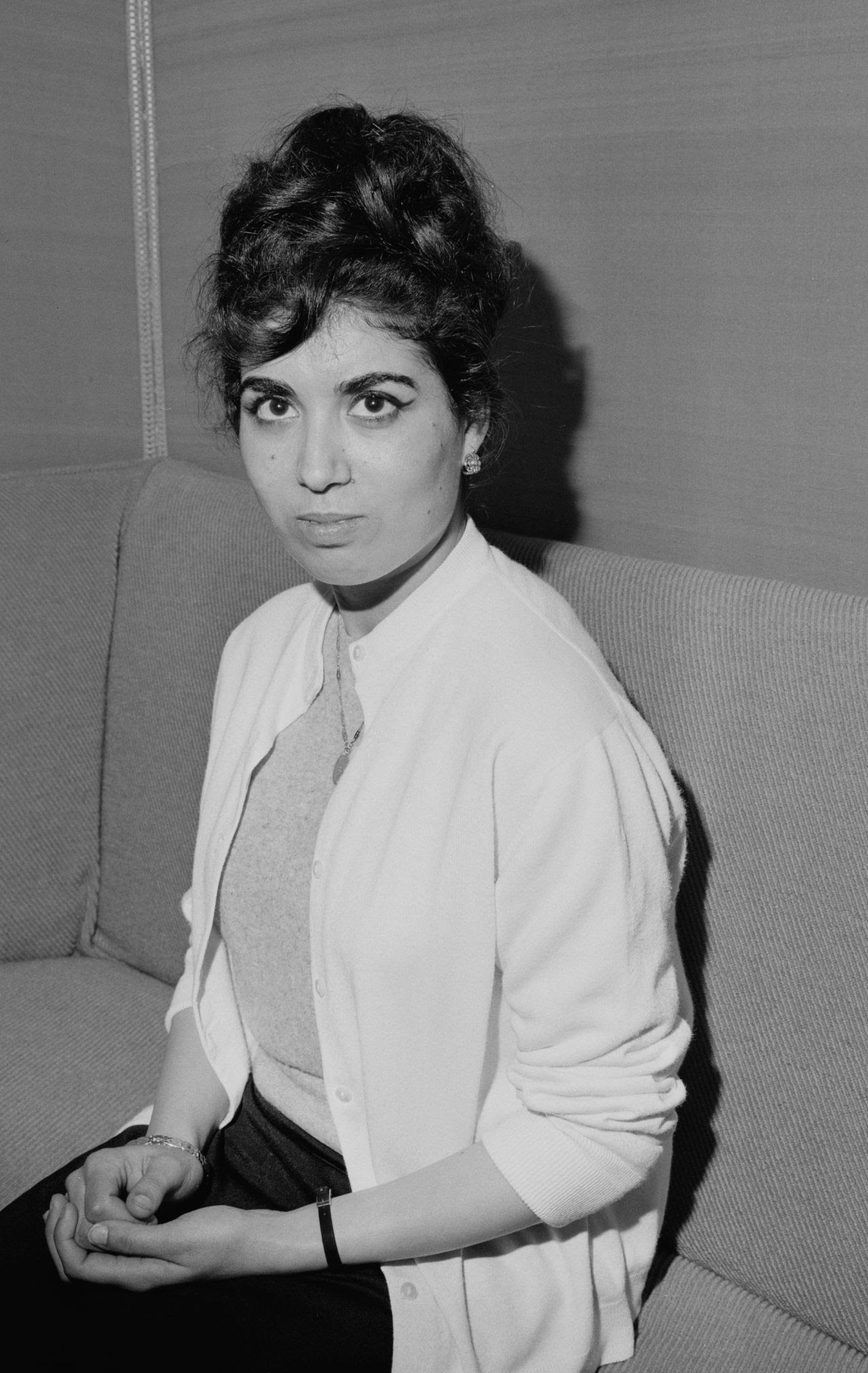
Djamila Boupacha was arrested at her family home on 10 February 1960 — the day after her twenty-second birthday — by French paratroopers acting on intelligence about a bomb placed at the University of Algiers cafeteria. Her father Abdelaziz and her brother-in-law were arrested at the same time. She was taken to El-Biar, the interrogation centre in a former farm building on the heights above Algiers that had been used by French intelligence since the Battle of Algiers and whose name was already known to Algerian nationalists as a place where people went in and did not come out in the same condition as they had entered.
What was done to her there, and subsequently at other facilities, is documented in the legal proceedings that Gisèle Halimi later brought and in the account that Boupacha gave to Halimi and then, through Halimi, to Simone de Beauvoir: beatings, near-drowning using the gégène (the field telephone adapted to deliver electric shocks), suspension by the wrists, and rape using a broken bottle. The last was particularly significant legally because it constituted a sexual crime under French law even within the military justice framework — a specificity that Halimi would exploit in the subsequent proceedings to force the case into legal territory where the French military's usual procedural protections did not fully apply.
A confession was extracted. Under French military law, a confession obtained under torture was formally valid — the prohibition on using torture to extract evidence was theoretical rather than operational in the context of the Algerian war's military justice system. Boupacha was charged, imprisoned, and brought before a military tribunal in Algiers.
Gisèle Halimi and the Decision to Make the Case Public
Gisèle Halimi was a Tunisian-born French lawyer of Jewish Berber heritage who had been defending FLN members since the early years of the war and who had developed, across those cases, a clear-eyed understanding of what French military justice in Algeria actually was: a procedural framework designed to provide legal cover for outcomes determined by intelligence services and military commanders rather than by evidence or due process. She had taken other cases that exposed French torture; she understood that exposure required more than legal argument before sympathetic tribunals — it required public attention that could not be managed or suppressed through the normal mechanisms of military censorship.
She agreed to defend Boupacha and immediately made two decisions: she would attempt to have the case transferred from Algiers to metropolitan France, where the military's stranglehold on the proceedings was less complete; and she would use the case to expose to French public opinion what was being done in their name. She contacted Simone de Beauvoir — the most prominent feminist intellectual in France, a woman whose name guaranteed publication and whose commitment to the Algerian cause was already publicly established — and proposed a collaboration. De Beauvoir agreed without hesitation.
Simone de Beauvoir, Picasso, and the Breaking of the Story
De Beauvoir's article in Le Monde on 2 June 1960 was one of the most important interventions in the French public debate about the Algerian war that had yet appeared. It described what had been done to Boupacha in clinical detail — the specific methods of torture, the rape, the extraction of a confession under duress — and framed the case not as an aberration but as an instance of a systematic policy that the French government was conducting and defending. The article appeared in the most respected newspaper in France, under the name of the most celebrated French intellectual woman of her generation, and it could not be dismissed as FLN propaganda or excused as the exaggeration of anti-French bias. It was believed, because it was believable, and because by 1960 enough had leaked out about French methods in Algeria that people who read carefully already knew, at some level, that what de Beauvoir was describing was true.
Pablo Picasso, who had been following the case through Halimi's network of contacts in the French left, drew a portrait of Boupacha that was published internationally and made her face recognisable to audiences far beyond those who read Le Monde. The portrait — characteristically Cubist in style, not a realistic likeness but an act of solidarity that translated the case into the visual language of the artistic avant-garde — placed Boupacha's name and situation in the newspapers and journals of the international left, from New York to London to Rome to Tokyo. Her case became what the Algerian FLN had struggled to achieve: a genuinely international symbol of the colonial violence that France was conducting in Algeria in the name of a civilisation that its methods in the field fundamentally contradicted.
The Legal Proceedings and the Transfer to Paris
Halimi's legal strategy was designed to make the military tribunal's proceedings as embarrassing as possible for the French government. She demanded that the medical evidence of torture be entered into the record; she pressed the rape charges with a specificity that the military preferred to ignore; she called for the prosecution of the officers responsible for the interrogation. The Algiers military authorities, faced with the combination of Halimi's legal aggression, the de Beauvoir article, and the growing international attention, agreed in September 1960 to transfer the case to Paris — a decision that itself acknowledged, implicitly, that a fair trial was impossible in Algiers.
The transfer to Paris was a partial victory. It removed the case from the military's most complete zone of control, allowed more exposure to civilian legal standards, and gave Halimi better access to the press and the political networks that were following the case. But the legal proceedings in Paris were also interminable — delayed, complicated, subject to the procedural management that the French state deployed to limit what could be said in open court — and were eventually overtaken by events. Algeria became independent on 5 July 1962. Under the Évian Accords, an amnesty was declared for acts committed during the war. The charges against Boupacha were dropped. She was released in July 1962 and returned to Algeria.
The Meaning of the Case: Torture as System, Not Exception
What the Boupacha case contributed to the Algerian war's historical record was not primarily the proof that French forces had tortured a specific individual — that proof was available from dozens of other cases and from the testimony of French soldiers who had participated in or witnessed torture. What it contributed was the exposure of torture as a system rather than an exception: a deliberate policy authorised at the highest levels of the French military command and protected by the legal framework of the military justice system. Boupacha's case made this argument with a specificity and a public visibility that the general accounts could not achieve alone.
The argument was politically significant because the French government's defence of its Algerian conduct had consistently relied on the claim that abuses were individual and exceptional — rogue officers, excessive zeal, regrettable but not representative. Halimi's legal strategy and de Beauvoir's article demonstrated that this claim was false: the torture at El-Biar had been systematic, organised, and conducted with the knowledge and approval of the military hierarchy. The rape had been conducted by officers in uniform, in a military facility, in the course of an officially sanctioned interrogation. There was no rogue here, no exception. There was a policy.
The Collaboration: Halimi and De Beauvoir's Book
Gisèle Halimi and Simone de Beauvoir co-authored a book about the case — Djamila Boupacha, published in 1962 — that included de Beauvoir's preface framing the political and moral significance of the case, Halimi's account of the legal proceedings, documents from the trial, and testimony from Boupacha herself. The book was one of the most important primary sources on the French judicial response to the Algerian war and on the specific experience of women subjected to torture in the context of the conflict. It was immediately translated into multiple languages and distributed across Europe and the Americas, ensuring that the case reached audiences beyond the French-reading world.
The collaboration between Halimi and de Beauvoir was also significant as an instance of feminist politics engaging with anti-colonial politics in a way that was not yet common. De Beauvoir's The Second Sex had been published in 1949; the feminist movement she was associated with was focused primarily on the situation of women in metropolitan France and Europe. Her intervention in the Boupacha case — and her insistence on the gendered specificity of what had been done to Boupacha, the rape as well as the other torture methods — connected the feminist critique of sexual violence to the anti-colonial critique of French imperialism in a way that anticipated the intersectional politics that would develop more fully in the following decades.
Legacy: The Case That Could Not Be Buried
Djamila Boupacha has lived in Algeria since her release in 1962, participating at various points in public commemorations of the revolution and giving interviews in which she discusses her case and its significance. Her name appears in the historical literature on the Algerian war as one of the defining cases in the exposure of French torture — alongside Alleg's La Question, the testimonies of French soldiers collected by journalists like Jean-Jacques Servan-Schreiber, and the work of the lawyers and intellectuals who spent the war years trying to bring to public attention what France was doing in Algeria.
The case has also entered the broader historical literature on the use of torture in counter-insurgency, on the relationship between colonial violence and metropolitan democratic claims, and on the role of international public opinion in constraining the methods of liberal democracies conducting colonial wars. It is studied in law schools, in military ethics courses, and in the literature of human rights as an instance of how publicity can constrain torture even when legal mechanisms have failed to do so. The constraint was partial — torture continued in Algeria after the Boupacha case became public; the case did not end the practice, only exposed it — but the exposure mattered, and it mattered in ways that continued to echo long after the war ended and Algeria became independent. She is still alive, and the case she was at the centre of is still studied, still argued about, and still relevant to debates about what liberal democracies do in the name of security and order when they believe no one is watching.