At a Glance
Bihar and the Political World of the United Provinces
Basawon Singh Sinha was born in 1902 in Bihar — then a division of the Bengal Presidency, separated into its own province only in 1912 — into a society that bore the weight of colonial extraction in forms that were immediate and concrete: the indigo plantations, the zamindari system, the land revenue demands that stripped agricultural surpluses from peasant cultivators and transferred them upward through layers of intermediaries to the colonial treasury. Bihar in the early twentieth century was a province where the connection between colonial governance and rural poverty was not an abstract political argument but the daily material experience of most of its people.
The educated middle class of Bihar — the lawyers, teachers, and government clerks whose families had managed to access the colonial education system — occupied an ambiguous position in this structure: sufficiently educated to understand the system that governed them, insufficiently powerful to change it through conventional means, and increasingly connected through newspapers, political organisations, and personal networks to the broader Indian nationalist movement centred in Calcutta, Bombay, and the cities of the United Provinces. It was from this milieu that Basawon Singh Sinha came, and it was through the networks that connected Bihar's educated young men to the United Provinces revolutionary underground that he encountered the Hindustan Republican Association.
The Hindustan Republican Association: What It Was and What It Believed
The Hindustan Republican Association was founded in 1924, emerging from the networks of the earlier revolutionary organisations — the Anushilan Samiti, the Yugantar group in Bengal, the various armed revolutionary cells in the Punjab and United Provinces — that had been building since the Swadeshi years. Its founding figures included Ram Prasad Bismil, Sachindra Nath Sanyal, and Jogesh Chandra Chatterjee, men who had been involved in earlier phases of the revolutionary movement and had concluded that a new organisation was needed with a clearer ideology and a more disciplined structure.
The HRA's founding document — the Yellow Manifesto of 1925 — was a remarkable political text for its era. It called for the establishment of the United States of India as a federal republic based on universal suffrage, rejected the caste system, demanded equal rights regardless of religion or social origin, and argued that armed revolution was the only means by which colonial rule could be ended. It was explicitly secular and socialist in its political vision, which distinguished it sharply from the Hindu nationalist strand of Indian revolutionary thought and aligned it with the internationalist left. The HRA attracted young men from Muslim as well as Hindu backgrounds — Ashfaqullah Khan's membership was the most prominent expression of this, but the organisation's ideological commitment to transcending communal divisions was reflected in its composition more broadly.
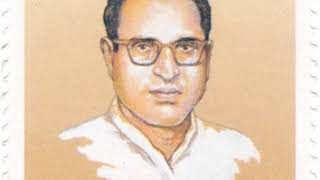
Basawon Singh Sinha joined this organisation. He was twenty-two or twenty-three when Kakori happened, young enough to be among the more junior members of the group, old enough to understand what participation meant. The HRA members knew what the colonial government did to people convicted of waging war against the King Emperor. The Alipore Bomb Case was seventeen years in the past but not forgotten. They proceeded anyway.
9 August 1925: The Train at Kakori
The Kakori operation was planned by Bismil and Ashfaqullah Khan over a period of months in 1925, with the objective of taking the government treasury funds transported by rail to finance the HRA's continued operations. The organisation had almost no money — weapons, printing, travel, and the maintenance of the network all required funds that could not be raised through subscriptions from a clandestine membership. The decision to take colonial government funds by force was explicitly ideological as well as practical: it was expropriation of the colonial state's resources, a direct act of war against the empire, not mere robbery.
On 9 August 1925, ten HRA members — including Bismil, Ashfaqullah Khan, Rajendra Lahiri, Roshan Singh, and Basawon Singh Sinha — boarded the 8 Down Saharanpur-Lucknow passenger train at various stations along its route. Near Kakori, a small station between Lucknow and Barabanki, they pulled the emergency chain and stopped the train. They overpowered the guard, broke open the government treasury bag with a hammer, and took the cash inside. During the operation a passenger — Ahmed Ali, an elderly man — was accidentally shot and killed, a fact that complicated the moral picture of the operation and that the prosecution emphasised heavily at trial. The revolutionaries dispersed into the countryside.
The operation yielded approximately 4,600 rupees — less than the revolutionaries had hoped for, and vastly less than the political and human cost it would exact. Within weeks the colonial government had mobilised every intelligence resource it had in the United Provinces to identify and arrest the participants. The HRA's internal security was insufficient to withstand this pressure: some members were identified through informants, others through the forensic examination of the evidence left at the scene, others through the surveillance of known revolutionary networks. Arrests followed rapidly. Basawon Singh Sinha was among those taken.
The Trial: A Year and a Half of Colonial Justice
The Kakori Conspiracy Case was tried before a Sessions Court in Lucknow over approximately eighteen months from late 1925 to late 1927. Nineteen men were eventually tried. The prosecution's case rested on approver testimony, physical evidence from the scene, and the detailed intelligence gathered during the post-Kakori investigation. The defence was conducted by a team of lawyers that included, at various stages, some of the most capable advocates in the United Provinces, but the evidence against the core participants was strong and the colonial government was determined to make examples.
The sentences varied significantly. Four men received the death penalty: Bismil, Ashfaqullah Khan, Roshan Singh, and Rajendra Lahiri. They were hanged in December 1927. Others received sentences of transportation for life — exile to the Andaman Cellular Jail, the colonial government's most severe non-capital punishment for political prisoners. Basawon Singh Sinha received a sentence of transportation for life. Others received shorter terms of rigorous imprisonment within India. The differentiation in sentences reflected the prosecution's assessment of individual culpability — those proved to have been the planners and leaders of the operation faced the gallows; those proved to have participated but in less central roles faced transportation or imprisonment.
The Andaman Cellular Jail: Kala Pani
Transportation to the Andaman Islands meant the Cellular Jail — the institution on South Andaman island that the colonial government had built specifically to hold political prisoners in conditions of maximum isolation. The crossing of the Bay of Bengal to the Andamans was itself significant in the consciousness of the prisoners: the traditional Hindu injunction against crossing the ocean — the "kala pani," black water — meant that transportation carried a dimension of cultural and ritual displacement beyond the physical imprisonment, a severing from family, community, and the social world that constituted a person's identity in ways that imprisonment within India did not.
The Cellular Jail held political prisoners from across the decades of India's revolutionary movement. Barindra Kumar Ghosh, convicted in the 1909 Alipore Bomb Case, had been there before Basawon Singh Sinha arrived. Vinayak Damodar Savarkar, serving two consecutive life sentences, was among the long-term inmates. The prison's regime of hard labour, restricted diet, and enforced solitary confinement was designed to break down individual and collective resistance, and it succeeded in breaking some of the men held there. Others organised hunger strikes, maintained political discussion wherever they could, and survived through mutual support in defiance of the prison's architectural logic.
Basawon Singh Sinha served his time, was eventually released — whether under amnesty, on completion of his sentence, or through some other mechanism is not definitively recorded in the available sources — and returned to Bihar. He lived to see India become independent in 1947 and to be recognised by the Indian government as a freedom fighter, a designation that came with a state pension and a formal acknowledgement that the thing he had done in 1925 had been an act of patriotism rather than a crime.
The Survivors and the Martyrs: How Movements Remember
Basawon Singh Sinha occupies a particular position in the historical memory of the Kakori Conspiracy: he is among the survivors whose biographical record is substantially thinner than those of the men who were hanged. This is a pattern that recurs throughout the history of the Indian independence movement and indeed throughout the history of liberation movements generally — the martyrs are remembered with a precision and a completeness that the survivors rarely achieve. The dead are fixed in their moment of sacrifice; the living go on to live complicated lives that resist the clean narrative of martyrdom.
Bismil and Ashfaqullah Khan are celebrated figures of Indian nationalist memory — their names appear on streets, their images on postage stamps, their words quoted in independence day speeches. The men who survived Kakori are present in the historical record but less vividly. This is not a criticism of the survivors; it is an observation about how movements construct their memory. The fact that Basawon Singh Sinha and several of his comrades served years in the Andaman Cellular Jail and then lived to see independence is not a lesser story than the story of the men who were hanged — it is a different story, one whose full weight is hard to recover precisely because the documents and testimonies are thinner.
What is recoverable is the essential fact: he was on that train at Kakori on 9 August 1925. He knew what the operation was, what it meant, and what it risked. He was twenty-two or twenty-three years old. He had joined an organisation whose founding document called for the abolition of colonialism, the caste system, and economic exploitation simultaneously — an organisation that believed the cost of that programme might well be its members' lives, and that the cost was worth paying. He paid a large portion of that cost. He survived. He saw India become free. That is what the record contains, and it is enough.