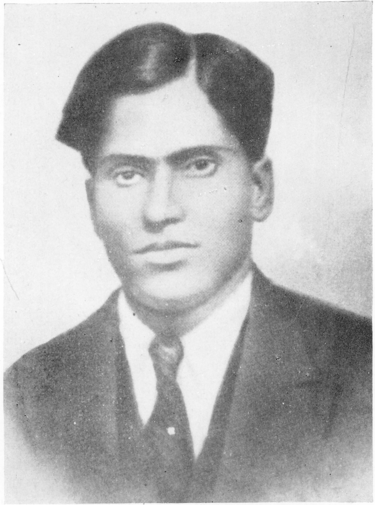
At a Glance
Burdwan and Calcutta: A Bengal That Was Already Burning
Badal Gupta was born in 1912 in Raina, a small town in Burdwan District in the Bengal Presidency — the agricultural heartland of Bengal, not far from Calcutta but far enough to be part of a world that the colonial capital touched indirectly, through the tax collectors and the court systems and the policemen who administered rural Bengal on behalf of the Government of India. His family were middle-class Hindus of the kind that formed the backbone of Bengali civil society — educated, modest in means, connected to the schools and colleges and political networks that made Bengal the most intellectually active province in British India throughout the late nineteenth and early twentieth centuries.
He was growing up in a Bengal that had been politically on fire for more than two decades by the time he was old enough to understand what was happening around him. The partition of Bengal in 1905, the Swadeshi Movement, the emergence of the revolutionary secret societies, the Alipore Bomb Case, the Yugantar and Anushilan networks — these were the political atmosphere he breathed from childhood. By the time Surya Sen's Indian Republican Army raided the Chittagong Armoury in April 1930, Badal Gupta was seventeen or eighteen years old and already involved in the revolutionary networks that had been building in Bengal for thirty years.
The Bengal Volunteers and the Political Context of 1930
The year 1930 was one of the most intense in the entire independence movement. Gandhi had launched the Salt March in March, and the Civil Disobedience Movement was spreading across India with a speed and scale that alarmed the colonial authorities. In Bengal, the revolutionary tradition had never been dormant — the networks of the Anushilan Samiti and the Jugantar group had continued operating through the 1920s, training young men in weapons use and physical culture and maintaining the ideology that armed resistance was not a supplement to the freedom struggle but its most honest expression.
In April 1930, Surya Sen — a schoolteacher in Chittagong known to his students as "Masterda" — led a group of roughly sixty revolutionaries in a raid on the Chittagong Armoury and the police armoury, briefly seizing control of the city and cutting its telegraph connections before being driven out by British troops. The Chittagong Armoury Raid did not succeed in its military objectives, but its political impact — the demonstration that a disciplined group of Indian revolutionaries could organise and execute a military operation against the colonial state — was enormous, particularly in Bengal, where it was experienced as a validation of everything the revolutionary tradition had argued.
The Bengal Volunteers was one of the organisations operating in this charged atmosphere. It drew young men who had been radicalised by the Chittagong raid, by the conditions of political prisoners in Bengal jails, and by the spectacle of the colonial government's increasingly harsh response to the Civil Disobedience Movement. The treatment of political prisoners had become a specific and prominent cause: prisoners on hunger strike had been subjected to force-feeding, and the Inspector General of Prisons, N. S. Simpson, was the administrator directly responsible for the regime applied to political detainees across Bengal. He was the target the Bengal Volunteers selected.
The Plan: Writers' Building and the Uniform
Writers' Building — a long, red-painted neoclassical structure on the north side of Dalhousie Square in central Calcutta — had been the administrative headquarters of the Bengal colonial government since the eighteenth century. It was named for the "writers," the junior clerks of the East India Company who had originally been housed there, and by 1930 it was the building where the senior officers of the Bengal provincial administration worked. It was not a military facility. It did not have a military guard of the kind that protected armouries or prisons. It was a government office building, full of civil servants, accessible to anyone who could convincingly present a reason for being there.
Binoy Basu, Badal Gupta, and Dinesh Gupta obtained or made khaki military uniforms — the kind worn by army dispatch riders — which would allow them to enter the building without raising immediate suspicion. They carried revolvers and, in Badal's case, potassium cyanide. The poison was not incidental equipment. It was a deliberate choice, made in advance, about what to do if the operation went wrong and capture became unavoidable. The Bengal revolutionary tradition had a clear position on this: surrendering alive to the colonial authorities meant interrogation, likely torture, public trial intended to humiliate the revolutionary cause, and execution. Some revolutionaries had chosen capture — Khudiram Bose had been captured and hanged with extraordinary courage at eighteen, and his example was celebrated. But others had decided that dying by one's own hand on one's own terms was the preferable choice. Badal carried the cyanide because he had already decided which choice was his.
8 December 1930: The Raid
On the morning of 8 December 1930 the three young men entered Writers' Building in their military uniforms. They made their way up to the upper floors where the senior administrators had their offices. They found N. S. Simpson. They shot him — he was severely wounded and died from his wounds. The operation had been executed at close quarters and in a crowded government building, and the noise brought police and guards immediately. The three revolutionaries were surrounded on the upper floors of Writers' Building with no exit available.
What happened next was compressed into a few minutes and has been told in Bengali popular memory in many versions, some of them almost certainly embellished in the decades of retelling. The essential facts are not disputed. Dinesh Gupta was captured — he was taken alive, tried, and hanged on 7 July 1931. Binoy Basu shot himself with his own revolver; he died of the wound the same day or shortly after. Badal Gupta swallowed the potassium cyanide he had carried for exactly this moment. He died later on 8 December 1930. He was approximately eighteen years old.
BBD Bagh: The Square That Carries Their Names
After independence, the Government of West Bengal renamed Dalhousie Square — the central administrative square of Calcutta, bordered by Writers' Building on one side, that had been the geographical heart of colonial governance in Bengal — as BBD Bagh: Binoy-Badal-Dinesh Bagh. The renaming was more than commemorative. It placed three revolutionary boys' names at the literal centre of the city's administration, overwriting the name of a colonial administrator with those of the people who had tried to kill his successors. Every address in central Calcutta that references the square carries those three names. Every taxi driver, every office worker, every schoolchild who navigates to the area learns, at least as a sound if not always as a story, that Binoy, Badal, and Dinesh did something that earned the right to name this place.
The story behind the names is not always told in full. Badal Gupta is the youngest and the one whose death was entirely self-chosen — not the result of a gunshot wound or the gallows but of a poison he had decided in advance he would take rather than be taken. That decision, made by a boy of eighteen in a government building corridor with police closing in, is the fact about him that resists sentimentalisation. It was not an impulsive act. It was a considered one, prepared in advance, carried out with the deliberateness that the Bengal revolutionary tradition had always claimed as its ethical foundation: that dying for the cause of India's freedom was not a tragedy to be mourned but an act to be honoured, and that the manner of dying — refusing to give the colonial state the satisfaction of a public trial and execution — was itself a form of resistance.
The Bengal Revolutionary Tradition and What It Cost
The Bengal revolutionary movement of the first three decades of the twentieth century produced an extraordinary number of young men and women who died before they were twenty-five. Khudiram Bose at eighteen. Badal Gupta at eighteen. Prafulla Chaki at nineteen. Dinesh Gupta at nineteen when he was hanged. Pritilata Waddedar at twenty-one. The list extends further and does not become less striking with length. These were not soldiers in any conventional sense — they were students, teachers, boys and girls from middle-class Bengali Hindu families who had decided, on the evidence of their own observation and reading, that the colonial state could only be fought with weapons, that the cost of fighting it that way was likely to be their own lives, and that the cost was acceptable.
What drove them was not an abstract ideology imported from outside but a specifically Bengali synthesis: the influence of Aurobindo Ghose's political philosophy, the example of the European nationalist movements of the nineteenth century, the Bhagavad Gita's argument that action in a righteous cause is not bound by the ordinary moral calculus of outcome, and the immediate observation of colonial governance — the jails, the floggings, the famines that the colonial administration managed rather than prevented, the systematic exclusion of Indians from the positions of authority in their own country. Badal Gupta grew up breathing this atmosphere. He acted on it when he was eighteen, in a government building in central Calcutta, on a December morning in 1930, with a vial of poison in his pocket that he had carried there knowing it might be needed.
Memory and the Limits of Recovery
Badal Gupta presents the historian with a particular difficulty: he died at eighteen, left no known writings of his own, and was part of an operation whose planning was conducted in secrecy by people most of whom also died or were imprisoned. What we know of him comes almost entirely from the testimony of those who survived — Dinesh Gupta's statements at trial, the accounts collected by later historians from people who knew the Bengal Volunteers networks, and the oral tradition of the Bengali revolutionary movement that was systematically recorded in the decades after independence.
The oral tradition is vivid and consistent on the essential points: a young man from Burdwan, deeply committed to the revolutionary cause, chosen for the Writers' Building operation because of his reliability and courage, who carried the cyanide as an act of prior decision-making rather than last-minute desperation. The details of his childhood and his path into the movement are thinner. He did not live long enough to write a memoir or give an interview. He is known almost entirely through the thing he did on one day in his eighteenth year, and through the square in Calcutta that carries his name alongside those of the two young men who died with him.
That the square was renamed is itself a statement about what the newly independent India thought it owed these boys. The colonial administrators whose decisions and whose building and whose square had been the targets of the 8 December operation were gone. The names of the boys who had attacked them were written into the city's geography. It is an imperfect and partial justice — the kind that history generally offers — but it is there, permanent and legible, in every Calcutta street address that contains the letters BBD.