At a Glance
Chittagong: The Port City and Its Revolutionary Tradition
Chittagong in the early twentieth century was not the obvious seedbed for one of the most dramatic armed operations in Indian revolutionary history. It was a medium-sized port city on the southeastern coast of Bengal, commercial and administratively unremarkable compared to Calcutta, without the intellectual ferment of the provincial capital or the industrial workforce of the United Provinces mill towns. What it had was a particular social geography: a concentrated Bengali Hindu middle class — teachers, lawyers, small businessmen, government clerks — living in close proximity to the colonial administrative apparatus, and a tradition of engagement with the broader Bengal nationalist movement that stretched back to the Swadeshi years.
It was in this milieu that Surya Sen — a schoolteacher known to his students and the town as Masterda, "revered teacher" — had been building the Indian Republican Army since the early 1920s. Sen was not a theorist or a pamphleteer; he was an organiser, patient and methodical, who built his network through personal trust and through the physical culture clubs and study circles that provided organisational cover for revolutionary recruitment across Bengal. By the late 1920s, the Chittagong branch of the Indian Republican Army had approximately sixty active members, mostly young men in their teens and twenties, trained in weapons use and committed to the ideology of armed insurrection against colonial rule.
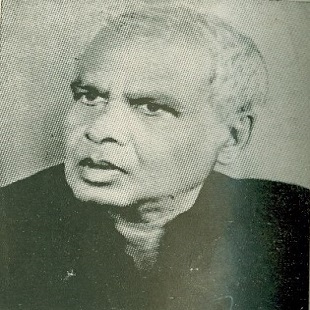
Bejoy Kumar Sinha was among the organisation's senior members — one of the men Surya Sen trusted with the planning details that could not be shared with the wider membership. He had grown up in Chittagong, knew the city and its colonial infrastructure intimately, and had been in the revolutionary network long enough to have earned the confidence that the most sensitive planning required. When Sen began developing the concept of a simultaneous raid on both of Chittagong's armouries — the police armoury and the Auxiliary Force armoury — Bejoy Kumar Sinha was among those involved in working out how it would be done.
Planning the Uprising: Logistics of the Impossible
The Chittagong Armoury Uprising was conceived as a military operation of a kind that no Indian revolutionary group had previously attempted. Earlier revolutionary actions — the Muzaffarpur bombing, the Kakori train robbery, the Writers' Building raid — had been small-unit actions: two, three, or ten people executing a specific strike and then dispersing. The Chittagong plan was fundamentally different. It called for the mobilisation of sixty people in two simultaneous operations, the seizure of both armouries, the cutting of the city's telegraph and telephone connections to prevent the colonial government from summoning reinforcements, the symbolic declaration of a provisional revolutionary government, and then — this was the aspect most starkly different from anything before — an organised military retreat into the hills east of Chittagong where the group would maintain a guerrilla campaign.
The plan drew explicitly on the model of the Irish Republican Army, whose guerrilla campaign against British rule in Ireland had recently produced the Anglo-Irish Treaty and the Irish Free State — a demonstration that a small armed group, if sufficiently organised and supported by the civilian population, could make colonial governance costly enough to force political concessions. Surya Sen had studied the Irish precedent carefully, and the Chittagong operation reflected that study. It was not a terrorist gesture or a propaganda action — it was the opening move of what Sen envisioned as a sustained armed campaign.
The logistics were formidable. Sixty people needed to be assembled at specific points across Chittagong on the same night without alerting the colonial police, who had informants throughout the revolutionary networks. The armouries needed to be entered and their weapons seized before any alarm could be raised. The telegraph office needed to be occupied and the lines cut. All of this needed to happen simultaneously, in the dark, with sixty people who had trained together but had never conducted an operation of this scale. Bejoy Kumar Sinha worked on the planning that tried to make these pieces fit together. The arrest that took him out of the operation before it was launched spared him the experience of discovering which pieces did not.
Arrest Before the Raid and the Trial That Followed
The colonial police's surveillance of Bengal's revolutionary networks was extensive, and the movement of sixty young men preparing for a major operation generated intelligence that reached the authorities through informants, correspondence intercepts, and the observation of unusual patterns of behaviour. Bejoy Kumar Sinha was arrested in the period before 18 April 1930 — the precise circumstances of his arrest are not recorded with the specificity that would allow a detailed reconstruction, but the effect was clear: he did not participate in the raid itself.
The raid proceeded without him. On the night of 18 April 1930, Surya Sen and his group seized the police armoury at Dampara and the Auxiliary Force armoury — though they found the Auxiliary Force armoury largely empty of weapons, a critical logistical failure. They cut the telegraph lines. Sen declared the establishment of the Indian Republican Army as the provisional authority of a free Chittagong. The group then retreated to Jalalabad Hill east of the city, where on 22 April they fought a pitched battle with British Indian Army troops. Twelve revolutionaries were killed at Jalalabad. The survivors dispersed into the countryside and began a cat-and-mouse existence with the colonial forces that would last, for some of them, for years.
The Chittagong Armoury Case trials proceeded through 1930 and 1931, involving dozens of defendants — some who had participated in the raid, others like Bejoy Kumar Sinha who were charged with conspiracy in the planning. The colonial government built its case on the network of connections between the defendants, the evidence of the planning discussions, and the weapons and materials recovered in the raids on the organisation's safe houses. Bejoy Kumar Sinha was convicted of conspiracy to wage war against the King Emperor and sentenced to transportation for life.
The Andaman Cellular Jail and the Years of Imprisonment
Transportation to the Andaman Cellular Jail placed Bejoy Kumar Sinha in the institution that the colonial government used to remove its most dangerous political opponents from the Indian mainland — not by killing them, which generated martyrs and protests, but by placing them beyond reach on an island two days' sailing from Calcutta, in conditions of hard labour and enforced isolation designed to exhaust the will to continue political activity. The Cellular Jail by the early 1930s held a substantial community of Bengal and Punjab revolutionaries, including veterans of the Alipore Bomb Case, the Lahore Conspiracy Case, and now the Chittagong Armoury Case.
The political prisoners organised hunger strikes, the most significant of which in the early 1930s demanded political prisoner status — the right to better food, access to reading and writing materials, and exemption from the most degrading forms of hard labour. The strikes were suppressed by force-feeding and produced mixed results: the colonial government made occasional partial concessions under public pressure, then withdrew them when pressure eased. Bejoy Kumar Sinha participated in the prison community's collective resistance and survived the imprisonment — his lungs, his health generally, bearing the marks of years of inadequate nutrition and tropical confinement that many of his fellow prisoners did not survive.
While Bejoy Kumar Sinha was in the Andamans, the story of the Chittagong uprising continued to develop on the mainland. Pritilata Waddedar led the attack on the Pahartali European Club in September 1932 and died swallowing cyanide when the retreat went wrong — becoming the first woman revolutionary martyr of the Bengal movement. Kalpana Dutta continued working with Surya Sen until his capture in 1933 and was tried alongside him. Surya Sen was tortured before his execution — the British broke his hands and teeth before hanging him on 12 January 1934, a fact that became part of the legend of Masterda's martyrdom. Bejoy Kumar Sinha learned these things from the fragments of news that reached the Cellular Jail, and absorbed them as the continuation of the work that he had been part of and that the colonial state was now methodically destroying.
Release, Independence, and the Work of Memory
Bejoy Kumar Sinha was eventually released from the Andaman Cellular Jail — the precise date is not definitively established in the available sources, whether through amnesty, completion of sentence modification, or the general releases that accompanied the political negotiations of the 1940s leading toward independence. He returned to Bengal and lived through the partition of 1947 — the division of Bengal along religious lines that placed Chittagong, the city where everything he had fought for had been acted out, in East Pakistan rather than India. The place whose liberation had been the purpose of the operation was now part of a different country. The personal geography of the Bengal revolutionary movement was severed in a way that was painful for everyone who had grown up in the undivided province.
In independent India, Bejoy Kumar Sinha turned to the work that his survival made possible and that the deaths of Surya Sen, Pritilata Waddedar, and so many others made necessary: the documentation of what had happened. He wrote about the Chittagong organisation, about the planning of the uprising, about the individuals who had been part of it and whose stories were in danger of being lost as the years passed and the generation that had lived them aged and died. His accounts became primary sources for the historians who subsequently wrote about the Chittagong Armoury Uprising — among them the historians of revolutionary Bengal whose work began appearing in the 1960s and 1970s as the independence generation began taking stock of what the struggle had consisted of.
Chittagong in History: What the Uprising Meant
The Chittagong Armoury Uprising occupies a particular place in the history of India's independence movement because it was, by a significant margin, the most militarily serious operation that any Indian revolutionary organisation attempted against the colonial state. It was not successful in its military objectives: the weapons that would have equipped a sustained guerrilla campaign were not in the armoury the group expected them to be in, the Jalalabad battle cost twelve lives, and the colonial government's subsequent counteroffensive dismantled the organisation over the following four years. But it demonstrated something that no petition or hunger strike could demonstrate: that organised Indians were willing and capable of conducting military operations against the colonial state on a significant scale.
The operation's political impact outlasted its military failure. Across India in 1930, news of the Chittagong uprising produced a reaction that Gandhi's Salt March had already set in motion: the sense that the independence movement had reached a point of no return, that the colonial government's days were measurable rather than indefinite. In Bengal specifically, the uprising produced a generation of young women and men who took the Chittagong revolutionaries as their models — Pritilata Waddedar's choice to join the organisation after reading about the uprising, and her subsequent role in it, is the clearest example of this inspirational effect.
Bejoy Kumar Sinha survived long enough to see Chittagong become part of Bangladesh after the 1971 Liberation War — a war that he must have followed with feelings too complex for simple summary, given that the city and the country where he had built his revolutionary life had passed through partition, Pakistani rule, and liberation into a new national existence that neither the colonial nor the independence-era maps had anticipated. He died in 1982, in his mid-seventies, having outlived the British empire, the undivided Bengal he had grown up in, the Pakistan that had briefly contained Chittagong, and most of the comrades whose stories he had spent his later years preserving. That he preserved those stories is the fact about him that history most needs.